

Low GI Roti Mix for Diabetes in India: Best Flour Combination, Recipe, and GI Comparison
Category: Diabetic Recipes |
Type: Low GI Indian Flatbread Mix |
Calories: ~210 kcal per 2 rotis |
Key Nutrients: Fibre ~4.5g, Protein ~7g, Magnesium ~48mg |
GI Range: 45–55 (Low GI) |
Cost per serving: ₹12–₹20 approx (current market rates) |
Data Source: ICMR-NIN IFCT 2017 + USDA FoodData Central
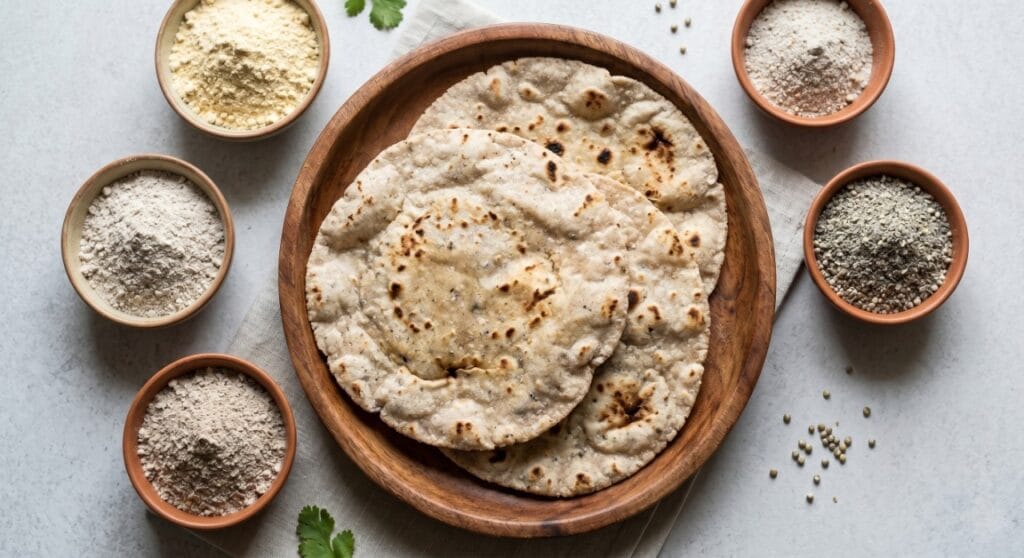
Low GI roti mix is a blend of Indian flours — bajra, jowar, besan, and a small proportion of whole wheat — with a combined glycemic index of 45–55. It releases glucose more slowly than standard wheat roti (GI ~70), supports steady energy levels throughout the day, and is suitable for daily Indian meals for better blood sugar management.
Per ICMR-NIN IFCT 2017 data, 2 rotis from this mix provide ~210 kcal, ~7g protein, and ~4.5g dietary fibre — nutritionally superior to plain wheat roti for people managing diabetes.
Introduction
Low GI roti mix is one of the most practical daily dietary changes for people managing diabetes in India. It allows better blood sugar control without eliminating roti from your meals — the most central food in the Indian diet.
Regular wheat roti has a glycemic index of approximately 70, which can lead to a relatively fast glucose rise after meals. In contrast, a carefully designed low GI roti mix using bajra, jowar, and besan reduces the glycemic impact to 45–55 while simultaneously improving fibre and protein content — two nutrients that further slow glucose absorption and improve satiety.
For people managing Type 2 diabetes or pre-diabetes in India, switching just one daily food — your roti — to a low GI flour blend can reduce glycemic load at every meal without changing your entire cooking style or family routine.
For the specific case of a proven single-flour low GI roti, see our detailed guide: Methi Bajra Roti — Low GI Flatbread for Diabetes (GI 50–56). For broader context on managing blood sugar through Indian food choices, explore the full Diabetic Recipes collection.
✔ People managing Type 2 diabetes or prediabetes who want a practical, familiar roti option
✔ Anyone following a low GI or reduced glycemic load Indian eating pattern
✔ Individuals on a weight management programme — see our weight loss recipes and 7-Day Indian Weight Loss Diet Plan
✔ Pregnant women managing gestational diabetes — see our Indian Pregnancy Diet Plan
✔ Families switching from plain wheat atta to a healthier everyday flatbread
✔ Fitness-focused individuals pairing low GI carbs with high protein meals — see our high protein Indian meals
Why Low GI Roti Mix Matters for Diabetes Management
1. Roti Is the Foundation of the Indian Plate
In Indian meals, roti accounts for a significant portion of total daily carbohydrate intake. Changing the flour blend — without changing how you cook or what you serve alongside — is therefore one of the highest-impact single dietary modifications available to an Indian person managing diabetes. Unlike elimination diets, this approach is sustainable because it works within existing food habits.
2. The Bajra + Jowar + Besan Combination Works Synergistically
Each flour in this mix contributes distinctly: bajra (GI 50–55) adds dietary fibre and magnesium — a mineral that plays a role in glucose metabolism. Jowar (GI 52–58) is naturally gluten-free, improves digestibility, and adds B vitamins. Besan (GI 44–50) is the most protein-dense flour in the mix and the primary driver of the reduced blend GI. Whole wheat at 10% provides structure and binding without significantly raising the overall GI. Together, they create a roti that is measurably better than plain wheat for blood sugar management.
3. Higher Fibre and Protein Slow Glucose Absorption
The ~4.5g dietary fibre and ~7g protein in 2 rotis from this mix — compared to ~2g fibre and ~5g protein from 2 plain wheat rotis — create a meaningful difference in digestion speed. Soluble fibre from besan slows carbohydrate breakdown in the small intestine. Protein increases satiety and reduces total meal carbohydrate load when it replaces a portion of starch. This is why pairing this roti with dal or curd — as recommended in our Indian nutrition guides — further amplifies the blood sugar benefit.
4. This Fits Indian Cooking Without Compromise
Unlike many dietary changes advised for diabetes management, this one requires no new cooking skills, no expensive specialty ingredients, and no change to family meal structure. The flour mix is prepared at home from widely available ingredients, costs ₹12–₹20 per batch, and cooks the same way as regular atta roti. It is sustainable because it feels familiar rather than medicinal. For complete structured meal planning that includes this roti, see our Millet Diet Plan for Weight Loss and Millet Recipes collection.
Best Flours for Low GI Roti Mix: GI and Nutritional Profile
Source: ICMR-NIN IFCT 2017 and peer-reviewed GI research on Indian millets and legumes. GI values are estimates — individual GI of any food depends on preparation, portion, and meal context.
| Flour | GI Range | Protein (per 100g) | Key Benefit for Diabetes |
|---|---|---|---|
| Bajra (Pearl Millet) | 50–55 | ~11g | High fibre, magnesium, mineral-dense |
| Jowar (Sorghum) | 52–58 | ~10g | Gluten-free, B vitamins, digestibility |
| Besan (Chickpea Flour) | 44–50 | ~22g | Highest protein — pulls blend GI down |
| Whole Wheat (Atta) | 60–70 | ~12g | Binding and structure — kept at 10% only |
For a deep dive into individual millet flour benefits, see our millet recipes guide and the dedicated methi bajra roti article for single-flour bajra nutrition data.
Recommended Low GI Roti Mix Ratio
| Flour | Proportion | Grams (per 150g batch) | Why This Amount |
|---|---|---|---|
| Bajra | 40% | 60g | Primary fibre and mineral base |
| Jowar | 30% | 45g | Adds digestibility and texture |
| Besan | 20% | 30g | Protein boost — lowers blend GI |
| Whole Wheat | 10% | 15g | Binding agent — keeps dough rollable |
This ratio can be adjusted. Increasing besan to 25–30% further lowers the GI and increases protein but adds a stronger chickpea flavour. Reducing whole wheat below 10% makes rolling harder. Keep bajra at minimum 35% to retain the fibre and mineral benefit. For a completely wheat-free variant, substitute the 10% wheat with an additional 5% bajra and 5% jowar — note this makes the dough slightly less rollable.
GI Comparison: Common Indian Rotis
| Roti Type | Approx GI | GI Category | Blood Sugar Impact |
|---|---|---|---|
| Maida roti (plain flour) | 70–80 | High GI | Rapid glucose spike — avoid |
| Regular wheat roti (atta) | 62–70 | Medium GI | Moderate — portion-controlled |
| Methi bajra roti | 50–56 | Low GI ✓ | Slow release — good daily choice |
| Low GI mix roti (this recipe) | 45–55 | Low GI ✓✓ | Best daily blend for diabetes |
Nutrition Profile (Per 2 Rotis, Approx 80g)
Source: ICMR-NIN IFCT 2017. Calculated from the recommended flour ratio above. All values approximate.
| Nutrient | Per 2 Rotis | Compared to 2 Wheat Rotis | Why It Matters |
|---|---|---|---|
| Calories | ~210 kcal | Similar (~200 kcal) | Comparable energy, better nutrients |
| Carbohydrates | ~34g | ~36g (wheat) | Lower GI carbs — slower absorption |
| Dietary Fibre | ~4.5g | ~2g (wheat) | 2× more fibre — slows digestion |
| Protein | ~7g | ~5g (wheat) | 40% more protein — improves satiety |
| Fat | ~2.5g | ~2g (wheat) | Minimal — similar to wheat roti |
| Magnesium | ~48mg | ~25mg (wheat) | Nearly 2× — supports glucose metabolism |
All values approximate. Actual values vary by brand, freshness, and cooking method. Magnesium reference: ICMR-NIN RDA 2020. For high-protein Indian meal combinations that pair well with this roti, see our high-protein paneer dal quinoa bowl and high-protein Indian breakfast recipes.
FSSAI Label: Vegetarian ▲ | ~210 kcal per 2-roti serving | Contains gluten (wheat), legumes (besan) | Prepared under hygienic conditions as per FSSAI guidelines.
Low GI Roti Mix: Full Recipe
Ingredients (Makes 4–5 Rotis — 2 Servings)
| Ingredient | Quantity | Approx Cost (₹) |
|---|---|---|
| Bajra flour | 60g (approx 40%) | ₹3–₹4 |
| Jowar flour | 45g (approx 30%) | ₹3–₹4 |
| Besan (chickpea flour) | 30g (approx 20%) | ₹2–₹3 |
| Whole wheat flour | 15g (approx 10%) | ₹1–₹2 |
| Salt | to taste | — |
| Warm water | for kneading (~80–100ml) | — |
Total cost per batch (4–5 rotis / 2 servings): ₹12–₹18 approx (current Indian market rates)
Step-by-Step Instructions
Step 1 — Mix the Flours
Measure out bajra, jowar, besan, and whole wheat flour in the recommended ratio. Combine all four flours in a large, wide mixing bowl and mix thoroughly with your fingers or a spoon until fully and evenly blended. Pre-mixing the dry ingredients before adding water prevents uneven absorption and clumping.
Step 2 — Add Salt and Water
Add salt to taste to the dry flour mix. Pour warm water in gradually — approximately 2 tablespoons at a time — starting from the edges of the bowl. Do not use cold or hot water. Warm water (not boiling) helps the flours — especially bajra — hydrate evenly and bind together more effectively.
Step 3 — Knead the Dough
Knead into a soft, pliable dough — slightly soft but not sticky. Multi-flour dough is denser and less elastic than pure wheat dough; this is expected and does not indicate a problem. Knead for 3–4 minutes with firm, even pressure. If the dough is cracking, add a tablespoon more warm water. If it is sticking to your palms, dust lightly with jowar flour.
Step 4 — Rest the Dough
Cover the dough with a damp cloth or cling film and rest for 10–15 minutes at room temperature. This is a critical step for multi-flour dough — bajra and jowar continue absorbing moisture after kneading, and resting allows full hydration to complete. Skipping this step typically results in cracking when rolling.
Step 5 — Divide and Roll
Divide the rested dough into 4–5 equal portions. Dust the rolling surface lightly with jowar flour. Roll each portion gently using light, even pressure — aim for 4–5mm thickness. Multi-flour dough is more fragile than pure wheat; slight cracking at edges is normal. Alternatively, shape directly on the tawa using wet palms (the bajra method) for a thicker, heartier roti.
Step 6 — Cook on Tawa
Heat a cast iron tawa or flat pan on medium flame. Cook the first side for 1.5–2 minutes until the surface looks dry and small bubbles appear. Flip and cook the second side for 1–2 minutes until evenly cooked with light golden-brown spots. Apply a minimal amount of ghee or oil if desired. Avoid high flame — multi-flour dough without gluten’s elasticity chars quickly on the outside while remaining undercooked in the centre.
For a proven single-flour variant, see our detailed guide: Methi Bajra Roti — Low GI Flatbread for Diabetes (GI 50–56).
Store-Bought vs Homemade Low GI Roti Mix
| Type | Pros | Cons |
|---|---|---|
| Homemade | Fresh, fully customisable ratio, cost-effective at ₹12–₹18 per batch, no additives | Requires preparation and sourcing individual flours |
| Store-bought | Convenient, ready to use, consistent texture | May contain additives or preservatives; ratio unknown; costs ₹60–₹120 per pack; actual GI may differ from label claims |
If buying store-bought, check the ingredient list and confirm bajra or jowar is listed first (indicating highest proportion). Check FSSAI label for allergen declaration. For commercial applications where consistent, documented GI data matters — as in hospital menus or cloud kitchens — see our food consulting services.
How to Eat Low GI Roti Mix: Pairing Guide
The glycemic impact of any meal is determined not just by the roti’s GI, but by what you eat alongside it. Pairing this roti with protein and fibre-rich foods reduces the overall glycemic load of the meal significantly.
| Pairing | Why It Works | GrowRain Guide |
|---|---|---|
| Moong dal or masoor dal | Adds protein and soluble fibre — further slows glucose absorption | Diabetic Recipes |
| Low-fat curd (plain) | Protein + probiotics; reduces glycemic response of the meal | Nutrition Guides |
| Paneer bhurji or paneer sabzi | High protein, minimal carbs — best pairing for post-meal blood sugar control | Paneer Dal Quinoa Bowl |
| Mixed vegetable sabzi | Adds micronutrients and fibre without significant carbohydrate load | Healthy Indian Dinner Recipes |
Avoid: sugary chutneys, pickle with high sodium content if managing hypertension, or eating this roti alongside plain white rice at the same meal — combining two high-carbohydrate foods raises the overall glycemic load even when each individual item has a moderate GI. For complete structured diabetes meal plans, see our 7-Day Indian Weight Loss Diet Plan and Millet Diet Plan for Weight Loss.
Practical Tips for Best Results
| Tip | Why It Matters |
|---|---|
| Use warm water | Warm water helps bind the multi-flour dough better and gives a softer, less crumbly roti. Cold water results in harder, drier dough. |
| Rest the dough (mandatory) | 10–15 minutes of resting allows full hydration of bajra and jowar. Without this, the dough cracks during rolling and the roti breaks on the tawa. |
| Medium flame throughout | Multi-flour dough without gluten’s elasticity chars quickly on high heat. Medium flame ensures even, consistent cooking throughout. |
| Batch-prep dry mix | Pre-mix dry flours in bulk and store in an airtight container for up to 2 weeks. This reduces daily preparation time significantly and makes the habit easier to maintain. |
| Add methi or palak for variation | Finely chopped fenugreek (methi) or spinach adds soluble fibre and further reduces the GI. See our dedicated methi bajra roti guide for this variant. |
| Serve immediately | Like bajra roti, this multi-flour mix hardens as it cools. Cook to order and eat fresh for best texture and palatability. |
Common Mistakes to Avoid
| Mistake | What Happens | Fix |
|---|---|---|
| Using too much wheat flour (>15%) | Increases overall GI — reduces the core benefit of the mix | Keep wheat at 10%; use extra jowar for texture if needed |
| Skipping protein pairing | Roti eaten alone metabolises faster; blood sugar benefit is diminished | Always pair with dal, curd, egg, or paneer |
| Skipping the resting step | Dough cracks when rolling; roti breaks on tawa | Always rest 10–15 minutes minimum |
| Cooking on high heat | Outside burns while inside stays raw; bitter taste | Medium flame throughout |
| Treating this as a cure for diabetes | No single food cures or controls diabetes — this is one dietary improvement | Use as part of a structured, dietitian-guided diabetes diet plan |
Related Recipes and Guides on GrowRain
➤ Methi Bajra Roti — Low GI Flatbread for Diabetes (GI 50–56)
➤ Full Diabetic Recipes Collection
🌭 Millet Recipes & Diet Plans
➤ Millet Diet Plan for Weight Loss
➤ All Millet Recipes
🍨 High Protein Meals
➤ High Protein Indian Meal: Paneer Dal Quinoa Bowl
➤ High Protein Indian Breakfast Recipes
➤ High Protein Meals Collection
🌻 Weight Loss
➤ 7-Day Indian Weight Loss Diet Plan
➤ Healthy Indian Dinner Recipes for Weight Loss
➤ Weight Loss Recipes Collection
🎯 Nutrition & Wellness
➤ Immunity Boosting Foods in India
➤ Indian Pregnancy Diet Plan (including gestational diabetes)
➤ Kids Lunch Box Ideas India
➤ All Indian Nutrition Guides
Frequently Asked Questions
🌿 Start with this roti mix today — pre-mix the dry flours tonight and make your first batch tomorrow morning.
Even replacing one daily wheat roti with this mix creates a measurable reduction in your daily glycemic load.
Conclusion
Low GI roti mix is one of the most practical and affordable everyday improvements available to people managing diabetes in India. By choosing bajra, jowar, besan, and a small proportion of wheat — in the right ratio — you reduce the glycemic impact of your daily roti by 20–35 GI points without changing your cooking style, equipment, or family meals.
The key to maximising the benefit is pairing this roti with protein and fibre at every meal. Dal, curd, or paneer alongside the roti moderates the overall glycemic load further — and that combination, repeated at two meals daily, creates a meaningful and sustainable pattern of blood sugar management.
Start with this mix and gradually replace regular wheat roti across all meals. For a complete structured approach, explore our Millet Diet Plan, our 7-Day Indian Diet Plan, and the full GrowRain Nutrition Guides for a complete picture of low GI eating in an Indian context.
Always consult your doctor or registered dietitian for personalised dietary advice, especially if you are managing diabetes, pre-diabetes, gestational diabetes, hypertension, or any other medical condition.
GrowRain Commercial Services
Integrating Low GI Items into Your Food Business Menu
For restaurant owners, cloud kitchen operators, and hospital dietary managers — the demand for clinically validated, low glycemic menu items is growing rapidly across India’s foodservice sector. Diabetic-friendly roti blends and millet-based flatbreads represent a significant menu engineering and revenue opportunity, particularly as diabetic and health-conscious consumer segments expand.
🍽 Restaurant & Cloud Kitchen Owners
Low GI item development aligned with ICMR-NIN nutritional benchmarks. FSSAI-compliant nutritional labelling — calorie, allergen, and GI disclosure for health menus and packaged food items. Ready-to-cook low GI mix formulations suitable for scale.
🏥 Hospital & Institutional Dietetics
Structured meal plans for diabetic, cardiac, and renal patient cohorts. ICMR-NIN aligned therapeutic menu design with per-serving nutrition breakdowns for hospital kitchen use and patient discharge diet counselling.
Medical & Nutrition Disclaimer: This article provides general nutrition and food information based on ICMR-NIN Indian Food Composition Tables (IFCT) 2017, USDA FoodData Central, and peer-reviewed GI research on Indian millets and legumes. All nutrition values are approximate per serving. Glycemic index values are estimates — actual GI of a prepared roti depends on portion size, cooking method, individual digestion, and meal composition. This article is for general educational purposes only and does not constitute medical advice. It is not a substitute for personalised guidance from a qualified doctor, registered dietitian, or diabetes educator. People with diabetes, pre-diabetes, gestational diabetes, or any other medical condition should consult their healthcare team before making dietary changes.
🌿 GrowRain.com — Practical Indian Nutrition & Recipe Platform | ICMR-NIN Sourced Data | Serving All of India