
Category: High Protein Meals |
Cuisine: Pan Indian |
Prep Time: 15 min |
Cook Time: 30 min |
Serves: 2 |
Protein per serving: 32.4g |
Calories: 612 kcal |
Cost per serving: ₹115 (approx, current market rates) |
Data Source: ICMR-NIN IFCT 2017 & USDA FoodData Central
Introduction
High protein Indian meals like paneer, dal, and quinoa combinations are practical, affordable, and effective ways to support muscle building, satiety, and balanced nutrition in everyday Indian diets.
High protein Indian meals are gaining popularity among fitness enthusiasts, working professionals, and home cooks looking for balanced nutrition. Whether your goal is muscle building, weight management, or simply eating healthier, Indian cuisine offers a wide range of protein-rich options using both vegetarian and non-vegetarian ingredients.
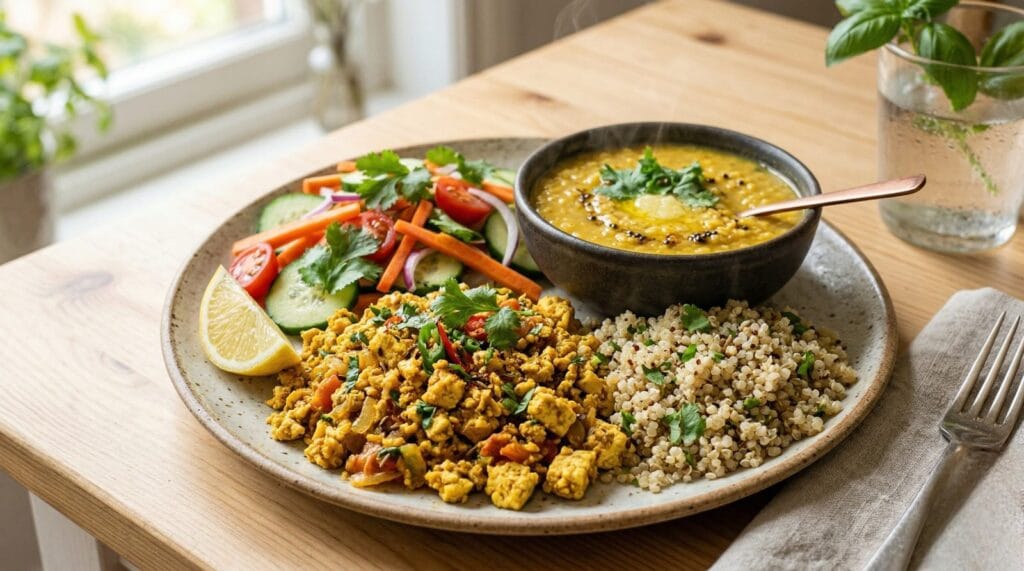
This recipe focuses on a high protein vegetarian Indian meal that combines paneer, moong dal, and quinoa to deliver a complete amino acid profile. It is ideal for a muscle building Indian diet, offering sustained energy, improved satiety, and better metabolic health. For more structured meal ideas, explore our high protein meals collection.
Unlike conventional high-protein diets that rely on expensive supplements, Indian meals can achieve protein targets using affordable, locally available ingredients. This recipe is designed for PAN India households as well as the global Indian diaspora, ensuring simplicity, taste, and nutritional accuracy. You can also explore our 7-day Indian weight loss diet plan to integrate such meals into a full weekly routine.
✔ Fitness enthusiasts and gym-goers building muscle on a vegetarian Indian diet
✔ Working professionals needing a high-satiety, affordable protein meal
✔ Home cooks wanting to increase daily protein without supplements
✔ Anyone on a weight management plan looking for calorie-controlled protein meals
A high protein Indian meal includes foods like paneer, dal, eggs, or chicken combined with grains or millets to deliver 20–35g protein per serving. This paneer bhurji with dal and quinoa combination provides 32.4g protein per serving, balanced amino acids, sustained energy, and improved satiety — using affordable Indian ingredients at ₹115 per serving.
Ingredients (Serves 2)
For Paneer Bhurji
- Paneer — 200g
- Onion — 100g, finely chopped
- Tomato — 100g, finely chopped
- Green chilli — 5g
- Ginger — 10g
- Oil — 10g
- Turmeric powder — 2g
- Red chilli powder — 2g
- Salt — 5g
For Moong Dal
- Yellow moong dal (raw) — 80g
- Water — 240ml
- Oil for tempering — 5g
- Cumin seeds — 2g
- Garlic — 5g
- Salt — 4g
For Quinoa
- Quinoa (raw) — 100g
- Water — 250ml
- Salt — 2g
Salad (Optional)
- Cucumber — 100g
- Carrot — 50g
- Lemon juice — 10g
Step-by-Step Cooking Instructions
Step 1: Cook Quinoa
- Wash quinoa thoroughly under running water to remove bitterness from the outer coating.
- Add 100g quinoa with 250ml water and 2g salt in a saucepan.
- Bring to a full boil on high flame, then reduce to the lowest flame and cover tightly.
- Cook for 12–15 minutes until fluffy and all water is fully absorbed.
- Remove from heat, let rest for 2 minutes, then fluff with a fork and set aside.
Step 2: Prepare Moong Dal
- Wash and soak moong dal in cold water for 10 minutes to reduce cooking time.
- Drain and pressure cook with 240ml fresh water for 2 whistles on medium flame.
- Heat 5g oil in a wide pan. Add cumin seeds and wait until they splutter.
- Add minced garlic and cook for 30 seconds. Add cooked dal and salt.
- Simmer on low flame for 5 minutes, stirring once. Remove from heat.
Step 3: Make Paneer Bhurji
- Heat 10g oil in a wide pan on medium flame.
- Add finely chopped onion and sauté until golden brown, around 4–5 minutes.
- Add minced ginger, green chilli, and chopped tomato. Mix well.
- Add turmeric and red chilli powder. Stir and cook for 2 minutes.
- Cook until tomato softens completely and oil separates from the masala.
- Crumble paneer evenly into the pan and mix gently into the masala.
- Cook for 5 minutes on medium heat, stirring occasionally. Remove from heat.
Step 4: Assemble the Meal
- Plate cooked quinoa as the base in a wide bowl or plate.
- Add moong dal on the side of the quinoa.
- Spoon paneer bhurji on top or alongside.
- Add fresh salad of sliced cucumber, grated carrot, and a squeeze of lemon juice.
- Serve immediately for best taste and maximum nutrient retention.
Why This High Protein Meal Works
1. Complete Protein from Three Sources
This meal combines paneer (complete dairy protein), moong dal (plant protein rich in lysine), and quinoa (one of the few plant foods with all 9 essential amino acids). Together they provide 32.4g protein per serving — more than many non-vegetarian meals — with a well-rounded amino acid profile.
2. Sustained Energy Without Spikes
Quinoa has a lower glycaemic index than white rice, moong dal provides slow-digesting carbohydrates, and paneer has virtually zero carbohydrates. This combination supports steady blood glucose levels after eating — avoiding the mid-afternoon energy crash common with carb-heavy Indian meals.
3. High Satiety at Controlled Calories
At 612 kcal per serving with 32.4g protein and 6.8g fibre, this meal keeps you full for 4–5 hours. Protein and fibre are the two nutrients most strongly linked to satiety — this meal provides both in meaningful quantities, making it a practical choice for anyone managing daily calorie intake.
4. Affordable Without Supplements
At ₹115 per serving (approx, current market rates), this meal delivers over 32g protein — which is comparable to a single serving of most commercial whey protein powders that cost ₹150–₹300 per serving. The difference is that this meal also provides fibre, complex carbohydrates, and micronutrients that no supplement can match.
Nutrition Information (Per Serving)
Source: ICMR-NIN IFCT 2017 & USDA FoodData Central. Values are approximate per serving.
| Nutrient | Value per Serving |
|---|---|
| Calories | 612 kcal |
| Protein | 32.4 g |
| Carbohydrates | 58.6 g |
| Fat | 26.2 g |
| Fibre | 6.8 g |
| Sodium | 640 mg |
Allergen Information
Contains: Dairy (paneer).
Free from: Gluten, Eggs, Fish, Shellfish, Soy, Tree nuts, Peanuts, Sesame.
FSSAI Label: Vegetarian ▲ | 612 kcal per serving | Contains Dairy | Prepared under hygienic conditions as per FSSAI guidelines.
Food Safety Notes (FSSAI Aligned)
- Use fresh paneer stored below 5°C before cooking.
- Ensure dal is fully cooked — no undercooked legume risk.
- Consume immediately after preparation or refrigerate within 2 hours.
- Refrigerated leftovers are safe for up to 24 hours. Reheat thoroughly to above 70°C before consuming.
- Do not reuse cooking oil from a previous batch.
Cost Breakdown (2 Servings)
| Ingredient | Quantity | Market Rate | Cost (₹) |
|---|---|---|---|
| Paneer | 200g | ₹300/kg | ₹60.00 |
| Yellow moong dal | 80g | ₹120/kg | ₹9.60 |
| Quinoa | 100g | ₹700/kg | ₹70.00 |
| Vegetables & spices | — | — | ₹20.00 |
| Oil & overhead (15%) | — | — | ₹21.00 |
| Total (2 servings) | — | — | ₹230.60 |
| Cost per serving | — | — | ₹115 |
Protein Comparison: How This Meal Ranks
This vegetarian meal delivers more protein per serving than many traditional Indian meals. For a grain-based alternative with strong nutritional value, explore our millet diet plan for weight loss.
| Meal | Protein per Serving |
|---|---|
| This Meal (Paneer + Dal + Quinoa) | 32.4 g |
| Chicken Curry + Rice | 28 g |
| Paneer Paratha | 14 g |
| 2 Roti + Dal | 12 g |
| Veg Pulao | 8 g |
| Plain Rice + Sabzi | 5 g |
Practical Tips for Better Results
| Tip | Why It Works |
|---|---|
| Combine dal + dairy protein sources | Dal is high in lysine but low in methionine. Paneer provides both — together they create a complete amino acid profile stronger than either alone |
| Control oil quantity at 10–15g | Each additional 5g oil adds ~45 kcal without any protein benefit — keeping oil minimal maintains the calorie efficiency of this meal |
| Always add salad with lemon | Vitamin C from lemon juice improves iron absorption from moong dal by 2–3× — a free nutritional upgrade that costs under ₹2 |
| Use fresh paneer stored below 5°C | Fresh paneer has better protein density and lower acidity than stored paneer — check the pack date before buying |
| Rotate with other high protein breakfasts | Dietary variety prevents micronutrient gaps — see our high protein Indian breakfast recipes for morning meal ideas |
Common Mistakes to Avoid
| Mistake | Why It Reduces Results |
|---|---|
| Using too much oil in bhurji | Excess oil adds hidden calories — each extra tablespoon adds 90 kcal without any nutritional gain |
| Skipping quinoa rinsing | Quinoa has a natural bitter coating (saponin) that causes digestive discomfort if not washed off thoroughly before cooking |
| Using packaged paneer near expiry | Old paneer breaks down during cooking, loses texture, and may carry higher bacterial load — always check the date |
| Eating only once a day for protein | The body can only absorb ~25–35g protein per meal efficiently — spread protein across 3 meals for maximum utilisation |
Frequently Asked Questions
💪 Add this to your weekly meal rotation.
Explore more ICMR-NIN backed recipes in our complete high protein meals collection.
Conclusion
This high protein Indian meal is a practical and affordable way to improve daily nutrition without relying on supplements. It delivers over 32g protein per serving while maintaining authentic Indian taste, using widely available ingredients at ₹115 per serving.
Whether your goal is muscle building, better energy, or healthier everyday eating, this paneer, dal, and quinoa combination fits seamlessly into Indian kitchens across the country. It outperforms most traditional Indian meals in protein content while remaining vegetarian, gluten-free, and genuinely satisfying.
Explore more recipes in our high protein meals collection, our weight loss recipes, and our complete Indian nutrition guides to build a sustainable, balanced diet routine rooted in Indian food.
Commercial Consulting · GrowRain
Menu Engineering & FSSAI-Compliant Nutrition Labeling for Food Businesses
Are you a restaurant owner, cloud kitchen operator, or hospital dietary manager looking to build high-protein, scientifically validated menus? GrowRain’s commercial consulting team works directly with food service businesses to:
- Design ICMR-NIN aligned, high-protein menu items for institutional and commercial kitchens
- Generate FSSAI-compliant nutrition labels for packaged meals, tiffin services, and cloud kitchen products
- Conduct calorie and macro audits of existing menus to identify gaps and upgrade opportunities
- Develop patient meal plans for hospitals, clinics, and rehabilitation centres based on RDA guidelines
- Provide cost-per-gram-protein analysis to improve margins without compromising nutritional quality
All consulting outputs are backed by ICMR-NIN IFCT 2017 data and comply with FSSAI Food Safety and Standards (Labelling and Display) Regulations 2020.
Nutrition Disclaimer: All nutrition values are approximate estimates based on ICMR-NIN Indian Food Composition Tables (IFCT) 2017 and USDA FoodData Central. Individual values may vary based on ingredient brands, cooking methods, and portion sizes. This article is for general informational purposes only and does not constitute medical or dietary advice. Consult a registered dietitian or doctor for personalised nutrition guidance.
🌿 GrowRain.com — Practical Nutrition & Recipe Platform | ICMR-NIN Sourced Data | Serving All of India