
Category: Immunity & Wellness Foods |
Foods Listed: 10 |
Diet: Vegetarian & Non-Veg options |
Calories per serving: 8–200 kcal depending on food |
Key Nutrients: Vitamin C, Protein, Probiotics, Zinc, Antioxidants, Vitamin E |
Daily Cost: ₹20–₹80/day (approx, current market rates) |
Data Source: ICMR-NIN IFCT 2017 & USDA FoodData Central
Introduction
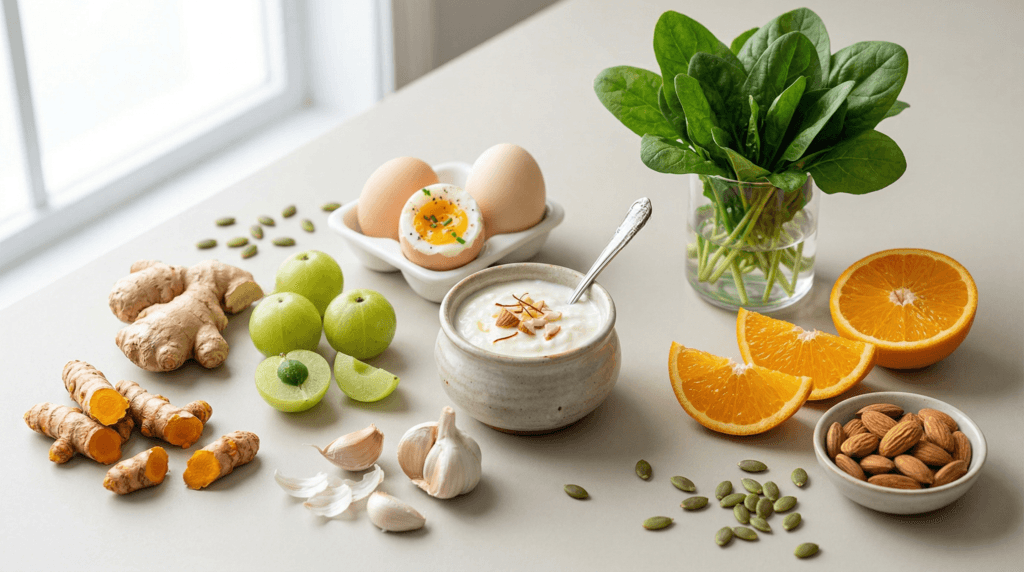
Immunity boosting foods in India are everyday ingredients — amla, turmeric, garlic, curd, eggs, and more — that provide vitamin C, protein, probiotics, zinc, and antioxidants to support normal immune function through consistent, balanced Indian meals.
If you often catch colds, feel fatigued, or notice slow recovery after illness, your daily diet may be lacking key nutrients that the immune system depends on. The good news is that Indian food traditions have always included these nutrients — they are present in ingredients your kitchen already has. The problem is not awareness, it is consistency. Most people know amla is good for them but consume it once a week instead of daily.
This guide gives you the top 10 immunity boosting foods available across India with exact serving sizes, per-serving nutrition values, practical ways to consume each, cost in ₹, and allergen information. Every value is sourced from ICMR-NIN IFCT 2017 or USDA FoodData Central. For more ideas on building a complete immune-supporting diet, explore our immunity and wellness foods collection.
This guide does not make medical claims. These foods support normal immune function as part of a balanced diet — not as treatment or cure for any condition.
Explore more: All Indian Recipes | Nutrition Guides | High Protein Indian Meals | Weight Loss Recipes
✔ People who fall sick frequently and want to improve immunity through food
✔ Indian households looking for affordable, practical daily immune support
✔ Parents building stronger nutrition habits for their children — see our kids lunch box ideas for practical school meal combinations
✔ Working adults with high stress and low energy looking for food-based solutions
✔ Anyone managing recovery after illness or seasonal health dips
Immunity boosting foods in India include amla, turmeric, garlic, ginger, curd, spinach, almonds, eggs, orange, and pumpkin seeds — everyday ingredients providing vitamin C, probiotics, zinc, and antioxidants at ₹20–₹80/day. Based on ICMR-NIN IFCT 2017 data, regular daily inclusion supports normal immune function without expensive supplements.
Why These Foods Matter for Immunity
1. Your Immune System Runs on Specific Nutrients
The immune system requires a continuous supply of vitamin C, protein, zinc, iron, and vitamin E to produce and maintain immune cells. A single week of poor nutrition visibly reduces immune response — not as a medical claim, but as established nutritional science backed by ICMR-NIN guidelines.
2. Indian Foods Are Naturally Rich in These Nutrients
Traditional Indian ingredients — amla, curd, dal, turmeric, garlic — were used in Indian kitchens long before the word “superfood” existed. They are affordable, seasonal, widely available, and provide exactly the nutrients the immune system needs. The challenge is consistency, not availability.
3. Gut Health Is the Foundation of Immune Health
A significant portion of immune activity is linked to gut health — gut-associated lymphoid tissue (GALT) is one of the largest immune organs in the body. Probiotic foods like curd and fermented foods support gut microbiome diversity, which directly improves immune response — making curd one of the most important daily habits for immunity in Indian diets.
4. No Supplement Can Replace Whole Food Nutrients
Vitamin C from amla is absorbed differently and more completely than vitamin C from a supplement tablet — because whole foods contain co-factors (bioflavonoids, enzymes) that improve absorption. This is why food-first nutrition is recommended by ICMR-NIN over supplementation for the general Indian population. To build a full nutrition plan, explore our Indian nutrition guides.
Top 10 Immunity Boosting Foods in India
All nutrition values are approximate per serving. Source: ICMR-NIN IFCT 2017 & USDA FoodData Central.
1. Amla (Indian Gooseberry)
~30 kcal | Serving: 1 medium (~50g) | Cost: ₹5–10
| Nutrient | Per Serving (50g) | Why It Matters |
|---|---|---|
| Vitamin C | ~300 mg | Supports antioxidant processes and normal immune cell production |
| Calories | ~30 kcal | Very low calorie — easy to include daily without calorie impact |
| Fibre | ~1.5g | Supports gut health and digestive regularity |
How to consume: Raw amla with salt and chilli, fresh amla juice (no sugar), amla chutney, or murabba. Fresh amla is available October–March; use amla powder year-round.
📆 Cost: ₹5–₹10 per amla, approx, current market rates.
⚠️ Allergens: None of the 14 FSSAI listed allergens.
💡 Tip: Consume amla in the morning on an empty stomach for maximum absorption. Avoid cooking amla at high heat — vitamin C degrades above 70°C. Raw or lightly cooked is best.
2. Turmeric (Haldi)
~8 kcal | Serving: ½ tsp (~2g) | Cost: ₹2–4
| Nutrient | Per Serving (2g) | Why It Matters |
|---|---|---|
| Curcumin | ~30–60 mg | Supports antioxidant and anti-inflammatory processes in the body |
| Calories | ~8 kcal | Negligible calorie addition to any meal |
| Iron | ~0.2 mg | Trace amounts contribute to daily iron intake |
How to consume: Add ½ tsp to dal, sabzi, or rice daily. Haldi milk (golden milk) with warm low-fat milk before bed. Always combine with a pinch of black pepper — piperine in pepper increases curcumin absorption by up to 20×.
📆 Cost: ₹2–₹4 per serving, approx, current market rates.
⚠️ Allergens: None of the 14 FSSAI listed allergens.
💡 Tip: The black pepper + turmeric combination is the single highest-impact daily habit in this entire list. Add both to any dal, curry, or warm milk — it costs under ₹1 per day.
3. Garlic (Lehsun)
~9 kcal | Serving: 2 cloves (~6g) | Cost: ₹3–5
| Nutrient | Per Serving (6g) | Why It Matters |
|---|---|---|
| Allicin | Active on crush | Supports immune activation — releases only when clove is crushed |
| Calories | ~9 kcal | Very low calorie — standard cooking quantity |
| Zinc | ~0.06 mg | Trace zinc contribution alongside allicin activity |
How to consume: Crush 2 cloves and wait 10 minutes before use. Add to dal tadka, sabzi, or consume raw in the morning. Do not microwave raw garlic — allicin deactivates above 60°C.
📆 Cost: ₹3–₹5 per serving, approx, current market rates.
⚠️ Allergens: None of the 14 FSSAI listed allergens.
💡 Tip: The crush-and-wait method is essential. Allicin is a volatile compound — it only forms when the cell walls are broken. Whole or uncrushed garlic has minimal immune activity.
4. Ginger (Adrak)
~8 kcal | Serving: 1 tsp (~10g) | Cost: ₹3–5
| Nutrient | Per Serving (10g) | Why It Matters |
|---|---|---|
| Gingerols | Active compounds | Supports anti-inflammatory and antioxidant processes |
| Calories | ~8 kcal | Negligible calorie impact |
| Zinc | ~0.07 mg | Small zinc contribution alongside gingerol activity |
How to consume: Fresh ginger in morning tea or warm water, grated into dal or sabzi, or ginger-lemon-honey drink. Use fresh ginger — dried ginger powder has lower gingerol content.
📆 Cost: ₹3–₹5 per serving, approx, current market rates.
⚠️ Allergens: None of the 14 FSSAI listed allergens.
💡 Tip: The garlic + ginger + turmeric combination in a single dal or sabzi covers three major immune-supporting compounds in one meal at a total additional cost of under ₹5.
5. Curd / Dahi (Plain, Low-Fat)
~60 kcal | Serving: 100g | Cost: ₹10–15
| Nutrient | Per Serving (100g) | Why It Matters |
|---|---|---|
| Probiotics | Live cultures | Supports gut microbiome diversity and GALT immune response |
| Protein | ~3.5g | Contributes to daily protein for immune cell production |
| Calcium | ~120 mg | Supports bone health and cellular signalling |
| Calories | ~60 kcal | Low calorie, high nutritional density |
How to consume: Plain curd with lunch or dinner, raita with minimal seasoning, or lassi without sugar. Always choose plain, unsweetened curd — added sugar in flavoured yoghurt feeds harmful gut bacteria and reduces the net probiotic benefit.
📆 Cost: ₹10–₹15 per 100g serving, approx, current market rates.
⚠️ Allergens: Contains Milk (dairy) — one of the 14 FSSAI listed allergens.
💡 Tip: Daily curd is the single most impactful habit for gut-mediated immune support. GALT (gut-associated lymphoid tissue) is one of the body’s largest immune organs — consistent probiotic intake directly supports its activity.
6. Spinach (Palak)
~23 kcal | Serving: 75g cooked | Cost: ₹8–12
| Nutrient | Per Serving (75g cooked) | Why It Matters |
|---|---|---|
| Iron (non-haem) | ~3.1 mg | Essential for haemoglobin and immune cell oxygen transport |
| Folate | ~130 mcg | Supports immune cell production and DNA repair |
| Vitamin C | ~14 mg | Enhances iron absorption when consumed together |
| Calories | ~23 kcal | Very low calorie, nutrient-dense |
How to consume: Palak dal, palak paneer, lightly sautéed palak sabzi, or spinach added to roti dough. Always squeeze lemon on spinach — vitamin C increases non-haem iron absorption by 2–3×. Do not overcook.
📆 Cost: ₹8–₹12 per 75g cooked serving, approx, current market rates.
⚠️ Allergens: None of the 14 FSSAI listed allergens.
💡 Tip: Spinach + lemon is one of the highest-impact combinations in Indian cooking for iron absorption. Spinach iron alone has low bioavailability — lemon changes this significantly at zero extra cost.
7. Almonds (Badam)
~58 kcal | Serving: 10g (~8–9 almonds) | Cost: ₹12–18
| Nutrient | Per Serving (10g) | Why It Matters |
|---|---|---|
| Vitamin E | ~2.6 mg | Fat-soluble antioxidant — protects immune cells from oxidative damage |
| Protein | ~2.1g | Contributes to daily protein intake |
| Healthy Fats | ~5g (monounsaturated) | Required for absorption of fat-soluble vitamins including vitamin E |
| Calories | ~58 kcal | Moderate calorie — portion control matters |
How to consume: Dry-roasted almonds as a mid-day snack. Soak overnight for improved digestibility. Avoid salted, sugar-coated, or honey-roasted almonds.
📆 Cost: ₹12–₹18 per 10g serving, approx, current market rates.
⚠️ Allergens: Contains Tree Nuts (almonds) — one of the 14 FSSAI listed allergens.
💡 Tip: Vitamin E is a fat-soluble vitamin — it requires dietary fat for absorption. Almonds naturally contain the fat needed for their own vitamin E to absorb, making them a self-contained immunity snack.
8. Eggs (Anda)
~155 kcal | Serving: 2 whole eggs (~100g) | Cost: ₹12–18
| Nutrient | Per Serving (2 eggs, ~100g) | Why It Matters |
|---|---|---|
| Protein | ~13g (complete) | All essential amino acids — directly supports antibody and immune cell production |
| Zinc | ~1.3 mg | Supports T-cell function and immune signalling |
| Vitamin D | ~2 mcg | Supports immune cell regulation |
| Calories | ~155 kcal | Moderate calorie, high satiety value |
How to consume: Boiled or poached eggs are best. Scrambled with minimal oil is acceptable. Avoid deep-fried egg preparations — fat content significantly increases with frying.
📆 Cost: ₹12–₹18 for 2 eggs, approx, current market rates.
⚠️ Allergens: Contains Eggs — one of the 14 FSSAI listed allergens.
💡 Tip: Eggs provide the highest-quality, most affordable complete protein available in the Indian food market. Antibodies are proteins — eggs directly supply the raw material the immune system needs to function.
9. Orange (Santra / Narangi)
~62 kcal | Serving: 1 medium (~120g) | Cost: ₹10–15
| Nutrient | Per Serving (120g) | Why It Matters |
|---|---|---|
| Vitamin C | ~60 mg | 150% of ICMR-NIN adult RDA (40mg/day) in a single orange |
| Flavonoids | Hesperidin, Naringenin | Co-factors that enhance vitamin C absorption and antioxidant activity |
| Fibre | ~2.4g | Supports gut health and microbiome diversity |
| Calories | ~62 kcal | Low to moderate calorie — diabetics should monitor intake |
How to consume: Eat whole orange rather than juice — whole fruit retains fibre and has lower glycaemic impact. Available November–March in most Indian markets.
📆 Cost: ₹10–₹15 per medium orange, approx, current market rates.
⚠️ Allergens: None of the 14 FSSAI listed allergens.
💡 Tip: Eat the orange whole. Juicing removes fibre and increases the glycaemic impact significantly — whole fruit is always the preferred form for blood sugar management.
10. Pumpkin Seeds (Kaddu ke Beej)
~57 kcal | Serving: 10g | Cost: ₹8–12
| Nutrient | Per Serving (10g) | Why It Matters |
|---|---|---|
| Zinc | ~0.7 mg | Supports T-cell immune function and wound healing |
| Vitamin E | ~0.2 mg | Fat-soluble antioxidant protecting immune cell membranes |
| Protein | ~3g | Plant protein contribution to daily intake |
| Calories | ~57 kcal | Moderate calorie — small serving is sufficient |
How to consume: Dry-roasted as a snack, sprinkled on dal or salad, or mixed into roti dough. Avoid heavily salted commercial pumpkin seed products.
📆 Cost: ₹8–₹12 per 10g serving, approx, current market rates.
⚠️ Allergens: None of the 14 FSSAI listed allergens. (Manufactured alongside nut products — check label for cross-contamination if allergic.)
💡 Tip: Pumpkin seeds are one of the most concentrated plant-based zinc sources available in Indian markets at low cost — making them an ideal add-on for vegetarians who cannot get zinc from eggs or meat.
Summary: All 10 Immunity Boosting Foods at a Glance
| # | Food | Serving | Key Nutrient | Calories | Cost ₹ | Allergen |
|---|---|---|---|---|---|---|
| 1 | Amla | 50g (1 medium) | Vitamin C ~300mg | ~30 | ₹5–10 | None |
| 2 | Turmeric | 2g (½ tsp) | Curcumin ~30–60mg | ~8 | ₹2–4 | None |
| 3 | Garlic | 6g (2 cloves) | Allicin (on crush) | ~9 | ₹3–5 | None |
| 4 | Ginger | 10g (1 tsp) | Gingerols | ~8 | ₹3–5 | None |
| 5 | Curd | 100g | Probiotics + Protein 3.5g | ~60 | ₹10–15 | Dairy |
| 6 | Spinach | 75g cooked | Iron 3.1mg + Folate 130mcg | ~23 | ₹8–12 | None |
| 7 | Almonds | 10g (~8–9) | Vitamin E 2.6mg | ~58 | ₹12–18 | Tree Nuts |
| 8 | Eggs | 2 whole (~100g) | Protein 13g + Zinc 1.3mg | ~155 | ₹12–18 | Eggs |
| 9 | Orange | 1 medium (~120g) | Vitamin C 60mg | ~62 | ₹10–15 | None |
| 10 | Pumpkin Seeds | 10g | Zinc 0.7mg + Protein 3g | ~57 | ₹8–12 | None |
| Combined Daily Total (all 10 foods) | ~470 kcal | ₹73–114 | See above | |||
How to Build the Immunity Habit — Daily Schedule
| Time | Food / Action | Why |
|---|---|---|
| Morning (empty stomach) | Raw amla + crushed garlic (10 min rest) | Maximum vitamin C and allicin absorption before food |
| Breakfast | Ginger tea + 100g plain curd + 2 boiled eggs | Probiotics + protein foundation for the day |
| Lunch | Turmeric + black pepper in dal + palak sabzi with lemon | Curcumin activation + iron absorption boost |
| Mid-day snack | 10g almonds + 1 orange | Vitamin E + vitamin C mid-day antioxidant boost |
| Dinner | 10g pumpkin seeds on dal or salad | Zinc + plant protein to support overnight immune repair |
5 Practical Tips to Maximise Immunity from These Foods
| Tip | Science Behind It |
|---|---|
| Include 1 immunity food at every main meal | Consistency matters more than quantity — daily small doses of amla, garlic, and curd compound into meaningful immune support over weeks |
| Pair vitamin C foods with iron-rich foods | Lemon on palak, orange with dal — vitamin C increases non-haem iron absorption by 2–3×, directly improving immune cell production |
| Drink 2.5–3 litres of water daily | Immune cells travel through the lymphatic system, which depends on hydration — dehydration reduces lymphatic flow and immune response speed |
| Maintain 7–8 hours of sleep | Immune repair processes are most active during deep sleep — even one night of poor sleep measurably reduces immune response within 24 hours |
| Add protein to every meal | Antibodies and immune cells are made of protein — insufficient protein intake directly reduces the immune system’s ability to respond to threats |
Common Mistakes That Reduce Immunity
| Mistake | How It Harms Immunity |
|---|---|
| Relying on supplements instead of whole foods | Supplements lack the co-factors (bioflavonoids, enzymes) in whole foods that improve absorption — food-first is always more effective |
| Eating amla or garlic only when sick | Immunity is built over weeks, not days — starting these foods only when ill provides no benefit; consistent daily inclusion is what matters |
| Heating amla or drinking boiled amla juice | Vitamin C in amla degrades above 70°C — always consume raw or at room temperature for maximum benefit |
| Consuming sweetened curd or flavoured yoghurt | Added sugar in flavoured curd feeds harmful gut bacteria and reduces the net probiotic benefit — always consume plain curd |
| Low protein diet — only eating sabzi and roti | Antibodies are proteins — without adequate daily protein (0.8–1g per kg body weight per ICMR-NIN guidelines), immune response is structurally limited |
Frequently Asked Questions
🌿 Start today — add at least 3 of these foods to your meals this week.
Explore our complete immunity and wellness foods collection to build a balanced, consistent immune-supporting diet.
Conclusion
Building immunity through everyday Indian foods is both practical and affordable. The 10 immunity boosting foods in this guide — amla, turmeric, garlic, ginger, curd, spinach, almonds, eggs, orange, and pumpkin seeds — are available at every Indian market, cost ₹40–₹80 per day combined, and provide exactly the nutrients the immune system needs to function well.
The key principle is consistency over quantity. Including 3–5 of these foods daily — amla in the morning, garlic and turmeric in cooking, curd with meals, and spinach at dinner — creates a cumulative nutritional foundation that reduces frequency of illness and supports faster recovery over time. Start with 2–3 foods and gradually build the habit across 4–6 weeks. For a complete structured approach, our 7-day Indian weight loss diet plan shows exactly how to build these foods into every daily meal.
You can also explore our complete immunity and wellness foods collection and our Indian nutrition guides for more practical, ICMR-NIN backed health guidance.
Explore more practical Indian recipes and nutrition guides on GrowRain to build sustainable eating habits that work for Indian lifestyles and Indian kitchens.
🌿 Commercial Consulting — For Restaurants, Cloud Kitchens & Healthcare Facilities
Menu Engineering · FSSAI-Compliant Labeling · Clinical Nutrition Planning
Are you a restaurant owner, cloud kitchen operator, or hospital dietary manager looking to build immunity-focused, ICMR-NIN aligned menus that meet FSSAI 2024 labeling standards and attract health-conscious customers?
🍽️ Restaurant & Cloud Kitchen Owners
Add ICMR-NIN backed immunity bowls, wellness thalis, and low-GI options to your menu. We provide nutritional analysis, per-dish calorie and protein data, and FSSAI-compliant allergen labeling for each item.
🏥 Hospital & Healthcare Facility Managers
Develop clinical diet plans for patient meals that meet ICMR-NIN RDA requirements for immunity, recovery, and chronic disease management. FSSAI Schedule 4 compliant documentation included.
📋 FSSAI-Compliant Nutrition Labeling
Mandatory FSSAI nutrition labeling for packaged food businesses, QSRs, and institutional caterers. We prepare compliant labels with per-100g and per-serving data per FSSAI Food Safety and Standards Regulations.
GrowRain’s commercial consulting services combine ICMR-NIN sourced nutritional data with practical Indian kitchen knowledge to help food businesses build menus that are both commercially competitive and nutritionally credible.
Medical & Nutrition Disclaimer: This guide provides general nutrition information based on ICMR-NIN IFCT 2017 and USDA FoodData Central data. Nutrition values are approximate per serving. These foods support normal immune function as part of a balanced diet — this is not medical advice and does not constitute treatment or cure for any medical condition. Individual nutritional needs vary based on age, health status, and medical conditions. Consult a qualified doctor or registered dietitian before making significant dietary changes, especially if you have diabetes, hypertension, kidney disease, allergies, or any other chronic condition.
🌿 GrowRain.com — Practical Nutrition & Recipe Platform | ICMR-NIN Sourced Data | Serving All of India