
Category: Diabetic Recipes |
Type: Low GI Indian flatbread |
Serves: 2 (4 rotis) |
Calories: ~210 kcal per serving (2 rotis) |
Key Nutrients: Fiber ~6g, Protein ~6.8g, Iron ~2.8mg, Magnesium ~60mg |
Estimated GI: 50–56 (Low GI) |
Cost: ₹10–14 per serving (approx, current market rates) |
Data Source: ICMR-NIN IFCT 2017 & USDA FoodData Central
Introduction
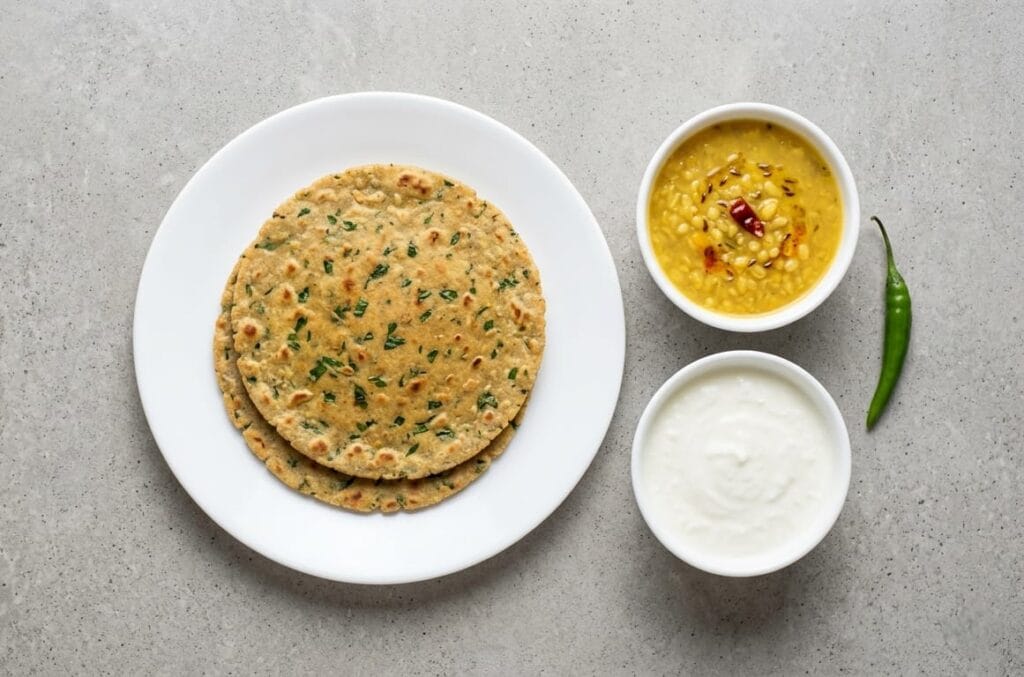
Methi bajra roti is a low glycemic index Indian flatbread made from pearl millet flour (bajra) and fresh fenugreek leaves (methi). It has an estimated GI of 50–56, provides approximately 6g of dietary fiber per serving, and is a practical everyday alternative to wheat roti for people managing diabetes or following a low GI Indian diet.
For the 77 million Indians living with diabetes — and the many more with pre-diabetes — one of the most impactful daily decisions is what kind of roti goes on the plate. Regular wheat roti has a glycemic index of 62–70, meaning it causes relatively fast glucose absorption. Switching to a low GI roti like methi bajra is a concrete, practical change that requires no expensive ingredients and no special cooking equipment.
Bajra (pearl millet) has a GI of approximately 54 per ICMR-NIN research — placing it in the low GI category. When combined with methi leaves, which contain soluble fiber and compounds that may support insulin sensitivity, the resulting flatbread offers a meaningful nutritional upgrade over plain wheat roti. For more recipes in this category, explore our diabetic-friendly recipes.
This recipe is not a medical intervention — it is a practical everyday food choice. All values in this guide are sourced from ICMR-NIN IFCT 2017 and USDA FoodData Central. This guide does not make medical claims. These foods support normal glucose management as part of a balanced diet — not as treatment or cure for any condition.
Explore more: All Indian Recipes | Millet Recipes | Nutrition Guides | Weight Loss Recipes
✔ People managing Type 2 diabetes or pre-diabetes who want a practical low GI roti option
✔ Anyone following a low GI or reduced carbohydrate Indian eating pattern
✔ People looking for a high-fiber daily flatbread to improve satiety and digestive health
✔ Home cooks who want a traditional, affordable, nutrient-rich alternative to wheat roti
✔ Those managing weight alongside blood sugar — see our weight loss recipes for complementary meal ideas
Methi bajra roti is a low GI Indian flatbread made from pearl millet flour and fenugreek leaves with an estimated glycemic index of 50–56. It provides approximately 6g fiber and 6.8g protein per serving of 2 rotis. Based on ICMR-NIN IFCT 2017 data, it releases glucose more slowly than standard wheat roti and is a practical daily option for people managing diabetes in India.
Why Roti Choice Matters for Blood Sugar Management
1. Glycemic Index Directly Affects Post-Meal Glucose Response
When carbohydrates are digested, glucose enters the bloodstream. The speed of this process depends on the food’s glycemic index. High GI foods (wheat, maida) cause a rapid spike; low GI foods (bajra, oats, lentils) release glucose progressively. For people with insulin resistance or Type 2 diabetes, a slower glucose rise reduces the demand on the pancreas and supports better long-term glucose control — as established in ICMR-NIN dietary recommendations for diabetes management.
2. Bajra Is India’s Original Low GI Grain
Bajra (pearl millet) has been cultivated in India for over 3,000 years, primarily in Rajasthan, Gujarat, and Maharashtra. Before wheat became the dominant grain, bajra was a staple across much of India precisely because it grew well in dry climates and provided sustained energy. Its fiber content of approximately 1.2g per roti and its mineral profile — particularly magnesium, which plays a role in glucose metabolism — make it nutritionally superior to refined wheat flour for people with metabolic concerns.
3. Methi Adds a Second Layer of Nutritional Support
Fenugreek (methi) contains soluble fiber — particularly galactomannan — which slows carbohydrate digestion in the small intestine. Research published in peer-reviewed nutrition journals suggests fenugreek consumption may support normal insulin sensitivity, though individual responses vary significantly. Adding fresh methi to bajra dough increases the fiber density of each roti and adds iron, folate, and bitter compounds that are part of traditional Indian dietary wisdom. This is not a therapeutic claim — it is a practical nutritional reason to choose methi bajra over plain bajra or wheat.
4. What You Eat With the Roti Matters As Much as the Roti Itself
The glycemic response of any meal is influenced by what is consumed together. Pairing methi bajra roti with a protein source (dal, curd, egg, paneer) and fiber-rich vegetables further reduces the overall glycemic load of the meal. This is why this recipe recommends specific pairings — not as decoration, but as a functionally important part of blood sugar management in the Indian context. For complete structured Indian meal plans, see our nutrition guides.
Ingredients (Serves 2 — 4 Rotis)
All quantities below are the exact amounts used for the nutrition calculations in this article. Adjust proportionally for larger batches.
| Ingredient | Quantity | Indian Measure | Notes |
|---|---|---|---|
| Bajra flour (pearl millet) | 120g | ¾ katori | Use fresh stock — stale bajra flour tastes bitter |
| Fresh methi leaves | 80g | 1 small bunch | Washed and finely chopped. Fresh preferred over dried. |
| Onion | 50g | 1 small onion | Optional — finely chopped, adds flavor |
| Green chilli | 5g | 1 small chilli | Finely chopped, adjust to tolerance |
| Ginger | 5g | ½ inch piece | Grated or very finely chopped |
| Ajwain (carom seeds) | 2g | ¼ tsp | Traditional digestive addition |
| Salt | 3–4g | ½ tsp | Adjust to taste. Use less for low-sodium diets. |
| Water | 85–95ml | Add gradually | Warm water makes dough softer and easier to handle |
| Oil or ghee | 5g | 1 tsp total | For cooking. Ghee adds traditional flavor. |
Step-by-Step Cooking Instructions
Step 1 — Prepare the Dough
In a wide mixing bowl, combine bajra flour, finely chopped methi leaves, onion (if using), green chilli, grated ginger, ajwain, and salt. Mix dry and moist ingredients together evenly before adding any water. Add warm water gradually — approximately 85–95ml total — and knead into a soft, pliable dough. Bajra dough is naturally stickier than wheat dough; this is normal and expected. Rest the dough for 5–10 minutes before shaping. Resting allows the flour to fully hydrate and makes rolling easier.
Step 2 — Shape the Rotis
Divide the dough into 4 equal portions (approximately 90g each). There are two reliable methods for shaping bajra roti. Method 1: Place each ball between two sheets of plastic wrap or a wet plastic bag and roll gently with a rolling pin. Method 2: Use wet palms to flatten each ball directly on a dry tawa surface, then transfer to heat. Bajra dough is more fragile than wheat dough and may crack slightly at edges — this does not affect cooking or taste. Aim for 5–6mm thickness for even cooking.
Step 3 — Cook on Tawa
Heat a tawa or flat pan on medium flame. If the dough is fragile, shape directly on a cold tawa and then apply heat — this prevents breaking during transfer. Cook the first side for approximately 2 minutes until the top surface begins to dry out and look opaque. Flip and cook the second side for 1–2 minutes until light golden spots appear. Apply a very small amount of ghee or oil (from the 5g allocated) while cooking. Each roti takes 3–4 minutes total. Never use high heat — bajra dries out and cracks rapidly.
Step 4 — Serve Immediately
Serve hot immediately off the tawa. Bajra roti firms as it cools and is significantly less enjoyable once cold — unlike wheat roti, it does not reheat well. Pair with moong dal, masoor dal, low-fat curd, or a vegetable sabzi. For a specifically blood sugar-aware meal combination, pair with a protein-rich accompaniment such as paneer bhurji, egg curry, or dal. The protein and fat in these foods slow the overall glycemic response of the meal. For more structured meal ideas, see our nutrition guides.
Glycemic Index (GI) Analysis
Reference: ICMR-NIN dietary guidelines for diabetes and peer-reviewed GI research on Indian millets and fenugreek.
| Roti Type | Approx GI | GI Category | Relative Impact |
|---|---|---|---|
| Maida roti (refined wheat) | 70–80 | High GI | Avoid or minimise |
| Wheat roti (atta) | 62–70 | Medium GI | Moderate, portion-controlled |
| Plain bajra roti | 54–58 | Low–Medium GI | Good daily option |
| Methi bajra roti | 50–56 | Low GI ✓ | Best daily choice for diabetes |
GI values are estimates based on standard ingredient composition from ICMR-NIN IFCT 2017. Actual GI varies by portion size, cooking method, individual digestion, and meal composition. GI values below 55 are classified as low GI per international nutritional standards. For more information on low GI Indian foods, visit our millet recipes collection.
Nutrition Information (Per Serving — 2 Rotis)
Source: ICMR-NIN IFCT 2017 and USDA FoodData Central. Calculated from exact ingredient quantities listed above. All values approximate.
| Nutrient | Per Serving (2 rotis) | Per Roti | Why It Matters |
|---|---|---|---|
| Calories | ~210 kcal | ~105 kcal | Moderate — comparable to 2 wheat rotis |
| Protein | ~6.8g | ~3.4g | Supports satiety and slows glucose release |
| Carbohydrates | ~32g | ~16g | Low GI carbs — slow glucose absorption |
| Dietary Fiber | ~6g | ~3g | Slows digestion; supports gut health |
| Fat | ~5g | ~2.5g | Mostly from cooking oil/ghee |
| Sodium | ~370mg | ~185mg | Moderate — reduce salt for low-sodium needs |
| Iron | ~2.8mg | ~1.4mg | ~16% of ICMR-NIN adult RDA (women: 21mg/day) |
| Magnesium | ~60mg | ~30mg | Supports glucose metabolism — naturally high in bajra |
All values are approximate. Actual values vary by ingredient brand, freshness, and cooking method. Iron RDA reference: ICMR-NIN Recommended Dietary Allowances for Indians (2020), adult women 19–50 years.
FSSAI Label: Vegetarian ▲ | ~210 kcal per serving (2 rotis) | No FSSAI listed allergens | Prepared under hygienic conditions as per FSSAI guidelines.
Ingredient Cost Breakdown
| Ingredient | Qty Used | Approx Cost |
|---|---|---|
| Bajra flour | 120g | ₹8–10 |
| Fresh methi | 80g | ₹6–8 |
| Onion, chilli, ginger | 60g total | ₹4–6 |
| Oil/ghee, ajwain, salt | Minimal | ₹2–4 |
| Total (4 rotis — 2 servings) | ₹20–28 total | |
| Cost per serving (2 rotis) | ₹10–14 |
Costs are approx, current market rates. Fresh methi prices vary seasonally — peak availability October–March with lower prices; use dried kasuri methi (half the quantity) in off-season months.
Why This Recipe Works
Methi bajra roti works because it addresses two aspects of blood sugar management simultaneously — the glycemic index of the carbohydrate source and the fiber density of the flatbread itself. Bajra provides a slow-release carbohydrate base. Methi adds soluble fiber that further slows carbohydrate digestion. Together, they create a flatbread that delivers approximately 6g of dietary fiber per 2-roti serving — compared to approximately 2g from 2 standard wheat rotis.
From a practical standpoint, this recipe also fits Indian home cooking without any compromise on taste, texture, or preparation time. The ingredients are inexpensive and widely available. The dough requires no rising time. The rotis cook in under 5 minutes each. And the result is a flatbread that carries traditional Indian flavors — the slight bitterness of methi, the earthiness of bajra, the warmth of ajwain — that feel familiar rather than medicinal.
This makes it a sustainable daily choice rather than a temporary dietary experiment. For more millet-based recipes with similar nutritional profiles, explore our millet recipes section, or see how these rotis can fit into a complete diet plan in our nutrition guides.
Practical Tips for Better Results
These tips apply every time you make this recipe. For complete Indian meal planning based on these principles, see our nutrition guides and diabetic recipes collection.
| Tip | Why It Matters |
|---|---|
| Use fresh methi leaves, not dried | Fresh methi contributes more soluble fiber per gram and provides better texture and flavor in the dough. If using kasuri methi (dried), use half the quantity. |
| Use warm water for kneading | Warm water makes bajra dough significantly softer and more workable — cold water results in cracking during shaping and cooking. |
| Rest dough for 10 minutes | Bajra flour takes time to fully absorb water. Resting allows hydration to complete, making rolling easier and reducing cracking. |
| Cook on medium heat, not high | High heat dries the surface before the interior cooks — resulting in a hard outer crust with undercooked, raw-tasting centre. Medium flame throughout is essential. |
| Eat immediately after cooking | Bajra roti hardens significantly as it cools. Unlike wheat roti, it does not retain softness well — always cook to order and eat fresh. |
| Pair with dal or curd at every meal | Protein alongside this roti is not optional for diabetes management — it moderates the overall glycemic response of the meal. Dal, curd, egg, or paneer are all appropriate choices. |
| Buy bajra flour fresh, in small quantities | Bajra flour turns bitter when old due to oxidation of its natural oils. Buy in quantities you will use within 2–3 weeks. Store in an airtight container in a cool, dry place. |
Common Mistakes That Affect Results
| Mistake | What Happens | Fix |
|---|---|---|
| Adding too much water at once | Dough becomes unworkably sticky and cannot be shaped | Add 2 tablespoons at a time — total 85–95ml maximum |
| Rolling too thin | Roti breaks apart during transfer to tawa or while cooking | Keep 5–6mm thickness. Bajra is not wheat — it cannot be rolled paper thin. |
| Cooking on high heat | Outside burns, inside stays raw. Roti tastes bitter. | Medium flame throughout — patience is required |
| Using old/stale bajra flour | Strong bitter taste that makes the roti unpleasant to eat | Buy fresh, use within 2–3 weeks, store airtight |
| Eating without a protein accompaniment | Loses part of the blood sugar benefit — carbs metabolise faster without protein | Always pair with dal, curd, egg, or paneer |
| Treating this as a cure for diabetes | No single food cures or reverses diabetes — this is a food choice, not medicine | Use as part of a balanced diet under dietitian guidance |
Frequently Asked Questions
🌿 Try this recipe this week — make 4 rotis, pair with moong dal and curd, and note the difference in energy levels 2 hours after eating.
Explore our complete diabetic-friendly recipes collection for more practical low GI Indian meals.
Conclusion
Methi bajra roti is one of the most practical dietary changes a person managing diabetes can make in their Indian kitchen. Its low glycemic index of 50–56, meaningful fiber content of approximately 6g per serving, and magnesium and iron from bajra make it nutritionally superior to wheat roti for blood sugar management — while remaining completely familiar in taste, preparation, and cost.
The key principle is pairing. This roti works best as the carbohydrate foundation of a balanced meal — not eaten alone, but alongside dal, curd, or another protein source that further moderates the glycemic response. Two rotis per meal, paired with protein and vegetables, represents a practical and realistic daily dietary pattern.
Start with 2 rotis and rotate with other low GI options from our millet recipes collection to maintain variety. For a complete structured dietary approach to diabetes and weight management, explore our Indian nutrition guides and our weight loss recipes for complementary meal ideas.
Always consult your doctor or registered dietitian for personalised dietary advice, especially if you are managing diabetes, hypertension, kidney disease, or any other medical condition.
GrowRain Commercial Services
Serving Low GI Menus at Scale? We Can Help.
The nutritional principles behind this recipe — low glycemic index grains, ICMR-NIN sourced data, FSSAI-compliant labeling — are increasingly relevant for commercial food operations. GrowRain works with restaurant owners, cloud kitchen operators, and hospital dietary managers to bring the same data rigour to institutional and commercial menus.
🍽 Restaurant & Cloud Kitchen Owners
Menu engineering for diabetic-friendly and low GI sections. Calorie and macronutrient labeling per dish. Compliance with FSSAI food labeling regulations for packaged and restaurant food.
🏥 Hospital & Institutional Dietetics
ICMR-NIN aligned therapeutic menu design for diabetic, renal, and cardiac wards. Standardised recipes with per-serving nutrition breakdowns for hospital kitchen use.
All consulting engagements are backed by ICMR-NIN IFCT 2017 data, FSSAI regulatory guidelines, and documented nutrition methodology — the same standards applied across every GrowRain recipe.
Medical & Nutrition Disclaimer: This article provides general nutrition and food information based on ICMR-NIN Indian Food Composition Tables (IFCT) 2017, USDA FoodData Central, and peer-reviewed GI research on Indian millets. All nutrition values are approximate per serving. Glycemic index values are estimates and individual responses vary based on portion size, cooking method, digestion, and meal composition. This article is for general educational purposes only. It does not constitute medical advice and is not a substitute for personalised guidance from a qualified doctor, registered dietitian, or diabetes educator. People with diabetes, pre-diabetes, or any other medical condition should consult their healthcare team before making dietary changes.
🌿 GrowRain.com — Practical Indian Nutrition & Recipe Platform | ICMR-NIN Sourced Data | Serving All of India