
Category: Kids Nutrition |
Age Group: 6–14 years |
Meals Listed: 10 lunch box ideas |
Calories per Meal: 220–420 kcal |
Key Nutrients: Protein, Calcium, Iron, Fibre, Zinc |
Cost per Lunchbox: ₹15–₹35 (approx, current market rates) |
Data Source: ICMR-NIN IFCT 2017 & USDA FoodData Central
Introduction
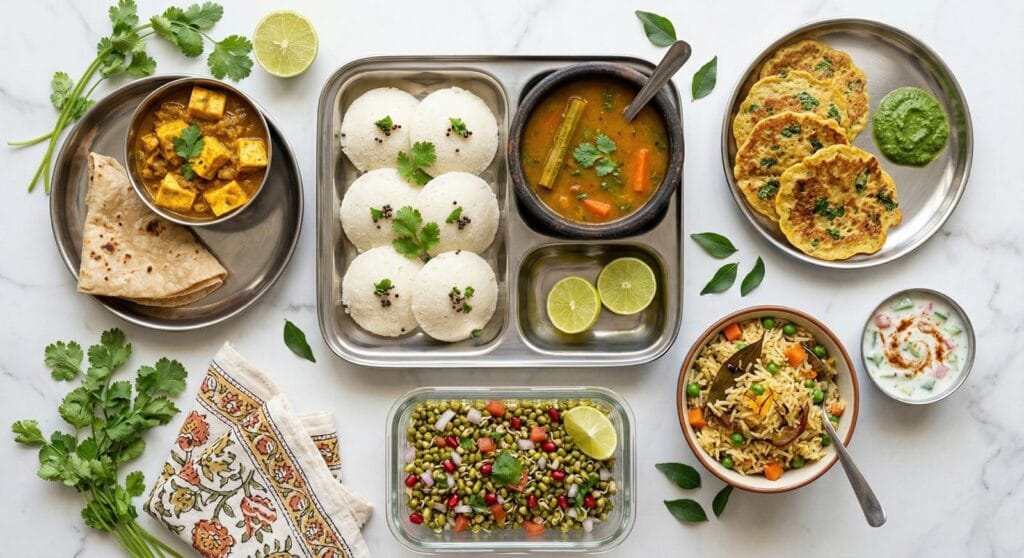
Healthy kids lunch box ideas in India are simple, balanced school meals made from everyday Indian ingredients — roti, dal, paneer, sprouts, and vegetables — that provide 220–420 kcal with adequate protein, calcium, and iron to support a child’s growth, energy, and concentration throughout the school day.
Most Indian school lunch boxes are either too carb-heavy — plain rotis with pickle, or white rice alone — or too processed, relying on packaged snacks and biscuits. Both options miss the key nutrients that school-going children need for bone development, brain function, and immunity. The good news is that a few simple ingredient swaps can turn any ordinary tiffin into a nutritionally complete school meal, without extra effort or cost.
This guide gives you 10 practical kids lunch box ideas for India with balanced ingredients, per-meal nutrition data, age-group guidance, food safety tips, and cost in ₹. All values are sourced from ICMR-NIN IFCT 2017. For a broader approach to child nutrition, explore our complete kids nutrition collection and our practical Indian nutrition guides.
This guide does not replace medical advice. For children with specific dietary requirements, allergies, or health conditions, always consult your paediatrician or registered dietitian.
Explore more: Kids Nutrition | Nutrition Guides | Immunity & Wellness Foods | All Indian Recipes
✔ Parents of school-going children aged 6–14 looking for practical, balanced tiffin ideas
✔ Mothers and caregivers managing daily lunch box preparation on a budget under ₹35
✔ Families wanting to move away from packaged snacks and processed foods in school meals
✔ Children with active schedules who need sustained energy and focus during school hours
✔ Parents of children with picky eating habits looking for familiar Indian flavours that are also nutritious
Healthy kids lunch box ideas in India include roti with paneer, moong dal cheela, vegetable pulao, sprouted moong salad, idli with sambar, and egg rice — balanced Indian meals providing 220–420 kcal with 8–18g protein per box at ₹15–₹35 per meal. Based on ICMR-NIN IFCT 2017, these meals support normal growth, bone development, and school-day concentration for children aged 6–14.
Why a Balanced School Lunch Matters for Children
1. School Lunch Covers 25–35% of Daily Nutritional Needs
ICMR-NIN guidelines recommend that the midday meal for school-going children should contribute approximately 1/3 of their daily calorie and protein requirement. A poorly planned lunch box means a child returns home nutritionally deficient — affecting energy, mood, and learning ability for the rest of the day.
2. Children’s Nutritional Needs Increase Rapidly with Age
A 6-year-old needs approximately 20g protein per day, while a 14-year-old may need 45–54g — a near-tripling within 8 years. This is why age-appropriate portioning matters. Many parents apply the same lunch box size and ingredients across ages, which leads to undernourishment for older children and possible over-feeding for younger ones.
3. Protein and Iron Directly Affect Concentration and Learning
Iron deficiency — among the most common nutritional deficiencies in Indian children — directly reduces attention span and cognitive performance, independent of anaemia. Including one iron-rich food (palak, rajma, sesame seeds, eggs) in the daily lunch box may support better focus and academic performance through consistent nutrition.
4. Affordable Indian Ingredients Cover All Key Nutrients
Dal, roti, curd, eggs, paneer, rice, and seasonal vegetables — ingredients that cost ₹15–₹35 per meal — collectively provide protein, calcium, iron, zinc, and B vitamins. No imported ingredients, protein powders, or expensive supplements are needed. Consistency with familiar Indian foods is the foundation of effective child nutrition. Explore more affordable ideas in our Indian nutrition guides.
Age-wise Nutrition Needs for School Lunch (ICMR-NIN RDA)
Values based on ICMR-NIN Recommended Dietary Allowances 2020. Lunch should provide approximately 25–35% of daily needs.
| Age Group | Daily Energy Needs | Daily Protein Needs | Ideal Lunch Calories | Best Lunch Box Focus |
|---|---|---|---|---|
| 6–8 years | 1,350–1,690 kcal | ~20g | 220–300 kcal | Moong Dal Cheela, Idli with Sambar |
| 9–11 years | 1,690–2,190 kcal | 29–39g | 300–380 kcal | Roti with Paneer, Vegetable Pulao |
| 12–14 years | 2,060–2,750 kcal | 39–54g | 350–420 kcal | Paneer Rice, Sprouts + Egg Combo |
Source: ICMR-NIN Recommended Dietary Allowances for Indians (2020). Values are approximate and vary by child’s activity level and body weight.
10 Healthy Kids Lunch Box Ideas for Indian Schools
All nutrition values are approximate estimates based on ICMR-NIN IFCT 2017 & USDA FoodData Central. Cost estimates are approx, current market rates.
1. Roti with Paneer Bhurji
[IMAGE: Roti with paneer bhurji in steel lunch box, golden scrambled paneer with tomato onion, top-view flat lay, natural daylight, Indian kitchen wooden background, 4K, no text, no watermark, 16:9]
🔥 Calories: ~380 kcal
💪 Protein: ~18g
₹ Cost: ₹25–30, approx, current market rates
What to Pack
- 2 medium rotis (60g wheat flour)
- 80g paneer, crumbled and cooked with onion, tomato, cumin, turmeric (1 tsp oil)
- 1 small portion of curd (50g) in a separate container
Nutrition per Box
| Calories | Protein | Carbs | Fat | Calcium | Iron |
|---|---|---|---|---|---|
| ~380 kcal | ~18g | ~42g | ~14g | ~280mg | ~2mg |
Values based on ICMR-NIN IFCT 2017 & USDA FoodData Central. Values approximate.
💰 Cost: ₹25–30 per box, approx, current market rates.
✅ Why it works: Paneer provides high-quality dairy protein and calcium — critical for bone development in 9–14 year olds. Combined with wheat roti for energy, this box delivers balanced macronutrients and keeps children full through afternoon classes.
⚠️ Allergens: Contains Milk (paneer, curd). Contains Gluten (wheat roti).
⚠️ Food Safety: Pack paneer bhurji in an insulated box. Consume within 4 hours of packing. Do not pack if curd appears sour or separated.
💡 Tip: Add finely chopped spinach or grated carrot to the bhurji for extra iron and vitamins without changing the taste.
2. Moong Dal Cheela
[IMAGE: Moong dal cheela golden pancakes in steel tiffin box with green chutney, top-view flat lay, natural daylight, Indian kitchen wooden background, 4K, no text, no watermark, 16:9]
🔥 Calories: ~260 kcal
💪 Protein: ~14g
₹ Cost: ₹15–20, approx, current market rates
What to Pack
- 2–3 moong dal cheela (80g split moong dal soaked and blended with ginger, green chilli, coriander, salt)
- 30g green chutney or curd in a sealed container
- 1 small seasonal fruit (banana, guava, or orange)
Nutrition per Box
| Calories | Protein | Carbs | Fat | Iron | Fibre |
|---|---|---|---|---|---|
| ~260 kcal | ~14g | ~34g | ~5g | ~3mg | ~4g |
Values based on ICMR-NIN IFCT 2017 & USDA FoodData Central. Values approximate.
💰 Cost: ₹15–20 per box, approx, current market rates.
✅ Why it works: Moong dal is one of the most digestible legumes for children — high protein, low fat, easy on young stomachs. At 260 kcal with 14g protein, it is ideal for children aged 6–11. The addition of a fruit provides Vitamin C which enhances iron absorption from the dal.
⚠️ Allergens: None of 14 FSSAI allergens. Naturally gluten-free.
⚠️ Food Safety: Cool cheela completely before packing. Pack with parchment paper between pieces to prevent sticking. Consume within 4 hours.
💡 Tip: Add grated carrot or finely chopped spinach to the batter before cooking — iron and Vitamin A with zero taste difference for picky eaters.
3. Idli with Sambar
[IMAGE: Mini idlis with sambar in steel tiffin box with coconut chutney, top-view flat lay, natural daylight, Indian kitchen wooden background, 4K, no text, no watermark, 16:9]
🔥 Calories: ~280 kcal
💪 Protein: ~10g
₹ Cost: ₹18–24, approx, current market rates
What to Pack
- 4–5 mini idlis (steamed from fermented rice-urad dal batter)
- 100ml sambar with toor dal, tomato, drumstick, and tamarind in a sealed container
- Optional: 20g coconut chutney in a separate small container
Nutrition per Box
| Calories | Protein | Carbs | Fat | Iron | Calcium |
|---|---|---|---|---|---|
| ~280 kcal | ~10g | ~46g | ~5g | ~2.5mg | ~80mg |
Values based on ICMR-NIN IFCT 2017 & USDA FoodData Central. Values approximate.
💰 Cost: ₹18–24 per box, approx, current market rates.
✅ Why it works: Fermented idli batter improves bioavailability of B vitamins and minerals. Sambar adds toor dal protein and vegetable micronutrients. One of the most child-friendly South Indian options — soft, mild, and easily eaten without mess during school lunch breaks.
⚠️ Allergens: None of 14 FSSAI allergens. Naturally gluten-free.
⚠️ Food Safety: Pack sambar in a leak-proof sealed container. Keep idli and sambar separate until lunchtime. Consume within 4 hours.
💡 Tip: Use mini idli moulds — smaller idlis pack more compactly, cool faster, and are easier for younger children to eat without cutting.
4. Vegetable Pulao with Raita
[IMAGE: Vegetable pulao in steel lunch box with colourful mixed vegetables, top-view flat lay, natural daylight, Indian kitchen wooden background, 4K, no text, no watermark, 16:9]
🔥 Calories: ~350 kcal
💪 Protein: ~10g
₹ Cost: ₹20–28, approx, current market rates
What to Pack
- 100g basmati rice cooked with mixed vegetables (carrot, peas, beans, potato), whole spices, 1 tsp ghee
- 50g raita (curd with grated cucumber and cumin) in a sealed container
- Optional: 1 small piece of seasonal fruit
Nutrition per Box
| Calories | Protein | Carbs | Fat | Calcium | Fibre |
|---|---|---|---|---|---|
| ~350 kcal | ~10g | ~58g | ~8g | ~120mg | ~4g |
Values based on ICMR-NIN IFCT 2017 & USDA FoodData Central. Values approximate.
💰 Cost: ₹20–28 per box, approx, current market rates.
✅ Why it works: A complete one-pot meal with grains, vegetables, and dairy (raita). The variety of vegetables provides multiple micronutrients in a single box. A favourite among children aged 9–14 who prefer rice-based meals. Easy to prep in bulk and portion across multiple school days.
⚠️ Allergens: Contains Milk (raita/curd). Replace raita with lemon juice for dairy-free version.
⚠️ Food Safety: Keep raita in a separate sealed container from the pulao. Pack pulao at room temperature. Safe for 4 hours in insulated box.
💡 Tip: Add a handful of paneer cubes or boiled chickpeas to the pulao to increase protein content to 14–16g per box.
5. Sprouted Moong Salad with Roti
[IMAGE: Sprouted moong salad in steel tiffin box with lemon and vegetables, top-view flat lay, natural daylight, Indian kitchen wooden background, 4K, no text, no watermark, 16:9]
🔥 Calories: ~340 kcal
💪 Protein: ~16g
₹ Cost: ₹18–24, approx, current market rates
What to Pack
- 80g sprouted moong (lightly steamed), mixed with tomato, cucumber, onion, lemon juice, salt, chaat masala
- 2 medium rotis (60g wheat flour)
- Optional: small piece of jaggery for natural sweetness
Nutrition per Box
| Calories | Protein | Carbs | Fat | Iron | Vitamin C |
|---|---|---|---|---|---|
| ~340 kcal | ~16g | ~52g | ~4g | ~3.5mg | ~15mg |
Values based on ICMR-NIN IFCT 2017 & USDA FoodData Central. Values approximate.
💰 Cost: ₹18–24 per box, approx, current market rates.
✅ Why it works: Sprouting increases the protein bioavailability and Vitamin C content of moong by up to 30–40% compared to cooked whole moong. With 16g protein and 3.5mg iron, this is one of the best iron-building lunch boxes in this list — particularly for children aged 10–14 with high growth demands.
⚠️ Allergens: None of 14 FSSAI allergens. Contains Gluten (wheat roti).
⚠️ Food Safety: Always lightly steam or blanch sprouts before packing — raw sprouts carry food safety risks for children. Cool completely before packing. Consume within 3–4 hours.
💡 Tip: Avoid raw sprouts for children under 8 years — always use lightly steamed sprouts for school boxes to reduce any risk of digestive discomfort.
6. Egg Fried Rice
[IMAGE: Egg fried rice in steel lunch box with colourful vegetables, top-view flat lay, natural daylight, Indian kitchen wooden background, 4K, no text, no watermark, 16:9]
🔥 Calories: ~420 kcal
💪 Protein: ~18g
₹ Cost: ₹25–32, approx, current market rates
What to Pack
- 100g cooked rice stir-fried with 2 eggs, mixed vegetables (carrot, beans, peas), soy sauce (½ tsp), salt, and 1 tsp oil
- A small piece of seasonal fruit as dessert
Nutrition per Box
| Calories | Protein | Carbs | Fat | Iron | Vitamin D |
|---|---|---|---|---|---|
| ~420 kcal | ~18g | ~55g | ~12g | ~2mg | ~1.5mcg |
Values based on ICMR-NIN IFCT 2017 & USDA FoodData Central. Values approximate.
💰 Cost: ₹25–32 per box, approx, current market rates.
✅ Why it works: Eggs are one of the most nutrient-dense foods for school-going children — providing complete protein, choline for brain function, and Vitamin D in a single ingredient. At 420 kcal with 18g protein, this is the best high-energy lunch for active children aged 12–14 with sports or physical activity at school. For more high-protein meal ideas, see our high protein Indian meals collection.
⚠️ Allergens: Contains Eggs. Contains Soy (soy sauce — use minimal or omit for soy-sensitive children).
⚠️ Food Safety: Eggs must be fully cooked — no runny parts. Pack in an insulated box. Egg rice is safe for 3–4 hours. Do not pack in summer without cooling.
💡 Tip: Cook the fried rice on high heat to avoid soggy texture — a dry, well-separated fried rice travels better and stays appetising in the lunch box.
7. Besan Cheela with Mint Chutney
[IMAGE: Besan cheela golden pancakes in steel tiffin box with green mint chutney, top-view flat lay, natural daylight, Indian kitchen wooden background, 4K, no text, no watermark, 16:9]
🔥 Calories: ~280 kcal
💪 Protein: ~13g
₹ Cost: ₹15–20, approx, current market rates
What to Pack
- 2 besan cheela (80g gram flour batter with onion, tomato, coriander, turmeric, 1 tsp oil)
- 30g mint-coriander chutney in a small sealed container
Nutrition per Box
| Calories | Protein | Carbs | Fat | Fibre | Iron |
|---|---|---|---|---|---|
| ~280 kcal | ~13g | ~36g | ~7g | ~5g | ~3mg |
Values based on ICMR-NIN IFCT 2017 & USDA FoodData Central. Values approximate.
💰 Cost: ₹15–20 per box, approx, current market rates.
✅ Why it works: Besan (gram flour) contains 22g protein per 100g — one of the highest protein contents among Indian flours. This lunch box provides 13g protein at only 280 kcal, with 5g fibre for slow digestion. Gluten-free and suitable for children with wheat sensitivity — one of the most versatile options on this list.
⚠️ Allergens: None of 14 FSSAI allergens. Naturally gluten-free.
⚠️ Food Safety: Pack in a flat container with parchment paper beneath to prevent sticking. Cheela stays fresh for 4 hours. Avoid packing with wet chutney directly on the cheela.
💡 Tip: Mix finely grated spinach or methi into the besan batter — this boosts iron and folate without altering the taste that children are familiar with.
8. Dal Khichdi with Vegetables
[IMAGE: Dal khichdi in steel tiffin box with soft golden rice and dal with vegetables, top-view flat lay, natural daylight, Indian kitchen wooden background, 4K, no text, no watermark, 16:9]
🔥 Calories: ~320 kcal
💪 Protein: ~12g
₹ Cost: ₹18–25, approx, current market rates
What to Pack
- 40g rice + 40g moong dal cooked as khichdi with carrot, peas, cumin, turmeric, and 1 tsp ghee
- Papad (1 small, roasted) for crunch
- Optional: 1 tsp pickle (small amount, not raw)
Nutrition per Box
| Calories | Protein | Carbs | Fat | Fibre | Iron |
|---|---|---|---|---|---|
| ~320 kcal | ~12g | ~52g | ~6g | ~5g | ~2.5mg |
Values based on ICMR-NIN IFCT 2017 & USDA FoodData Central. Values approximate.
💰 Cost: ₹18–25 per box, approx, current market rates.
✅ Why it works: Khichdi is the ultimate comfort-food lunch box for Indian children — easy to eat, soft, mild, and complete. Rice and moong dal together form a complete protein profile. The addition of ghee improves fat-soluble vitamin absorption and makes it more filling. Ideal for children recovering from illness or those with sensitive digestion.
⚠️ Allergens: Contains Milk (ghee). Replace ghee with oil for dairy-free version.
⚠️ Food Safety: Khichdi must be fully cooked and hot-packed in an insulated container. It is safe for 4–5 hours in a good-quality thermos tiffin. Do not re-heat after packing.
💡 Tip: A hot-packed khichdi in a quality thermos tiffin is one of the safest school lunches during monsoon season when food spoilage risk is highest.
9. Roti with Rajma or Chhole
[IMAGE: Roti with rajma curry in steel tiffin box, warm dal and roti combination, top-view flat lay, natural daylight, Indian kitchen wooden background, 4K, no text, no watermark, 16:9]
🔥 Calories: ~400 kcal
💪 Protein: ~16g
₹ Cost: ₹20–28, approx, current market rates
What to Pack
- 2 medium rotis (60g wheat flour)
- 100g rajma (kidney beans) or chhole (chickpeas) cooked in tomato-onion masala, minimal oil
- Optional: a small piece of lemon to squeeze on the rajma (boosts iron absorption from the legume)
Nutrition per Box
| Calories | Protein | Carbs | Fat | Iron | Fibre |
|---|---|---|---|---|---|
| ~400 kcal | ~16g | ~62g | ~6g | ~4mg | ~9g |
Values based on ICMR-NIN IFCT 2017 & USDA FoodData Central. Values approximate.
💰 Cost: ₹20–28 per box, approx, current market rates.
✅ Why it works: Rajma provides the highest iron content (4mg) of all 10 options in this list — making this the single best lunch box choice for iron-deficient children. The combination of wheat roti and rajma also provides a complete amino acid profile. With 9g fibre, it is also the most filling option for active teenagers.
⚠️ Allergens: None of 14 FSSAI allergens. Contains Gluten (wheat roti).
⚠️ Food Safety: Pack rajma/chhole in a leak-proof container separate from rotis. Curry stays safe for 4 hours in insulated box. Always cook rajma fully — undercooked kidney beans carry toxic lectins.
💡 Tip: Squeeze half a lemon over the rajma just before packing — this keeps colour, enhances taste, and boosts non-heme iron absorption by 2–3x.
10. Vegetable Upma with Fruit
[IMAGE: Vegetable upma in steel tiffin box with cashews and curry leaves, side portion of fruit, top-view flat lay, natural daylight, Indian kitchen wooden background, 4K, no text, no watermark, 16:9]
🔥 Calories: ~300 kcal
💪 Protein: ~8g
₹ Cost: ₹15–20, approx, current market rates
What to Pack
- 80g semolina (suji) upma cooked with mustard seeds, curry leaves, onion, carrot, peas, and 1 tsp oil
- Optional: 5–6 roasted cashews or peanuts for added protein
- 1 small seasonal fruit (banana, guava, or pomegranate)
Nutrition per Box
| Calories | Protein | Carbs | Fat | Vitamin C | Iron |
|---|---|---|---|---|---|
| ~300 kcal | ~8g | ~52g | ~6g | ~20mg | ~2mg |
Values based on ICMR-NIN IFCT 2017 & USDA FoodData Central. Values approximate.
💰 Cost: ₹15–20 per box, approx, current market rates.
✅ Why it works: Upma is one of the most cost-effective, universally liked Indian school lunch options. At ₹15–20 per box, it delivers 300 kcal with Vitamin C from the fruit addition — supporting immune function and iron absorption. Best for younger children (6–11 years) who need milder flavours and softer textures.
⚠️ Allergens: Contains Gluten (semolina/suji). Contains Tree Nuts if cashews are added.
⚠️ Food Safety: Upma stays fresh for 4 hours at room temperature. Avoid packing in summer without insulation as semolina dishes can turn sour quickly.
💡 Tip: Add 2 tbsp of roasted chana dal to the upma to increase protein to 11–12g — still budget-friendly and kid-approved.
Quick Comparison: All 10 Lunch Box Ideas at a Glance
All nutrition values are approximate estimates. Cost estimates are approx, current market rates.
| Lunch Box | Calories | Protein | Cost | Best Age | Key Benefit |
|---|---|---|---|---|---|
| 1. Roti + Paneer Bhurji | ~380 kcal | ~18g | ₹25–30 | 9–14 yrs | Highest Calcium |
| 2. Moong Dal Cheela | ~260 kcal | ~14g | ₹15–20 | 6–11 yrs | Most Digestible |
| 3. Idli with Sambar | ~280 kcal | ~10g | ₹18–24 | 6–11 yrs | Fermented, Probiotic |
| 4. Vegetable Pulao | ~350 kcal | ~10g | ₹20–28 | 9–14 yrs | Multi-Vegetable |
| 5. Sprouted Moong | ~340 kcal | ~16g | ₹18–24 | 9–14 yrs | High Iron, Vitamin C |
| 6. Egg Fried Rice | ~420 kcal | ~18g | ₹25–32 | 9–14 yrs | Highest Energy, Vitamin D |
| 7. Besan Cheela | ~280 kcal | ~13g | ₹15–20 | 6–14 yrs | Gluten-Free Option |
| 8. Dal Khichdi | ~320 kcal | ~12g | ₹18–25 | 6–14 yrs | Safest, Most Digestible |
| 9. Roti + Rajma | ~400 kcal | ~16g | ₹20–28 | 9–14 yrs | Highest Iron (4mg) |
| 10. Vegetable Upma | ~300 kcal | ~8g | ₹15–20 | 6–11 yrs | Budget-friendly, Vitamin C |
All cost estimates are approx, current market rates.
Practical Tips for Packing a Healthy School Lunch Box
| Tip | Why It Matters |
|---|---|
| Use insulated stainless steel tiffin boxes | Maintains temperature for 4–5 hours — reduces food spoilage risk significantly in Indian summer months |
| Include one protein-rich item every day | Dal, paneer, egg, or legumes at lunch supports growth, concentration, and muscle development in school-going children |
| Avoid excess oil — limit to 1–2 tsp per box | Controls calorie density without losing flavour — over-oiled food also increases nausea risk during school hours |
| Rotate across all 10 ideas weekly | Prevents taste fatigue — children who enjoy variety eat more consistently than those given the same lunch daily |
| Add a small seasonal fruit 3–4 times a week | Provides Vitamin C for iron absorption, natural sugars for afternoon energy, and fibre for digestion |
| Prep ingredients the night before | Pre-chopped vegetables and soaked dal reduce morning cooking time to under 15 minutes — the single biggest barrier to consistent healthy packing |
Common Mistakes to Avoid in Kids Lunch Boxes
| Mistake | Why It Harms Child Nutrition |
|---|---|
| Packing only rotis or plain rice with no protein | Carbs-only lunches cause an energy crash 1–2 hours after eating — reducing afternoon concentration and increasing hunger-related irritability |
| Relying on packaged snacks and biscuits | Packaged foods provide empty calories — high in refined carbs, sodium, and unhealthy fats with very low protein and zero meaningful micronutrients |
| Packing raw sprouts for young children | Raw sprouts carry bacteria risk for children under 10 — always steam or blanch sprouts before packing in school boxes |
| Using the same lunch box every day | Nutritional monotony increases the chance of children trading or discarding food, reducing actual nutritional intake below the intended level |
| Skipping food safety basics (insulation, cooling) | Food kept at 25–35°C without insulation for 5+ hours creates significant bacterial growth risk — particularly dangerous during Indian summers and monsoon |
Frequently Asked Questions
🔗 Explore More on GrowRain
- Kids Nutrition — Complete nutrition guides for Indian children from infancy to teens
- High Protein Indian Meals — Dal, paneer, eggs and lean protein Indian meal ideas
- Nutrition Guides — ICMR-NIN based practical nutrition for every life stage
- Immunity & Wellness Foods — Foods that support children’s immunity through regular meals
- 7-Day Indian Diet Plan — Full family meal planning for healthy Indian households
- Browse All Recipes — Complete GrowRain recipe and nutrition library
🍳 Start this week — pick 3 ideas from this list and rotate them through Monday to Wednesday.
Explore our complete kids nutrition collection to build a full weekly lunch rotation plan for your child.
Conclusion
Healthy kids lunch box ideas in India do not require elaborate preparation, imported ingredients, or significant extra cost. The 10 lunch box ideas in this guide — roti with paneer, moong dal cheela, idli sambar, sprouted moong, egg fried rice, and more — are all made from everyday Indian ingredients that cost ₹15–₹35 per box, based on approx, current market rates, and provide 220–420 kcal with 8–18g protein per meal.
The key principle is simple: every lunch box should include one protein source, one grain or carbohydrate, and at least one vegetable or fruit. This three-component structure — protein, grain, vegetable — applies regardless of which specific recipe you choose, and ensures that children receive balanced nutrition five days a week without requiring any special planning expertise.
For children with specific health needs or nutritional deficiencies, always consult your paediatrician or registered dietitian. For supporting your child’s immunity through food, explore our immunity and wellness foods guide. For broader family nutrition planning, our Indian nutrition guides provide ICMR-NIN backed meal plans for every life stage.
Explore more practical Indian recipes and nutrition guides on GrowRain to build sustainable eating habits that work for Indian lifestyles and Indian kitchens.
Commercial & Institutional Consulting
Children’s Nutrition Menu Engineering for Restaurants, Cloud Kitchens & Hospitals
Are you a restaurant owner, cloud kitchen operator, or hospital food service manager looking to develop or audit your children’s menu offering? GrowRain’s commercial nutrition consulting team works with food businesses across India to build ICMR-NIN compliant, FSSAI-ready children’s meal programmes that meet regulatory standards, satisfy institutional procurement requirements, and appeal to health-conscious parents.
🍽 Restaurant & QSR Owners
Children’s menu development with ICMR-NIN nutritional benchmarking, age-group portioning, allergen disclosure, and calorie-per-portion documentation for dine-in and delivery formats.
☁️ Cloud Kitchen Operators
FSSAI-compliant nutritional labelling for school tiffin delivery menus, calorie and protein declarations, standardised recipe costing, and food safety SOP development for school lunch programmes.
🏥 Hospital & Institutional Catering
Paediatric meal planning aligned with ICMR-NIN RDA standards, therapeutic diet menu engineering, FSSAI Schedule VI nutritional labelling compliance, and catering audit support for hospital food service teams.
Our consulting engagements are designed for Indian food businesses operating at scale — from 50-seat restaurants to 500-meal-per-day cloud kitchen operations serving school contracts. All recommendations are grounded in ICMR-NIN IFCT 2017 data and current FSSAI regulatory requirements.
Enquire About Commercial Consulting →
Response within 2 business days
Medical & Nutrition Disclaimer: Calorie, protein, and nutrient values in this guide are approximate estimates based on standard ingredient quantities sourced from ICMR-NIN IFCT 2017 and USDA FoodData Central. Actual values may vary by ingredient quality, brand, portion size, and cooking method. Cost estimates are approx, current market rates and may vary by region and season. This guide provides general nutrition information for healthy school-going children only and is not a substitute for personalised medical or dietary advice. Consult a qualified paediatrician or registered dietitian for children with specific health conditions, allergies, underweight or overweight concerns, or any other individual nutritional requirements.
🌿 GrowRain.com — Practical Nutrition & Recipe Platform | ICMR-NIN Sourced Data | Serving All of India