
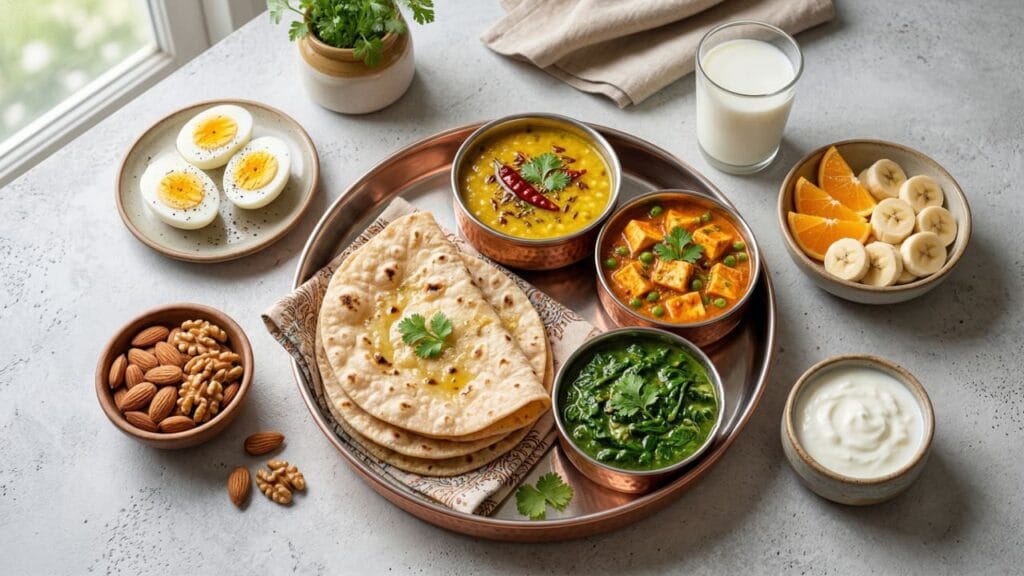
7-Day Indian Pregnancy Diet Plan (ICMR Nutrition + Trimester Guide + Cost ₹)
Last Updated: April 17, 2026 | Published: April 11, 2026 | Next Review: July 2026 | Content follows ICMR-NIN RDA 2020 & FSSAI guidelines

Category: Pregnancy Diet |
Duration: 7 Days (repeatable across trimesters) |
Diet: Vegetarian & Non-Veg options |
Daily Calories: 1,800–2,400 kcal (trimester-dependent) |
Key Nutrients: Iron, Folate, Calcium, Protein, DHA |
Daily Cost: ₹180–₹300/day (approx, current market rates) |
Data Source: ICMR-NIN IFCT 2017 & ICMR-NIN RDA 2020
⚠️ Pregnancy Safety Notice: This content is for general information only and does not replace professional prenatal care. Always consult your obstetrician, gynaecologist, or registered dietitian before making dietary changes during pregnancy. Individual needs vary by trimester, medical history, and pregnancy complications. If you have gestational diabetes, anaemia, hypertension, or any high-risk pregnancy condition, follow your doctor’s specific dietary guidance.
This content follows ICMR-NIN Recommended Dietary Allowances for pregnant women (2020) and FSSAI food safety standards. It is educational and does not replace personalised medical advice from your doctor or registered dietitian.
Introduction
A pregnancy diet plan in India includes balanced meals with iron, calcium, protein, folate, and DHA from everyday Indian foods — dal, milk, vegetables, curd, fruits, and eggs — to support normal maternal nutrition and fetal development across all three trimesters.
During pregnancy, your body’s nutritional requirements increase significantly — not just in calories but in specific nutrients. Iron requirements nearly double, calcium needs rise, and folate becomes critical in the first trimester for normal fetal development. Indian home cooking naturally covers most of these needs when meals are planned thoughtfully. The problem most Indian households face is not knowing which foods to prioritise at each stage of pregnancy.
This guide gives you a practical 7-day Indian pregnancy diet plan with daily meals, key nutrient focus, cost in ₹, trimester-specific guidance, safe and avoid foods, and practical tips for Indian kitchens. Every nutrient value is sourced from ICMR-NIN IFCT 2017 and ICMR-NIN RDA 2020. For a broader healthy eating framework, also explore our Indian nutrition guides.
This guide does not replace medical advice. All dietary changes during pregnancy must be discussed with your doctor or registered dietitian.
Explore more: All Indian Recipes | Nutrition Guides | Immunity & Wellness Foods | Kids Nutrition
✔ Pregnant women across all three trimesters looking for practical Indian meal guidance
✔ First-time mothers needing a structured, beginner-friendly plan
✔ Indian families planning daily meals during pregnancy on a budget
✔ Women with vegetarian or mixed dietary preferences
✔ Mothers planning post-delivery nutrition — see our kids nutrition guides for infant and child feeding next steps
A pregnancy diet plan in India is a structured meal programme providing 1,800–2,400 kcal daily with iron, folate, calcium, protein, and DHA from everyday Indian foods — dal, milk, vegetables, curd, fruits, and eggs — at approx. ₹180–₹300/day. Based on ICMR-NIN RDA 2020, it supports normal maternal nutrition and fetal development across all three trimesters without expensive supplements.
Why Nutrition Matters More During Pregnancy
1. Nutrient Needs Increase Across All Trimesters
ICMR-NIN RDA 2020 recommends additional 350 kcal per day in the second trimester and 450 kcal in the third trimester above normal maintenance levels. Iron requirements increase from 17 mg to 35 mg per day, and calcium needs rise to 1,200 mg per day — both achievable through Indian foods without supplementation in many cases.
2. Indian Meals Naturally Cover Most Pregnancy Nutrients
A well-planned Indian thali — roti, dal, sabzi, curd, and a fruit — provides iron, protein, calcium, folate, and fibre in a single meal. The challenge is not foreign ingredients but consistent meal structure. This plan shows you exactly how to build that structure day by day.
3. Small Frequent Meals Reduce Pregnancy Discomfort
Morning sickness, heartburn, and bloating — common across all trimesters — are significantly reduced by eating 5–6 small meals instead of 3 large ones. This plan structures meals as breakfast, mid-morning, lunch, afternoon snack, and dinner to align with this approach.
4. Food-First Nutrition Is Safer Than Over-Supplementation
ICMR-NIN guidelines recommend obtaining nutrients from whole foods wherever possible, with supplementation only when prescribed by a doctor. Most Indian pregnant women require iron and folate supplements — but calcium, protein, and zinc can be fully met through food. To complement this guide, explore our immunity and wellness foods for daily nutrient support during pregnancy.
Trimester-by-Trimester Nutrition Guide
Each trimester has distinct nutritional priorities. This plan covers all three — use the guidance below to adjust portion sizes and food choices as your pregnancy progresses:
1st Trimester (Weeks 1–12) — Folate & Small Meals
This is the most critical period for fetal neural tube development. Folate is the priority nutrient. Morning sickness often reduces appetite, making small, frequent, bland meals more practical than large ones.
| Priority Nutrient | ICMR-NIN Target | Best Indian Sources |
|---|---|---|
| Folate | 500 mcg/day | Palak, methi, moong dal, green peas, orange |
| Iron | 35 mg/day | Spinach + lemon, rajma, jaggery, horse gram |
| Vitamin B12 | 1.2 mcg/day | Milk, curd, eggs, paneer |
| Protein | +23g above normal | Dal, curd, paneer, eggs, chicken |
💡 Tip: Eat a small bowl of curd or a banana before getting out of bed to reduce morning nausea significantly.
2nd Trimester (Weeks 13–26) — Calcium & Protein
Appetite typically improves. Fetal bone formation accelerates, making calcium the priority alongside continued protein for tissue and muscle development. Increase meal portions gradually.
| Priority Nutrient | ICMR-NIN Target | Best Indian Sources |
|---|---|---|
| Calcium | 1,200 mg/day | Milk (300ml), curd (200g), ragi, til (sesame) |
| Protein | +23g above normal | Paneer, dal, rajma, eggs, chicken |
| Vitamin D | 600 IU/day | Eggs (yolk), fortified milk, sunlight exposure |
| Magnesium | 310 mg/day | Bajra roti, almonds, pumpkin seeds, banana |
💡 Tip: 300ml warm milk at night covers nearly 25% of daily calcium needs. Adding a pinch of turmeric makes it more nutrient-dense without adding calories significantly.
3rd Trimester (Weeks 27–40) — Iron, DHA & Energy
Calorie and iron needs peak in the third trimester. Fetal brain development requires DHA. Meals should remain frequent and moderate in size — the uterus compresses the stomach, making large meals uncomfortable.
| Priority Nutrient | ICMR-NIN Target | Best Indian Sources |
|---|---|---|
| Iron | 35 mg/day | Spinach, rajma, horse gram, jaggery, dal |
| DHA (Omega-3) | 200 mg/day | Fish (rohu, surmai), walnuts, flaxseed (alsi) |
| Zinc | 12 mg/day | Pumpkin seeds, chicken, eggs, rajma |
| Energy | +450 kcal above normal | Roti, rice, poha, oats — complex carbohydrates |
💡 Tip: Add 1 tsp alsi powder (flaxseed) to chapati dough or curd daily — this provides plant-based omega-3 for DHA support at approximately ₹3–₹5 per serving.
Key Nutrients During Pregnancy — Indian Sources
Source: ICMR-NIN IFCT 2017 & ICMR-NIN RDA 2020. Values are approximate.
| Nutrient | Role in Pregnancy | ICMR-NIN Daily Target | Best Indian Food Sources |
|---|---|---|---|
| Iron | Supports maternal blood formation and prevents anaemia | 35 mg/day | Spinach + lemon, rajma, horse gram, jaggery, dal |
| Folate | Supports neural tube formation in first trimester | 500 mcg/day | Palak, methi, moong dal, green peas, orange, beetroot |
| Calcium | Supports fetal bone and teeth development | 1,200 mg/day | Milk (300ml = ~300mg), curd, ragi, sesame seeds (til) |
| Protein | Supports fetal tissue growth and maternal repair | +23g above normal | Dal, paneer, curd, eggs, chicken, rajma, moong |
| DHA (Omega-3) | Supports fetal brain and eye development | 200 mg/day | Fish (rohu, surmai), walnuts, flaxseed powder |
| Vitamin D | Supports calcium absorption and fetal bone health | 600 IU/day | Eggs (yolk), fortified milk, 20–30 min sunlight/day |
| Zinc | Supports immune function and cell division | 12 mg/day | Pumpkin seeds, chicken, eggs, rajma, peanuts |
7-Day Indian Pregnancy Diet Plan
All calorie values are approximate. Source: ICMR-NIN IFCT 2017. This plan can be rotated weekly and adjusted to trimester needs and local food availability.
Day 1 — Iron & Folate Focus
Est. Cost: ₹200 | ~1,900 kcal | Key: Iron + Folate
| Meal | What to Eat | Calories | Key Nutrient |
|---|---|---|---|
| Breakfast | Poha (1 cup) + 2 tbsp Peanuts + 1 Glass Milk (250ml) | ~420 kcal | Iron + Protein |
| Mid-Morning | 1 Orange + 5 Almonds (soaked) | ~100 kcal | Folate + Vitamin C |
| Lunch | 2 Roti + Palak Dal (iron + folate) + Mixed Sabzi + Curd (100g) | ~550 kcal | Iron + Calcium |
| Afternoon Snack | Jaggery (10g) + Roasted Peanuts (20g) | ~120 kcal | Iron |
| Dinner | 1 Cup Brown Rice + Rajma (1 katori) + Green Salad with Lemon | ~480 kcal | Protein + Folate |
| Bedtime | 1 Glass Warm Milk (250ml) + Pinch Turmeric | ~170 kcal | Calcium |
💡 Tip: Always squeeze lemon over palak dal and rajma — vitamin C in lemon increases iron absorption from plant sources by 2–3×. Do not skip this step on iron-focus days.
Day 2 — Calcium & Protein Day
Est. Cost: ₹220 | ~2,000 kcal | Key: Calcium + Protein
| Meal | What to Eat | Calories | Key Nutrient |
|---|---|---|---|
| Breakfast | Ragi Dosa (2) + Sambar + 1 Glass Milk (250ml) | ~450 kcal | Calcium |
| Mid-Morning | 1 Banana + 5 Walnuts | ~150 kcal | DHA + Magnesium |
| Lunch | 2 Roti + Paneer Sabzi + Dal + Curd (100g) | ~580 kcal | Protein + Calcium |
| Afternoon Snack | Roasted Chana (30g) | ~110 kcal | Protein + Zinc |
| Dinner | 2 Ragi Roti + Palak Paneer + Salad | ~500 kcal | Calcium + Iron |
| Bedtime | 1 Glass Warm Milk (250ml) | ~160 kcal | Calcium |
💡 Tip: Ragi provides ~344mg calcium per 100g — the highest among Indian grains. Use ragi flour in place of half the wheat flour in roti for a calcium upgrade with no taste compromise.
Day 3 — DHA & Omega-3 Day
Est. Cost: ₹260 | ~2,000 kcal | Key: DHA + Protein
| Meal | What to Eat | Calories | Key Nutrient |
|---|---|---|---|
| Breakfast | Oats Porridge (1 bowl) + 1 tsp Alsi Powder + Milk (250ml) | ~400 kcal | DHA (plant) + Fibre |
| Mid-Morning | 1 Guava + 5 Walnuts | ~120 kcal | Vitamin C + DHA |
| Lunch | 1 Cup Rice + Fish Curry (rohu/surmai 100g) + Sabzi + Salad with Lemon | ~580 kcal | DHA + Protein |
| Afternoon Snack | Til Chikki or Peanuts (20g) | ~120 kcal | Calcium + Iron |
| Dinner | 2 Roti + Moong Dal + Mixed Sabzi + Curd (100g) | ~490 kcal | Folate + Protein |
| Bedtime | 1 Glass Warm Milk (250ml) | ~160 kcal | Calcium |
💡 Tip: Prioritise Day 3 twice a week in the third trimester — DHA from fish and walnuts is the key fetal brain development nutrient that is hardest to get from Indian vegetarian meals alone.
Day 4 — Energy & Fibre Day
Est. Cost: ₹210 | ~1,950 kcal | Key: Energy + Fibre
| Meal | What to Eat | Calories | Key Nutrient |
|---|---|---|---|
| Breakfast | 2 Whole Wheat Paratha (light oil) + Curd (100g) + 1 Fruit | ~480 kcal | Fibre + Calcium |
| Mid-Morning | Coconut Water + 5 Almonds | ~90 kcal | Electrolytes |
| Lunch | Khichdi (1 bowl) + Curd (100g) + Orange | ~450 kcal | Protein + Folate |
| Afternoon Snack | Roasted Pumpkin Seeds (20g) + Jaggery (10g) | ~130 kcal | Zinc + Iron |
| Dinner | 2 Bajra Roti + Rajma + Mixed Sabzi + Salad | ~510 kcal | Iron + Protein |
| Bedtime | 1 Glass Warm Milk (250ml) | ~160 kcal | Calcium |
💡 Tip: Khichdi is ideal in the third trimester — easy to digest, high protein, and manageable in small portions when the stomach is compressed.
Day 5 — Budget Iron & Folate Day
Est. Cost: ₹180 | ~1,880 kcal | Key: Iron + Folate
| Meal | What to Eat | Calories | Key Nutrient |
|---|---|---|---|
| Breakfast | Oats Porridge with Banana + Milk (250ml) | ~380 kcal | Fibre + Calcium |
| Mid-Morning | 1 Orange + Peanuts (20g) | ~110 kcal | Vitamin C + Folate |
| Lunch | 2 Methi Roti + Moong Dal + Mixed Sabzi + Curd (100g) | ~520 kcal | Folate + Iron |
| Afternoon Snack | Jaggery (10g) + Roasted Peanuts (20g) | ~120 kcal | Iron |
| Dinner | Horse Gram Dal (1 katori) + 1 Cup Rice + Salad with Lemon | ~490 kcal | Iron + Protein |
| Bedtime | 1 Glass Warm Milk (250ml) | ~160 kcal | Calcium |
💡 Tip: Horse gram (kulthi) is one of the highest iron legumes available in India at under ₹80/kg — an underused pregnancy superfood available across most Indian markets.
Day 6 — Vitamin D & Protein Day
Est. Cost: ₹250 | ~2,000 kcal | Key: Vitamin D + Protein
| Meal | What to Eat | Calories | Key Nutrient |
|---|---|---|---|
| Breakfast | 1 Boiled Egg + 2 Whole Wheat Toast + 1 Glass Milk (250ml) | ~420 kcal | Vitamin D + Protein |
| Mid-Morning | 1 Seasonal Fruit + 5 Soaked Almonds | ~110 kcal | Vitamin C + Calcium |
| Lunch | 2 Roti + Egg Curry or Paneer + Dal + Curd (100g) | ~570 kcal | Protein + Calcium |
| Afternoon Snack | Roasted Chana (30g) + 1 Small Fruit | ~120 kcal | Protein |
| Dinner | 1 Cup Brown Rice + Palak Dal + Salad with Lemon | ~490 kcal | Iron + Folate |
| Bedtime | 1 Glass Warm Milk (250ml) | ~160 kcal | Calcium |
💡 Tip: Egg yolk is one of the few natural Indian food sources of Vitamin D — do not discard the yolk during pregnancy. Fully cook the egg (boiled or omelette) but always include the yolk.
Day 7 — Balanced Reset Day
Est. Cost: ₹200 | ~1,950 kcal | Key: All Nutrients
| Meal | What to Eat | Calories | Key Nutrient |
|---|---|---|---|
| Breakfast | Idli (3 medium) + Sambar + Coconut Chutney + Milk (250ml) | ~450 kcal | Protein + Calcium |
| Mid-Morning | 1 Banana + 5 Walnuts | ~150 kcal | DHA + Magnesium |
| Lunch | 2 Roti + Mixed Dal + Seasonal Sabzi + Curd (100g) | ~540 kcal | All Key Nutrients |
| Afternoon Snack | Til Chikki or Roasted Peanuts (20g) | ~110 kcal | Calcium + Iron |
| Dinner | Khichdi (1 bowl) + Curd (100g) + Salad | ~460 kcal | Protein + Fibre |
| Bedtime | 1 Glass Warm Milk (250ml) | ~160 kcal | Calcium |
💡 Tip: Day 7 is a balanced reset — rotate this day on any day nausea returns or appetite is reduced, as khichdi and idli are the most stomach-friendly high-protein options in Indian cooking.
Weekly Summary
| Day | Focus | Approx. Calories | Key Nutrients | Est. Cost |
|---|---|---|---|---|
| Day 1 | Iron & Folate | ~1,900 kcal | Iron + Folate | ₹200 |
| Day 2 | Calcium & Protein | ~2,000 kcal | Calcium + Protein | ₹220 |
| Day 3 | DHA & Omega-3 | ~2,000 kcal | DHA + Protein | ₹260 |
| Day 4 | Energy & Fibre | ~1,950 kcal | Energy + Zinc | ₹210 |
| Day 5 | Budget Iron Day | ~1,880 kcal | Iron + Folate | ₹180 |
| Day 6 | Vitamin D & Protein | ~2,000 kcal | Vitamin D + Protein | ₹250 |
| Day 7 | Balanced Reset | ~1,950 kcal | All Key Nutrients | ₹200 |
| Weekly Total | Full Plan | ~13,900 kcal | All 7 Key Nutrients | ₹1,520 |
Safe Foods vs Foods to Avoid During Pregnancy
Food Safety Note: Pregnancy increases vulnerability to foodborne illness. Listeria, Salmonella, and E. coli infections carry serious risks. The avoid list below is based on FSSAI food safety guidelines and standard obstetric nutrition recommendations. For a complete trimester-wise list of all foods to avoid, see our dedicated pregnancy foods to avoid guide. For immune-supportive foods safe during pregnancy, see our immunity boosting foods guide.
| ✅ Safe Foods | Why Safe | ❌ Avoid Foods | Why Avoid |
|---|---|---|---|
| Fully cooked vegetables | Safe when washed and cooked thoroughly | Raw or undercooked meat | Listeria and Toxoplasma risk |
| Pasteurised milk and curd | Safe — pathogens eliminated in pasteurisation | Unpasteurised dairy (kaccha doodh) | Listeria risk — buy only packaged milk |
| Fresh seasonal fruits | Washed and peeled; high vitamins | Raw papaya (green/unripe) | Contains papain — may stimulate uterine contractions |
| Fully cooked eggs (boiled, omelette) | Protein and Vitamin D — safe when fully cooked | Raw or runny eggs | Salmonella risk in undercooked eggs |
| Cooked fish (rohu, surmai, catla) | DHA + protein — freshwater fish are safe | High mercury fish (swordfish, shark, king mackerel) | Mercury accumulates in fetal brain tissue |
| Dal, rajma, chickpeas (fully cooked) | Protein + iron + folate — all pregnancy essentials | Excess caffeine (>200mg/day) | Crosses placental barrier; linked to low birth weight |
| Ragi, bajra, jowar rotis | Calcium + fibre + iron — excellent pregnancy grains | Street food and packaged junk food | High sodium, trans fat, food safety risk |
Daily Practical Tips for Indian Pregnancy Diet
These habits apply daily throughout pregnancy and are aligned with ICMR-NIN and standard obstetric nutrition guidelines. For building immunity alongside pregnancy nutrition, explore our immunity and wellness foods guide.
| Habit | Why It Matters During Pregnancy |
|---|---|
| Eat 5–6 small meals instead of 3 large ones | Reduces morning sickness, heartburn, and blood sugar fluctuations — also improves total nutrient absorption across the day |
| Include protein in every meal | Fetal tissue development requires constant protein supply — skipping protein at any meal creates a gap that cannot be compensated at the next meal |
| Drink 2.5–3 litres of water daily | Supports increased blood volume during pregnancy, prevents UTIs (very common in pregnancy), reduces swelling and constipation |
| Always add lemon to iron-rich dishes | Vitamin C from lemon doubles to triples iron absorption from plant sources — palak, rajma, and dal with lemon are nutritionally far superior to the same dishes without it |
| Drink warm milk at bedtime daily | 300ml milk at bedtime provides ~300mg calcium — covering 25% of pregnancy calcium needs in one simple, affordable habit at approximately ₹12–₹18 |
| Prefer home-cooked meals over outside food | Pregnancy increases food safety risk — home cooking using pasteurised dairy, thoroughly washed produce, and fully cooked proteins eliminates the most common sources of foodborne illness |
Common Mistakes to Avoid During Indian Pregnancy Diet
These are the most common nutritional errors in Indian pregnancy diets. Avoiding them from the first trimester significantly improves outcomes. For child nutrition after delivery, see our kids nutrition guides.
| Mistake | Why It Creates a Nutritional Risk |
|---|---|
| Eating for two by doubling all portions | ICMR-NIN requires only +350 kcal extra in T2 and +450 kcal in T3 — doubling food leads to excessive weight gain, gestational diabetes risk, and difficulty in normal delivery |
| Skipping meals due to nausea | Skipping meals causes blood sugar drops that worsen nausea — eat small, bland meals (banana, curd, plain khichdi) rather than skipping entirely |
| Avoiding all fats thinking they are harmful | DHA (from fish, walnuts) and fat-soluble vitamins (A, D, E, K) require dietary fat for absorption — zero-fat diets during pregnancy can create critical nutrient deficiencies |
| Relying only on supplements, not food | Iron and folate supplements are usually prescribed and necessary — but they do not replace the calcium, protein, zinc, and DHA that must come from food |
| Consuming tea or chai immediately after meals | Tannins in tea inhibit iron absorption by up to 60% — a major issue in India where anaemia in pregnancy is already high. Wait at least 1 hour after iron-rich meals before drinking tea |
⚠️ FSSAI Allergen Note: This 7-day Indian pregnancy diet plan contains common FSSAI listed allergens including Milk/Dairy (milk, curd, paneer), Eggs (Day 3, Day 6), Tree Nuts (almonds, walnuts), Fish (Day 3 — optional), and Peanuts (used as snacks). Pregnant women with known food allergies must substitute accordingly and consult their doctor before modifying this plan.
As per FSSAI Food Safety and Standards (Labelling and Display) Regulations 2020.
Frequently Asked Questions
🌿 Start this pregnancy diet plan from today — your meals are the most direct input to your baby’s development.
Explore our complete Indian nutrition guides collection for more ICMR-NIN backed meal planning resources.
Conclusion
A well-planned 7-day Indian pregnancy diet plan does not require expensive supplements, imported superfoods, or complex cooking. Everyday Indian foods — ragi roti, palak dal, curd, rajma, eggs, and seasonal fruits — provide all the iron, folate, calcium, protein, and DHA that a pregnant woman needs, at ₹180–₹300 per day based on approx, current market rates.
The key principles of this pregnancy diet plan India are consistent across all trimesters: eat 5–6 small meals, include protein at every meal, always add lemon to iron-rich foods, drink warm milk at bedtime, and avoid raw or unsafe foods entirely. These simple, practical habits compound over the course of pregnancy into meaningful nutrition that supports both mother and baby.
After delivery, nutrition continues to be important for both recovery and infant feeding. Explore our kids nutrition guides for practical Indian infant and child feeding guidance, and our immunity and wellness foods for postpartum recovery nutrition.
Explore more practical Indian recipes and nutrition guides on GrowRain to build sustainable eating habits that work for Indian lifestyles and Indian kitchens.
Commercial Consulting · GrowRain
Pregnancy & Maternal Nutrition Menus — FSSAI-Compliant Menu Engineering for Food Businesses
Are you a hospital dietary manager, maternity clinic operator, cloud kitchen owner, or restaurant brand looking to build medically accurate, high-margin maternal nutrition menus? GrowRain’s commercial consulting team works directly with food service businesses to:
- Design ICMR-NIN aligned pregnancy and postnatal meal menus for hospital kitchens, maternity wards, and cloud kitchen services
- Generate FSSAI-compliant nutrition labels for packaged pregnancy meals, tiffin services, and institutional food products
- Conduct trimester-specific menu audits — ensuring iron, folate, calcium, protein, and DHA targets are met across all meal categories
- Develop gestational diabetes and anaemia-safe meal plans for hospital patient nutrition services, aligned with clinical dietary guidelines
- Provide cost-per-nutrient analysis to help hospital and cloud kitchen operators optimise margins while maintaining clinical accuracy
All consulting outputs are backed by ICMR-NIN RDA 2020 and IFCT 2017 data, and comply with FSSAI Food Safety and Standards (Labelling and Display) Regulations 2020.
Medical & Nutrition Disclaimer: This 7-day Indian pregnancy diet plan provides general nutrition information based on ICMR-NIN IFCT 2017 and ICMR-NIN Recommended Dietary Allowances for Indian adults (2020). Calorie and nutrient values are approximate. This guide does not constitute medical advice and is not a substitute for personalised guidance from your doctor, gynaecologist, or registered dietitian. All dietary decisions during pregnancy must be made in consultation with your healthcare provider, especially if you have gestational diabetes, anaemia, hypertension, food allergies, or any other medical condition.
🌿 GrowRain.com — Practical Nutrition & Recipe Platform | ICMR-NIN Sourced Data | Serving All of India