
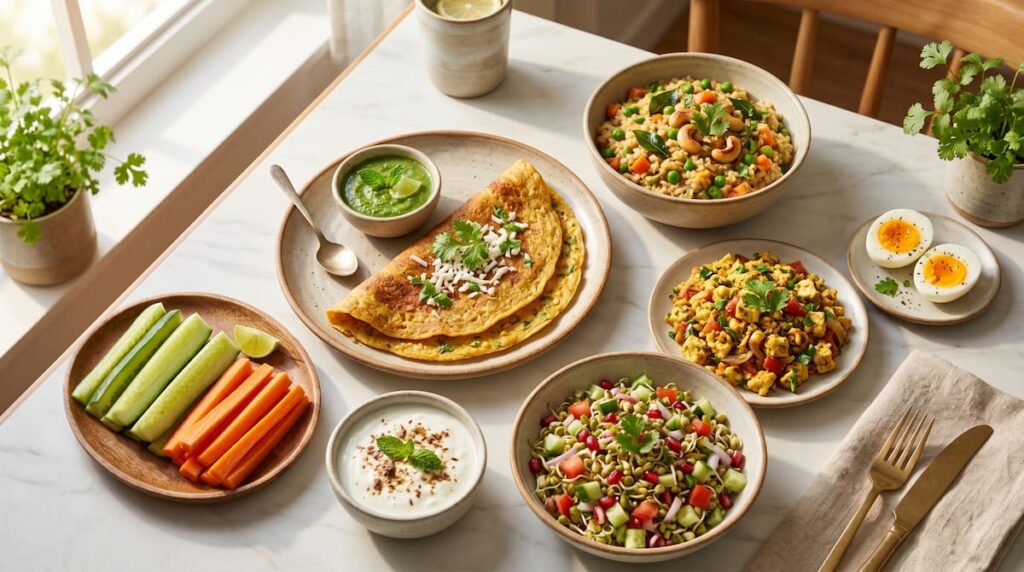
7-Day Diabetes Breakfast Plan for Indian Adults: Low GI, High Protein & Daily Costs
Category: Diabetic Recipes |
Calories: 250–400 kcal per breakfast |
Protein: 10–22g per meal |
Cost: ₹25–₹60 per meal (approx. current market rates) |
Focus: Low GI + High Protein + Stable Blood Sugar |
Data Source: ICMR-NIN IFCT 2017 & USDA FoodData Central
Introduction
A 7-day diabetes breakfast plan for Indian adults is a structured, low GI meal programme using everyday Indian ingredients — moong dal, paneer, eggs, oats, and sprouts — to deliver stable blood sugar, 10–22g protein per meal, and sustained morning energy without expensive supplements or foreign foods.
Managing diabetes through diet does not mean eliminating Indian food. The challenge is not the cuisine — it is the selection of the wrong ingredients: refined flour, white rice, sweetened beverages, and deep-fried snacks. Replacing these with low GI, high protein equivalents within the same Indian kitchen framework is both practical and clinically effective.
This guide provides a complete 7-day diabetes breakfast plan with meal details, glycemic index comparisons, protein data, cost estimates in Indian rupees, and quick swap options for different dietary preferences. Explore our full diabetic recipe collection for complementary lunch and dinner ideas.
Explore more: All Indian Recipes | High Protein Indian Meals | Weight Loss Recipes
✔ Adults managing Type 2 diabetes or prediabetes with Indian food
✔ People looking for practical low GI breakfast options in India
✔ Busy working professionals needing quick, structured morning meals
✔ Anyone aiming for stable blood sugar and sustained morning energy
A 7-day diabetes breakfast plan for Indian adults is a structured, low GI morning meal programme using everyday Indian ingredients — moong chilla, paneer bhurji, oats upma, eggs, besan cheela, and sprouts — delivering 250–400 kcal and 10–22g protein per meal at ₹25–₹60/day. It stabilises blood glucose through protein-first, low glycemic meals without requiring foreign foods or expensive supplements.
Why Breakfast Is Critical for Diabetes Management
1. Sets the Glucose Baseline for the Day
The first meal after an overnight fast directly determines morning blood glucose trajectory. A low GI, protein-rich breakfast prevents early glucose spikes and keeps the liver from releasing excess glucose into the bloodstream.
2. High Protein Reduces Post-Meal Glucose Spikes
Protein slows gastric emptying and reduces the glycemic impact of carbohydrates consumed in the same meal. Targeting 10–22g protein per breakfast — as in this plan — is clinically supported for improved post-prandial glucose control.
3. Prevents Compensatory Overeating at Lunch
Skipping breakfast leads to stronger hunger signals by mid-morning, increasing the likelihood of high-calorie, high-GI food choices at lunch. A structured morning meal removes this risk and supports calorie control across the full day.
4. Supports Consistent Medication Timing
For diabetics on oral medication or insulin, consistent meal timing is essential for drug efficacy. A predictable breakfast schedule reduces the risk of hypoglycaemia from medication taken without adequate food intake.
7-Day Diabetes Breakfast Plan
All calorie and protein values are approximate estimates. Source: ICMR-NIN IFCT 2017 & USDA FoodData Central.
Day 1 — Moong Chilla with Curd
~320 kcal | ~18g protein | Est. ₹35
| Component | Detail |
|---|---|
| Main Meal | 2 medium moong dal chillas (low oil) + 100g low-fat curd |
| GI Level | ~45 (Low GI) |
| Key Nutrients | Protein from moong dal + probiotics from curd |
| Prep Time | 15 min (soak dal overnight) |
💡 Tip: Soak moong dal overnight to reduce prep time. Use a non-stick pan with 1 tsp oil maximum per 2 chillas. Avoid chutney with added sugar.
Day 2 — Oats Vegetable Upma
~280 kcal | ~10g protein | Est. ₹25
| Component | Detail |
|---|---|
| Main Meal | 1 bowl oats upma with onion, capsicum, carrot (1 tsp oil) |
| GI Level | ~55 (Medium GI — acceptable with vegetables) |
| Key Nutrients | Beta-glucan fiber from oats slows glucose absorption |
| Prep Time | 10 min |
💡 Tip: Use rolled oats, not instant oats — rolled oats have a lower glycemic impact. Add peanuts (10g) to boost protein to ~14g. No sugar or sweetener.
Day 3 — Paneer Bhurji with Roti
~350 kcal | ~20g protein | Est. ₹50
| Component | Detail |
|---|---|
| Main Meal | 100g low-fat paneer bhurji + 1 small whole wheat roti |
| GI Level | Low (paneer GI ~1; whole wheat roti GI ~62) |
| Key Nutrients | Highest protein meal of the 7-day plan — 18g from paneer alone |
| Prep Time | 15 min |
💡 Tip: Use low-fat paneer (less than 20% fat). Limit roti to 1 small — approximately 30g dough — to control carbohydrate load. Sauté paneer dry without cream or butter.
Day 4 — Boiled Eggs with Sautéed Vegetables
~300 kcal | ~18g protein | Est. ₹40
| Component | Detail |
|---|---|
| Main Meal | 2 boiled eggs + 80g sautéed vegetables (spinach, capsicum, beans) |
| GI Level | Very Low (<20) |
| Key Nutrients | Complete amino acid profile from eggs; high micronutrient density from vegetables |
| Prep Time | 12 min |
💡 Tip: Boiling preserves egg protein better than frying. Use spinach and capsicum — both are low GI and add folate and vitamin C. 1 tsp oil maximum for sautéing.
Day 5 — Besan Cheela
~300 kcal | ~16g protein | Est. ₹30
| Component | Detail |
|---|---|
| Main Meal | 2 medium besan cheelas with green chutney (no sugar) |
| GI Level | ~35–40 (Low GI) |
| Key Nutrients | Chickpea flour is among the lowest GI grain flours available |
| Prep Time | 10 min |
💡 Tip: Add finely chopped onion and capsicum to the batter for extra fiber and micronutrients. Use ajwain (carom seeds) to improve digestion. 1 tsp oil maximum per 2 cheelas.
Day 6 — Greek Yogurt with Nuts
~280 kcal | ~15g protein | Est. ₹45
| Component | Detail |
|---|---|
| Main Meal | 150g unsweetened Greek yogurt + 10g mixed nuts (almonds, walnuts) |
| GI Level | Very Low (~11–14) |
| Key Nutrients | Casein protein from yogurt + healthy fats from nuts for extended satiety |
| Prep Time | 2 min (no cooking) |
💡 Tip: The fastest meal of the week — ideal for time-constrained mornings. Use plain curd if Greek yogurt is not available locally. Add a pinch of cinnamon — it is associated with improved insulin sensitivity.
Day 7 — Sprouts Salad with Boiled Egg
~260 kcal | ~14g protein | Est. ₹30
| Component | Detail |
|---|---|
| Main Meal | 50g steamed mixed sprouts salad (tomato, cucumber, lemon) + 1 boiled egg |
| GI Level | Very Low (~25–30) |
| Key Nutrients | Highest fiber density of the week — gut-friendly and anti-inflammatory |
| Prep Time | 10 min (sprout overnight) |
💡 Tip: Always steam sprouts for 5–7 minutes — never serve raw due to Salmonella risk (FSSAI guideline). Lemon juice lowers the glycemic impact of the full meal. Sprout moong overnight at home to minimise cost.
Weekly Summary
Source: ICMR-NIN IFCT 2017 & USDA FoodData Central. All values are approximate.
| Day | Meal | Calories | Protein | GI | Cost ₹ |
|---|---|---|---|---|---|
| Day 1 | Moong Chilla + Curd | ~320 kcal | ~18g | ~45 | ₹35 |
| Day 2 | Oats Vegetable Upma | ~280 kcal | ~10g | ~55 | ₹25 |
| Day 3 | Paneer Bhurji + Roti | ~350 kcal | ~20g | Low | ₹50 |
| Day 4 | Boiled Eggs + Vegetables | ~300 kcal | ~18g | <20 | ₹40 |
| Day 5 | Besan Cheela | ~300 kcal | ~16g | ~35–40 | ₹30 |
| Day 6 | Greek Yogurt + Nuts | ~280 kcal | ~15g | ~11–14 | ₹45 |
| Day 7 | Sprouts Salad + Egg | ~260 kcal | ~14g | ~25–30 | ₹30 |
| Weekly | Full Plan | ~2,090 kcal | ~111g | All Low–Medium | ₹255 |
Source: ICMR-NIN IFCT 2017 & USDA FoodData Central. GI values are approximate references.
Quick Swap Options
Use these substitutions to adapt the plan without compromising blood sugar control or protein targets:
No paneer available?
Replace 100g paneer with 100g firm tofu (similar protein, lower fat) or 50g moong sprouts + 1 boiled egg for comparable protein output.
Vegetarian / no eggs?
Replace any egg-based meal with moong dal chilla or besan cheela. Both deliver 14–16g protein and have a GI below 45.
No time to cook?
Day 6 (Greek yogurt + nuts) takes under 2 minutes with no cooking. Alternatively, 2 pre-boiled eggs with cucumber slices is a valid 300 kcal, 13g protein emergency meal.
Budget constraint day?
Day 2 (₹25) and Day 5 (₹30) are the lowest cost days of the week. Both use shelf-stable pantry ingredients and can be prepared in under 10 minutes.
GI & Protein Comparison by Food
Understanding the glycemic index of each ingredient helps you make smarter substitutions within this plan. Browse our full diabetic recipe collection for dishes using these ingredients.
| Food | GI (approx.) | Protein (per serving) | Primary Benefit for Diabetics |
|---|---|---|---|
| Moong chilla (2 medium) | ~45 | ~14g | Low GI + high plant protein |
| Oats (40g rolled) | ~55 | ~6g | Beta-glucan fiber — slows glucose absorption |
| Paneer (100g low fat) | <5 | ~18g | Negligible carbohydrate — no glucose impact |
| Eggs (2 boiled) | <20 | ~13g | Complete amino acid profile; no blood sugar impact |
| Besan (30g) | ~35–40 | ~10g | Lowest GI flour option for Indian breakfasts |
| Mixed sprouts (50g) | ~25–30 | ~8g | High fiber, gut-friendly, anti-inflammatory |
| Greek yogurt (150g) | ~11–14 | ~12g | Very low GI; improves gut microbiome |
Source: ICMR-NIN IFCT 2017 & USDA FoodData Central. GI values are approximate reference figures.
Foods to Avoid at Breakfast for Diabetics
The following common Indian breakfast foods cause rapid glucose spikes and should be avoided or minimised:
| Food to Avoid | Why It Is Problematic | Better Alternative |
|---|---|---|
| White bread / maida products | GI 70–85; causes rapid glucose spike with no fiber buffer | Whole wheat roti (1 small) |
| Sugary breakfast cereals | GI 70+; high sugar content negates any whole grain benefit | Rolled oats without sugar |
| Deep-fried snacks (bonda, vada) | High GI + high fat — dual mechanism for glucose and insulin resistance | Steamed idli (small portion) or besan cheela |
| Sweetened tea/coffee | Sugar on an empty stomach spikes glucose immediately | Unsweetened tea or black coffee |
| Plain white rice poha or semolina upma | GI ~65–70; high glycemic even in small portions | Oats upma or besan cheela |
| Fruit juice (any) | Fructose without fiber — comparable glycemic impact to soft drinks | Whole fruit with protein (e.g., 1 guava + curd) |
Common Breakfast Mistakes in Diabetes Management
These are the most frequently observed mistakes that undermine blood sugar control despite otherwise good dietary intentions:
1. Skipping Protein in the Morning Meal
A carbohydrate-only breakfast (e.g., plain toast, poha without dal/egg, or fruit alone) causes a faster glucose spike and shorter satiety window. Every breakfast in this plan includes a minimum 10g protein source.
2. Drinking Sweet Tea or Coffee Before Eating
Sugar consumed on an empty fasted stomach has the highest glycemic impact of the day. Drinking sweetened chai before breakfast is one of the most common and easily corrected mistakes in Indian diabetic dietary patterns.
3. Eating Fruits Alone Without Protein
Even low GI fruits like guava or apple, when eaten alone, cause a measurable glucose spike in diabetics. Pairing fruit with protein (curd, paneer, or egg) significantly dampens the glycemic response.
4. Using Excess Oil in Supposedly Healthy Preparations
Moong chilla and besan cheela are excellent choices, but excess oil (more than 1 tsp per meal) adds hidden calories and reduces the effectiveness of protein-driven satiety. Non-stick cookware is essential for this plan.
Explore More on GrowRain
Complement this breakfast plan with our other ICMR-NIN backed guides for diabetic and weight management nutrition:
🌿 Methi Bajra Roti — GI below 45, high fiber, ideal for diabetic lunches
🌿 High Protein Indian Breakfast Recipes — Full collection for active and sedentary adults
🌿 Millet Diet Plan for Weight Loss — Low GI grain alternatives to rice and wheat
🌿 All Recipes — Complete GrowRain recipe archive
Frequently Asked Questions
📅 Save this plan and start Monday.
Bookmark this 7-day diabetes breakfast plan or explore more structured diabetic meal ideas from our full diabetic recipe collection.
Conclusion
A structured 7-day diabetes breakfast plan for Indian adults does not require imported ingredients, expensive supplements, or complicated preparation. The meals in this guide — moong chilla, oats upma, paneer bhurji, boiled eggs, besan cheela, Greek yogurt, and steamed sprouts — are available in every Indian kitchen at ₹25–₹60 per meal and deliver the protein and low GI balance required for effective blood sugar management.
The key principles are consistent: include a minimum 10g protein per breakfast, avoid refined carbohydrates and sugar in the morning, use non-stick cooking to minimise oil, and maintain consistent meal timing. These are not restrictions — they are simply better choices within the existing Indian culinary framework.
For lunch and dinner ideas that complement this breakfast plan, explore our full diabetic recipe collection, high protein Indian meals, and the millet diet plan — all built on ICMR-NIN nutritional data.
🍽 GrowRain Commercial Nutrition Consulting
For Restaurant Owners | Cloud Kitchen Operators | Hospital & Institutional Food Managers
The same ICMR-NIN nutritional framework behind this diabetes breakfast plan is available as a structured consulting service for food businesses and healthcare institutions. GrowRain helps you develop clinically credible diabetic-friendly menus, FSSAI-compliant nutritional labels, and cost-optimised meal planning systems.
| Service | Who It Is For | Deliverable |
|---|---|---|
| Diabetic-Friendly Menu Engineering | Restaurants, Health Cafes, QSR Chains | GI-mapped, protein-forward menus with ICMR-NIN calorie declarations |
| Therapeutic Breakfast Plan Packages | Cloud Kitchens, Diabetes Meal Subscription Brands | 7-day to 30-day low GI, high protein breakfast plans with portion specs and sourcing guides |
| Hospital Dietary Department Support | Hospital Canteens, Senior Care Facilities | Condition-specific meal plans (diabetic, renal, cardiac) aligned with ICMR-NIN RDA guidelines |
| FSSAI Nutritional Labelling | Packaged Food Brands, Institutional Caterers | Label-ready nutrition declarations compliant with FSSAI (Labelling & Display) Regulations 2020 |
All consulting engagements are grounded in ICMR-NIN Recommended Dietary Allowances (2020), IFCT 2017 data, and FSSAI regulations.
Medical & Nutrition Disclaimer: This 7-day diabetes breakfast plan provides general nutrition guidance based on ICMR-NIN Recommended Dietary Allowances for Indian adults (2020) and ICMR-NIN IFCT 2017 data. Calorie, protein, and glycemic index values are approximate estimates. Individual nutritional needs vary significantly based on body weight, medication, insulin regimen, health status, and activity level. This article is not a substitute for personalised medical or dietary advice. Consult a qualified doctor or registered dietitian before making changes to your diet, especially if you are managing diabetes, prediabetes, hypertension, kidney disease, or any other chronic condition.
🌿 GrowRain.com — Practical Nutrition & Recipe Platform | ICMR-NIN Sourced Data | Serving All of India