
PCOS Indian Diet Plan for Weight Loss and Hormone Balance
Category: Weight Loss Recipes |
Also: PCOD Diet Chart Indian |
Calories: 1,500–1,900 kcal/day |
Protein: 70–95g/day |
Key Focus: Insulin Balance + Protein + Fibre |
Daily Cost: ₹180–₹320/day (approx, current market rates) |
Data Source: ICMR-NIN IFCT 2017 + Practical Indian Diet Patterns
A PCOS Indian diet plan is a structured daily eating pattern using high-protein breakfasts, low-GI carbohydrates, fibre-rich vegetables, healthy fats, and regular meal timing to support weight loss, insulin balance, and hormone health using practical Indian meals at ₹180–₹320/day.
✔ Women managing PCOS or PCOD with Indian food and daily routines
✔ Beginners trying to lose weight without extreme diets or supplements
✔ Women struggling with cravings, bloating, or insulin resistance
✔ Vegetarian and mixed-diet Indian households
✔ Women wanting sustainable hormone-supportive eating habits they can maintain for years
Introduction
PCOS weight gain often feels frustrating because many women eat less but still struggle with belly fat, cravings, irregular hunger, and slow progress.
The issue is often not “too much food” — it is poor meal timing, high refined carbohydrates, low-protein breakfasts, and insulin resistance. A proper PCOS Indian diet plan focuses on stable blood sugar, better hormone support, and sustainable fat loss using everyday Indian foods instead of extreme dieting.
Based on ICMR-NIN guidance, practical Indian meals like dal, paneer, curd, eggs, vegetables, millets, and balanced roti meals help improve satiety and reduce unnecessary cravings. The goal is not fast dieting — it is consistency over months, not days.
This guide gives you a complete 7-day PCOS meal plan, meal timing strategy, macro breakdown, food choices, foods to avoid, and realistic Indian strategies for weight loss and hormone balance. Explore our nutrition guides, 7-day Indian weight loss plan, and high protein meals.
This guide provides general nutrition support only. Consult your doctor or registered dietitian for personalised medical advice.
All Recipes |
High Protein Breakfasts |
Healthy Dinner Recipes
Why PCOS and PCOD Diet Matters
1. Insulin Resistance Is the Core Issue
Many women with PCOS experience insulin resistance, where the body struggles to use insulin efficiently. This leads to elevated androgen levels, irregular periods, fat storage around the abdomen, and persistent cravings. The right Indian diet helps break this cycle by choosing foods that produce a slower, steadier glucose response.
2. Protein Controls Cravings at the Source
Low protein intake is one of the most common dietary patterns in Indian women with PCOS. Without adequate protein (70–95g/day), hunger returns quickly, blood sugar dips between meals, and snacking on refined foods becomes hard to avoid. Dal, paneer, curd, eggs, and roasted chana are the practical protein pillars of any PCOS Indian diet plan.
3. Low GI Carbohydrates Reduce Androgen Spikes
High GI foods — maida, white rice in large portions, sweetened beverages — trigger rapid insulin secretion which worsens PCOS symptoms. Replacing these with bajra, jowar, ragi, dal, and vegetables reduces the insulin burden and supports better androgen balance over time. For low GI meal support, also explore our methi bajra roti guide, millet diet plan, and high protein Indian meals.
PCOS Daily Meal Timing Strategy
Meal timing is as important as food selection in PCOS management. This schedule supports insulin stability through the day.
| Meal | What to Eat | Focus | Protein | Calories | Cost ₹ |
|---|---|---|---|---|---|
| Breakfast 7–9 AM | Moong chilla + curd / Paneer bhurji + roti / 2 eggs + vegetables | Protein + insulin stability | 18–25g | 320–400 kcal | ₹35–₹60 |
| Mid-Morning 10:30–11 AM | 1 fruit + 8–10 almonds / Buttermilk (chaas) | Craving control | 5–8g | 120–180 kcal | ₹20–₹35 |
| Lunch 1–2 PM | Dal + sabzi + 2 roti / small rice (½ katori) + curd | Balanced meal + fibre | 20–28g | 400–500 kcal | ₹45–₹70 |
| Evening Snack 4:30–5 PM | Roasted chana (30g) / Sprouts chaat / Besan cheela (1) | Blood sugar stability | 6–10g | 150–220 kcal | ₹15–₹30 |
| Dinner 7–8 PM | Paneer sabzi + dal soup + 1–2 roti / Grilled chicken + vegetables | Light protein-rich meal | 20–30g | 350–450 kcal | ₹50–₹80 |
| Daily Total | Full Day Plan | Balanced + Sustainable | 70–95g/day | 1,500–1,900 kcal | ₹180–₹320 |
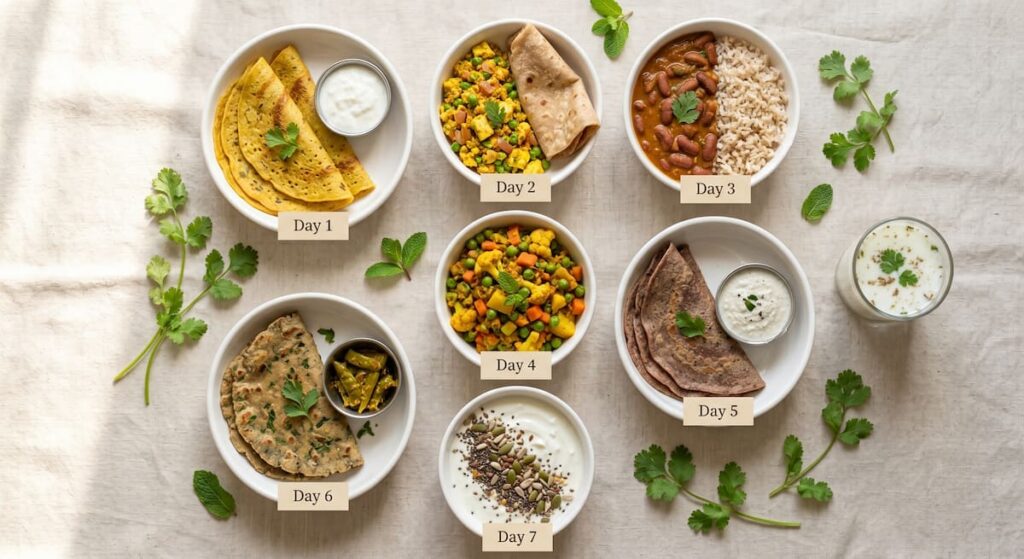
7-Day PCOS Indian Diet Plan
All meals are Indian, practical, and designed for home cooking. Values are approximate per ICMR-NIN IFCT 2017.
| Day | Breakfast | Lunch | Snack | Dinner | ~Protein | ~kcal |
|---|---|---|---|---|---|---|
| Day 1 Monday | 2 Moong dal chilla + 100g low-fat curd | Moong dal + palak sabzi + 2 bajra roti + curd | 30g roasted chana + chaas | 100g paneer sabzi + 1 roti + dal soup | ~78g | ~1,620 |
| Day 2 Tuesday | 2 boiled eggs + oats upma with vegetables | Rajma (small serving) + brown rice (½ katori) + cucumber raita | 1 apple + 8 almonds | Mixed vegetable daliya khichdi + curd | ~82g | ~1,700 |
| Day 3 Wednesday | Paneer bhurji + 1 whole wheat roti | Masoor dal + mixed sabzi + 2 jowar roti + curd | Moong sprouts chaat (50g) | Grilled chicken (100g) + sautéed vegetables + dal soup (non-veg option) | ~91g | ~1,780 |
| Day 4 Thursday | 150g Greek yogurt + 10g pumpkin seeds + 1 guava | Chana masala (small katori) + 2 roti + green salad | Besan cheela (1) + mint chutney | Palak paneer + 1 bajra roti + cucumber raita | ~80g | ~1,680 |
| Day 5 Friday | 2 scrambled eggs + sautéed spinach + 1 roti | Toor dal + lauki sabzi + 2 roti + curd | 30g peanuts + chaas | Tofu stir-fry with vegetables + 1 roti (veg option) / Fish curry + 1 roti | ~85g | ~1,720 |
| Day 6 Saturday | Ragi dosa (2) + sambar + coconut chutney | Mixed dal + bhindi sabzi + 2 jowar roti + curd | 1 banana + 8 walnuts | Methi dal + 1 roti + steamed vegetables | ~75g | ~1,650 |
| Day 7 Sunday | Moong dal chilla + paneer stuffing + curd | Dal makhani (small) + 2 roti + green salad + buttermilk | Sprouts salad + lemon | Egg curry (2 eggs) + 1 roti / Paneer tikka + dal soup | ~88g | ~1,750 |
All values are approximate. Source: ICMR-NIN IFCT 2017. Non-veg options shown for Days 3 and 5 — replace with paneer or tofu equivalents for fully vegetarian plans. For complete breakfast ideas, explore our high protein Indian breakfast recipes.
Vegetarian vs Non-Vegetarian PCOS Diet Options
| Meal Slot | 🌿 Vegetarian Option | 🦐 Non-Vegetarian Option | Protein ≈ |
|---|---|---|---|
| Breakfast | Moong chilla + curd / Paneer bhurji | 2 boiled or scrambled eggs + vegetables | 18–22g |
| Lunch protein | Rajma / chana / paneer / tofu | Grilled chicken (100g) / fish curry | 20–28g |
| Evening snack | Besan cheela / roasted chana / sprouts | 1 boiled egg + vegetables | 7–12g |
| Dinner protein | Palak paneer / dal tadka / tofu stir-fry | Egg curry / grilled fish / chicken soup | 20–28g |
| Daily protein total (vegetarian) — achievable with dal + paneer + curd + chana | ~70–85g | ||
| Daily protein total (mixed diet) — eggs + chicken + dal + curd | ~80–95g | ||
Best Foods for PCOS and PCOD
| Food Category | Best Indian Options | Why It Helps PCOS |
|---|---|---|
| Protein sources | Paneer, eggs, dal, curd, Greek yogurt, roasted chana, tofu | Reduces cravings, supports muscle mass, stabilises blood sugar |
| Low GI grains | Bajra, jowar, ragi, oats, barley | Slower glucose release, better insulin response, reduces androgen impact |
| Vegetables | Spinach, methi, lauki, bhindi, broccoli, capsicum, carrots | High fibre, low calorie, anti-inflammatory micronutrients |
| Healthy fats | Almonds, walnuts, flax seeds, chia seeds, pumpkin seeds, ghee (small) | Omega-3 support for hormone synthesis, satiety, anti-inflammation |
| Fruits (controlled) | Guava, apple, pear, amla, berries, orange | Vitamin C, fibre, antioxidants — low GI options preferred |
| Spices | Cinnamon, turmeric, methi seeds, jeera | Associated with improved insulin sensitivity and anti-inflammatory effects |
For better breakfast structure, explore high-protein Indian breakfast recipes and structured breakfast planning ideas.
Foods to Avoid in a PCOS Diet
| Avoid or Minimise | Why It Worsens PCOS | Better Alternative |
|---|---|---|
| Sweetened chai 3–4 times/day | Sugar on empty stomach spikes insulin immediately | 1–2 cups unsweetened chai or herbal tea |
| Maida products (bread, biscuits, namkeen) | High GI, no fibre — rapid insulin spike | Roasted chana, besan cheela, whole grain roti |
| Packaged juices and cold drinks | Liquid sugar — absorbed faster than solid food | Chaas, coconut water, plain water with lemon |
| Skipping breakfast | Worsens cortisol, triggers binge eating, increases insulin resistance | Protein-rich breakfast within 1–2 hours of waking |
| Very low-calorie crash diets | Increases cortisol, disrupts hormonal cycles, causes muscle loss | 1,500–1,900 kcal/day balanced structured plan |
| Late-night heavy meals after 9 PM | Disrupts fasting insulin window — peak insulin sensitivity is lost | Light protein dinner by 7:30–8 PM |
Daily Macro Targets for PCOS Weight Loss
Based on ICMR-NIN RDA 2020 for adult Indian women with calorie restriction for weight management. Adjust with your dietitian.
| Macronutrient | Target Range / Day | % of Calories | Key Indian Sources |
|---|---|---|---|
| Protein | 70–95g | 20–25% | Dal, paneer, eggs, curd, chana, Greek yogurt |
| Carbohydrates (low GI) | 160–200g | 40–45% | Bajra roti, jowar, oats, dal, vegetables |
| Healthy Fats | 45–65g | 25–30% | Almonds, walnuts, seeds, cooking oil (1–2 tsp/meal), ghee (small) |
| Dietary Fibre | 25–35g | — | Vegetables, millets, sabzi, dal, fruits, seeds |
| Total Calories | 1,500–1,900 kcal | 100% | 300–400 kcal deficit for weight loss |
Practical Tips for Long-Term PCOS Success
1. Fix Breakfast First
A stable, protein-rich morning meal often improves the entire day’s cravings, hunger, and food decisions. Eat within 1–2 hours of waking — this is the single highest-impact change for most women with PCOS.
2. Walk After Every Meal
Even a 10-minute walk after lunch and dinner significantly reduces post-meal blood glucose spikes — a simple, free, and highly effective PCOS management habit.
3. Add Seeds Daily
1 tsp flax seeds (ground) or chia seeds in curd, lassi, or roti dough adds omega-3 fatty acids and fibre without significant calorie impact. Pumpkin seeds provide zinc for hormone support.
4. Weekly Meal Prep Reduces Snacking Mistakes
Preparing moong dal batter, boiling eggs, and portioning roasted chana at the start of each week makes healthy snacking the default choice and eliminates reliance on biscuits and packaged snacks.
5. Track Cravings, Not Just Calories
In PCOS, cravings are a signal — usually of a blood sugar dip, protein deficiency, or poor sleep. Noting when cravings occur (late morning or late evening) helps identify which meals need structural improvement.
You can combine this with our healthy Indian dinner recipes, immunity foods guide, and weight loss recipe collection.
🌿 Start with one change this week: fix breakfast first.
A stable morning meal often improves the entire day’s cravings, hunger, and food decisions. Explore our complete collection of practical Indian nutrition guides to build a sustainable plan.
Frequently Asked Questions
Explore More on GrowRain
🌿 High Protein Indian Breakfast Recipes — 10+ options with 12–25g protein per meal
🌿 Millet Diet Plan for Weight Loss — Low GI grain alternatives to rice and wheat
🌿 Methi Bajra Roti — Low GI Flatbread — GI below 56, ideal for PCOS daily meals
🌿 High Protein Indian Meal — Paneer, Dal, Quinoa — Complete balanced meal template
🌿 Healthy Indian Dinner Recipes for Weight Loss — Light protein-forward dinner ideas
🌿 Immunity Boosting Foods India — Antioxidant and hormone-supportive daily foods
🌿 All GrowRain Recipes — Complete recipe archive
Conclusion
A PCOS Indian diet plan does not require extreme restrictions or expensive supplements. Simple Indian meals like dal, paneer, roti, vegetables, curd, eggs, and millets can support weight loss and hormone balance when used consistently across the 7-day framework in this guide.
The real goal is stable energy, better hunger control, improved insulin response, and daily routines you can continue for years — not weeks. The 7-day plan above gives you a practical starting point for both vegetarian and mixed-diet Indian households at ₹180–₹320/day.
Explore more practical Indian recipes, high protein meals, and nutrition guides on GrowRain.
🍽 GrowRain Commercial Nutrition Consulting
For Restaurant Owners | Cloud Kitchen Operators | Hospital & Institutional Food Managers
The ICMR-NIN nutritional framework behind this PCOS diet plan is available as a structured consulting service for food businesses and healthcare institutions. GrowRain helps operators develop hormone-supportive menus, FSSAI-compliant nutritional labels, and therapeutic meal planning systems for women’s health programmes.
| Service | Who It Is For | Deliverable |
|---|---|---|
| Women’s Health Menu Engineering | Health Cafes, Women’s Wellness Brands, QSR Chains | PCOS-friendly, hormone-supportive menus with protein and GI declarations |
| Therapeutic Meal Plan Packages | Cloud Kitchens, PCOS Meal Subscription Brands | 7-day to 30-day structured PCOS meal plans with portion specs and sourcing guides |
| Hospital Dietary Support | Hospital Canteens, Women’s Health & Maternity Facilities | Condition-specific meal plans (PCOS, gestational diabetes, post-partum) per ICMR-NIN RDA |
| FSSAI Nutritional Labelling | Packaged Food Brands, Institutional Caterers | Label-ready nutrition declarations compliant with FSSAI (Labelling & Display) Regulations 2020 |
All consulting engagements are grounded in ICMR-NIN Recommended Dietary Allowances (2020), IFCT 2017 data, and FSSAI regulations.
Medical & Nutrition Disclaimer: This PCOS Indian diet plan provides general nutrition information based on ICMR-NIN Recommended Dietary Allowances for Indian adults (2020) and ICMR-NIN IFCT 2017 data. Calorie, protein, and macronutrient values are approximate estimates. Individual nutritional needs vary significantly based on body weight, health status, medication, hormonal profile, and activity level. This article does not diagnose, treat, or cure PCOS or PCOD. It is not a substitute for personalised medical or dietary advice. Consult your doctor, gynaecologist, endocrinologist, or registered dietitian before making significant dietary changes, especially if you are managing PCOS, PCOD, thyroid conditions, insulin resistance, or any other chronic condition.
🌿 GrowRain.com — Practical Nutrition & Recipe Platform | ICMR-NIN Sourced Data | Serving All of India