
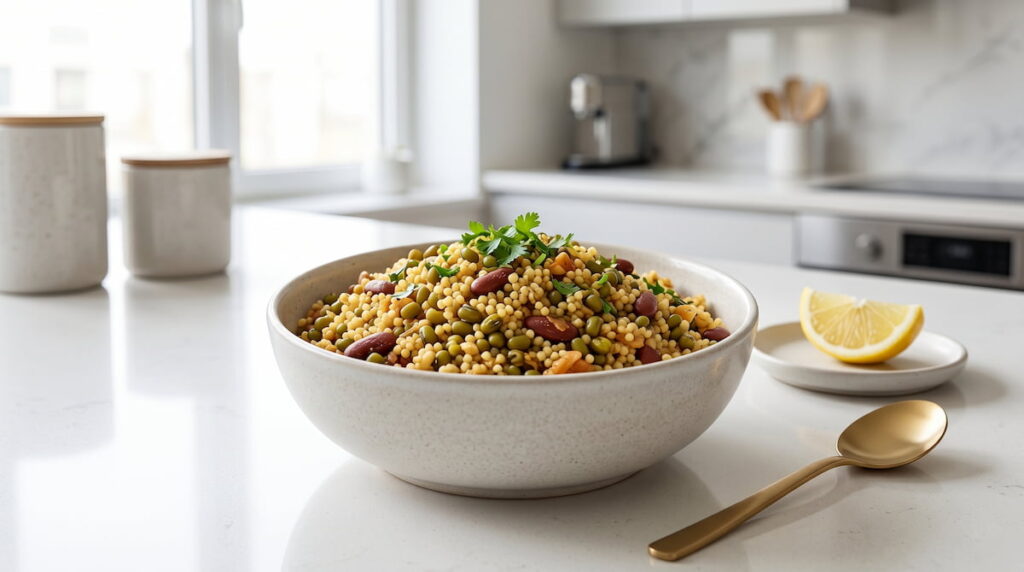
Foxtail Millet Breakfast Recipe for Morning Energy: Millet, Moong and Rajma Indian Breakfast
Category: Millet Recipes |
Prep: 8 hrs soaking + 15 mins |
Cook: 30 mins |
Serves: 3 |
Calories: ~395 kcal per serving |
Protein: ~19g |
Cost: ₹22–₹28 per serving (approx. current market rates, April 2026) |
Data: ICMR-NIN IFCT 2017
Introduction
Many people wake up feeling tired, dull, or low on energy even after sleeping well. In many Indian homes, the reason is not only sleep — it is a weak breakfast. Tea with biscuits or plain bread may feel easy, but they do not provide lasting energy for a productive morning.
A good foxtail millet breakfast recipe should provide slow-release carbohydrates, enough protein, and better fibre. Foxtail millet, whole moong, and rajma work well together because they improve fullness and support better digestion while helping you stay active through the morning.
This recipe is simple, affordable, and practical for everyday Indian cooking. It works well for breakfast, lunch, or even a light dinner when you want something filling but balanced.
For more high-protein Indian breakfast ideas, explore our high protein Indian meals collection and our complete recipe archive.
✔ Working adults with low morning energy
✔ Students needing a filling, healthy Indian breakfast before classes
✔ Families looking for better millet recipes beyond dosa and roti
✔ People trying to improve protein and fibre intake
✔ Weight-conscious home cooks looking for a practical high protein breakfast
What is Foxtail Millet Breakfast?
A foxtail millet breakfast recipe made with moong and rajma gives around ~395 kcal and ~19g protein per serving. It supports normal morning energy because it combines fibre, protein, and slow-digesting carbohydrates in one practical Indian breakfast — at a cost of ₹22–₹28 per serving at current Indian market rates.
Why Foxtail Millet Breakfast Helps Morning Energy
Foxtail millet is naturally rich in fibre and provides steady energy instead of sudden hunger spikes. It is one of India’s oldest cultivated grains — widely grown in Karnataka, Andhra Pradesh, Tamil Nadu, and Telangana — and is available in most Indian supermarkets at ₹80–₹120 per kg (approx. current market rates).
Whole moong and rajma add significant protein to the meal and help you stay full for longer. Together, this combination supports better meal balance compared to refined breakfast options like white bread, biscuits, or fried snacks that cause energy crashes by mid-morning.
If you are managing blood sugar alongside energy levels, this recipe pairs naturally with ideas from our diabetic recipes collection. For a full structured weekly plan, see our 7-day Indian weight loss diet plan.
Market Price of Key Ingredients (India, April 2026)
| Ingredient | Market Rate (₹/kg) | Recipe Qty | Cost for Recipe |
|---|---|---|---|
| Foxtail millet | ₹80–₹120/kg | 100g | ₹8–₹12 |
| Whole green moong | ₹120–₹160/kg | 100g | ₹12–₹16 |
| Rajma | ₹120–₹200/kg | 100g | ₹12–₹20 |
| Onion + Tomato | ₹25–₹60/kg | 300g total | ₹8–₹15 |
| Oil, spices, coriander, lemon | — | As per recipe | ₹5–₹8 |
Total for 3 servings: ₹45–₹71 → Per serving: ₹15–₹24 (budget range) or ₹22–₹28 (branded/organic products)
Approx. current Indian retail market rates, April 2026. Prices vary by city, season, and product quality.
Foxtail Millet Moong Rajma Breakfast Recipe
Cook: 30 mins |
Serves: 3 |
Calories: ~395 kcal |
Protein: ~19g |
Cost: ₹22–₹28 per serving
Ingredients (Serves 3)
| Ingredient | Quantity | Notes |
|---|---|---|
| Foxtail millet | 100g (½ cup) | Thinai / korra / kangni |
| Whole green moong | 100g (½ cup) | Soak separately |
| Rajma (kidney beans) | 100g (½ cup) | Soak separately |
| Onion | 150g (2 medium) | Finely chopped |
| Tomato | 150g (2 medium) | Roughly chopped |
| Green chilli | 10g (2–4 nos) | Adjust to preference |
| Ginger garlic paste | 15g (1 tbsp) | Fresh preferred |
| Red chilli powder | 8g (1 tsp) | Reduce for mild version |
| Turmeric powder | 3g (½ tsp) | |
| Salt | 6g or as needed | Add while boiling too |
| Oil | 10ml (2 tsp) | Sunflower or groundnut |
| Fresh coriander + lemon | 25g + 10ml | Lemon optional |
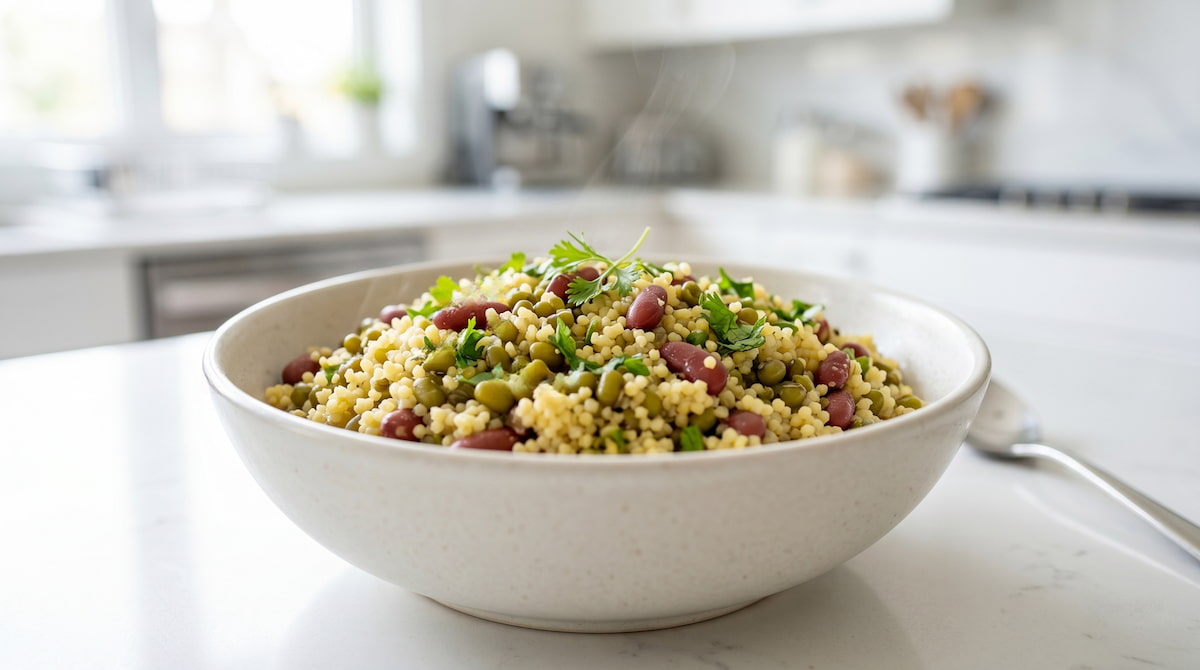
Method
- Wash and soak separately — Wash foxtail millet, moong and rajma well. Soak them separately in enough water for at least 8 hours or overnight. Separate soaking ensures each cooks to the right texture.
- Pressure cook moong and rajma — Drain and transfer rajma and moong to a pressure cooker. Add turmeric, a little salt, and enough water. Cook for 5–6 whistles until completely soft.
- Cook foxtail millet separately — Cook foxtail millet in a pot with enough water until soft but not mushy. Drain any excess water. Cooking separately prevents the millet from becoming sticky.
- Sauté onion and chilli — Heat oil in a pan on medium flame. Add chopped onion and green chilli. Sauté until the onion turns light golden — about 4–5 minutes.
- Cook ginger garlic paste — Add ginger garlic paste and cook for 1 minute, stirring continuously, until the raw smell reduces.
- Add tomato and cook — Add chopped tomato and cook until completely soft and pulpy — about 4–5 minutes.
- Combine and simmer — Add cooked moong, rajma, and foxtail millet. Add red chilli powder and remaining salt. Mix well and simmer for 5–7 minutes on low flame.
- Finish and serve — Finish with fresh coriander and optional lemon juice. Serve hot as a breakfast bowl.
Nutrition Profile (Per Serving — Approx. 360g Cooked)
| Nutrient | Per Serving | % Daily Value* | Source |
|---|---|---|---|
| Calories | ~395 kcal | ~14% | ICMR-NIN IFCT 2017 |
| Protein | ~19 g | ~22% | ICMR-NIN IFCT 2017 |
| Carbohydrates | ~64 g | ~13% | ICMR-NIN IFCT 2017 |
| Fat | ~5.8 g | ~8% | ICMR-NIN IFCT 2017 |
| Dietary Fibre | ~6.5 g | ~35% | ICMR-NIN IFCT 2017 |
| Sodium | 310 mg | ~14% | ICMR-NIN IFCT 2017 |
*%DV based on ICMR-NIN RDA for Indian adults (2020) — 2000 kcal reference diet.
⚠️ FSSAI Allergen Note: This recipe does not intentionally include any of the major FSSAI-declared allergens in standard home preparation. Vegetarian ▲ | Individuals with known food allergies should verify all ingredients before consumption. Prepared under hygienic conditions as per FSSAI Food Safety and Standards (Labelling and Display) Regulations 2020.
Foxtail Millet Breakfast vs Common Indian Breakfast Options
How this foxtail millet breakfast recipe compares to popular Indian morning choices on key nutrition and cost parameters:
| Breakfast Option | Calories | Protein | Fibre | Cost/Serving |
|---|---|---|---|---|
| Foxtail Millet Moong Rajma Bowl | ~395 kcal | ~19 g | ~6.5 g | ₹22–₹28 |
| Vegetable Poha | 250 kcal | 5 g | 2 g | ₹15–₹20 |
| Bread + Tea | 210 kcal | 4 g | 1 g | ₹12–₹18 |
Source: ICMR-NIN IFCT 2017 & USDA FoodData Central. Values approximate per serving.
Practical Tips for Best Results
| Tip | Why It Helps |
|---|---|
| Soak overnight | Reduces cooking time by 30–40% and improves digestibility of pulses |
| Cook millet separately | Prevents sticky texture — foxtail millet cooks faster than rajma and moong |
| Add lemon before serving | Adds freshness and Vitamin C which helps iron absorption from pulses |
| Use maximum 2 tsp oil | Keeps breakfast light — each extra tsp adds ~40 kcal unnecessarily |
| Batch prep the base | Cook and refrigerate the millet-pulse base for 2 days — saves morning time |
Common Mistakes to Avoid
| Mistake | Why It Matters |
|---|---|
| Skipping soaking | Results in hard pulse texture and significantly longer pressure cooking time |
| Using too much oil | Makes breakfast heavier and adds hidden calories that offset the nutritional benefit |
| Overcooking millet | Texture becomes sticky and unpleasant — cook until just soft, not mushy |
Frequently Asked Questions
What is foxtail millet breakfast?
Foxtail millet breakfast is a morning meal made using foxtail millet with pulses or vegetables. A practical serving provides around 250–350 kcal and supports normal morning energy with better fibre and protein compared to refined breakfast options.
Is foxtail millet good for morning energy?
Yes, foxtail millet is useful for morning energy because it provides slow-digesting carbohydrates and fibre. It helps you stay full longer compared to refined breakfast foods like white bread or plain biscuits. For more energy-supporting foods, see our immunity boosting foods guide.
How much protein should an Indian breakfast have?
A practical Indian breakfast should provide around 10–20g protein depending on your daily needs. This recipe gives about 19g protein per serving, which supports better fullness and meal balance throughout the morning. Explore more ideas in our high protein meals collection.
Which millet breakfast is best for weight control?
Breakfasts combining millet with pulses work better because they improve fibre and protein together. Foxtail millet with moong and rajma is stronger for satiety than plain poha if your goal is portion control and balanced eating. Pair it with a structured 7-day Indian weight loss diet plan for best results.
Can children eat foxtail millet breakfast?
Yes, children who eat regular family food can enjoy this recipe with mild spice. Reduce green chilli and serve with curd for a softer taste and better acceptance for younger children.
📌 Explore More on GrowRain
This foxtail millet breakfast fits naturally into a broader healthy Indian eating routine. Related content you may find useful:
- More grain and pulse breakfast ideas → Millet Recipes Collection
- Protein-focused meal planning → High Protein Indian Meals
- Full 7-day structured meal plan → 7-Day Indian Weight Loss Diet Plan
- Blood sugar and low GI recipes → Diabetic Recipes
- Low GI flatbread for daily use → Low GI Roti Mix for Diabetes
- Weight management recipes → Weight Loss Recipes
- Nutrition science guides → Nutrition Guides
- Foods for immunity support → Immunity Boosting Foods in India
- Browse everything → All Recipes on GrowRain
✅ Try this foxtail millet breakfast once this week and notice how your morning energy changes. Small breakfast improvements often create better eating habits for the whole day.
Conclusion
This foxtail millet breakfast recipe is simple, filling, and practical for Indian households. Instead of depending on quick breakfast options that leave you hungry again, this millet, moong, and rajma bowl gives better balance with protein, fibre, and longer-lasting morning energy.
It is affordable at ₹22–₹28 per serving, family-friendly, and easy to prepare with basic Indian kitchen ingredients. Add this foxtail millet breakfast recipe to your weekly routine for a stronger and more balanced start to the day. For more practical nutrition content, explore our complete recipe archive and nutrition guides.
Commercial Consulting
Integrating Millet Breakfast Items into Your Food Business
For restaurant owners, cloud kitchen operators, and hospital dietary managers — consumer demand for millet-based, high-protein breakfast items is growing significantly across India’s organised food service sector. Foxtail millet recipes and pulse-based breakfast bowls offer strong menu engineering opportunities for health-focused brands.
GrowRain consulting services include:
| Service | For | Deliverable |
|---|---|---|
| Millet Menu Engineering | Restaurants, QSR, Cloud Kitchens | ICMR-NIN aligned calorie and protein mapping for millet breakfast items |
| Diet Plan Product Development | Meal Subscription Brands, Cloud Kitchens | Structured breakfast and meal plans with sourcing and portioning guides |
| FSSAI Nutritional Labelling | Packaged Millet Food Brands | Label-ready declarations per FSSAI (Labelling & Display) Regulations 2020 |
| Hospital Breakfast Programme | Hospital Dietary Departments | Millet-based therapeutic meal plans aligned with clinical RDA guidelines |
All consulting work is grounded in ICMR-NIN RDA 2020, IFCT 2017 data, and FSSAI regulations — the same standards referenced throughout this article.
Nutrition Disclaimer: Nutrition values are approximate based on ICMR-NIN IFCT 2017 and common Indian household portions. Individual nutritional needs vary based on age, health status, and activity level. This article is for general educational purposes only and is not a substitute for personalised medical or dietary advice. Consult your doctor or registered dietitian before making significant dietary changes, especially if you have diabetes, hypertension, or any chronic health condition.