
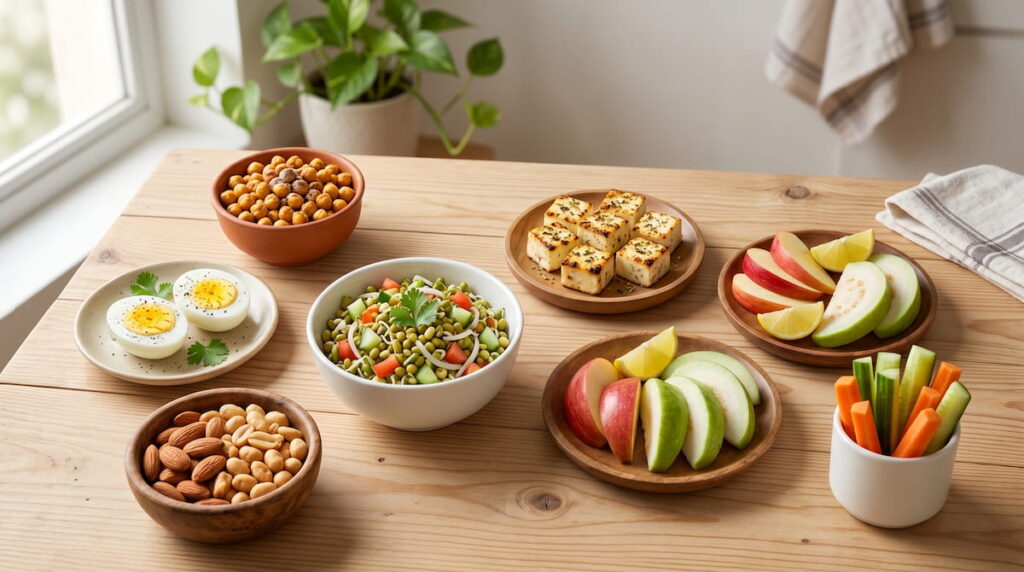
Low GI Snacks for Diabetes in India: 15 Best Options with GI & Protein Data
Category: Diabetic Recipes |
Snacks Listed: 15 options |
Calories: 80–250 kcal per snack |
Protein: 5–14g per serving |
Cost: ₹10–₹40 per snack (approx, current market rates) |
Focus: Low GI + Protein-rich + Portion control |
Data Source: ICMR-NIN IFCT 2017 & USDA FoodData Central
✔ Adults managing Type 2 diabetes or prediabetes looking for practical between-meal options
✔ Office workers and busy professionals who need portable, no-cook snack ideas
✔ Anyone experiencing mid-meal glucose spikes from current snack habits
✔ People trying to reduce dependence on packaged snacks like biscuits and namkeen
✔ Caregivers planning daily food schedules for a diabetic family member
Low GI snacks for diabetes in India are between-meal foods with a glycemic index below 55 that release glucose slowly into the bloodstream, preventing post-snack spikes. The best Indian options include roasted chana (GI ~28), moong sprouts (GI ~25–30), paneer cubes (GI <5), boiled eggs (GI <20), and besan cheela (GI ~35–40) — delivering 5–14g protein per serving at ₹10–₹40 per portion using everyday Indian ingredients.
Why Snack Choices Matter More Than Most Diabetics Realise
For a diabetic adult, between-meal snacks are not optional extras — they are structured nutritional events that directly affect blood glucose between the two largest glucose spikes of the day.
The typical Indian snacking pattern — biscuits with tea, namkeen from a packet, a banana, or fried chakli — introduces a rapid glucose load at the exact point when post-breakfast or post-lunch glucose is already elevated. This compounds the daily spike pattern and worsens glycaemic control over time, even when main meals are well-managed.
The fix does not require expensive or exotic foods. Indian kitchens already contain the most effective low GI snack ingredients available — roasted chana, sprouts, paneer, eggs, curd, besan, and nuts. The gap is knowing which to choose, how much to eat, and when to eat them. This guide provides all three, with exact GI values, protein content, calorie estimates, and cost in rupees for 15 practical options.
To build a complete diabetes-friendly daily diet, combine this snack guide with our 7-day diabetes breakfast plan, low GI roti mix for lunch and dinner, and methi bajra roti.
The Science Behind Low GI Snacking for Diabetics
Understanding what GI means in the context of snacks changes how you evaluate every between-meal food choice.
1. GI measures speed of glucose entry — not total glucose
The glycemic index ranks foods on a scale of 0–100 based on how quickly they raise blood glucose relative to pure glucose. A GI below 55 is considered low. For diabetics, the speed of glucose entry is as important as the total amount — a rapid spike stresses insulin response mechanisms even if the portion is small. Low GI snacks slow glucose release and produce a flatter, more manageable blood sugar curve.
2. Protein combined with carbohydrate further reduces glycemic impact
Protein slows gastric emptying, which delays the absorption of any carbohydrates consumed in the same snack. This is why paneer with a small amount of roti has a lower glycemic effect than roti alone. Every snack in this guide includes protein as a primary component, not an afterthought.
3. Fibre creates a physical barrier to glucose absorption
Soluble fibre — found in chana, oats, besan, and sprouts — forms a gel in the gut that slows glucose diffusion into the bloodstream. This is the mechanism behind the low GI of legume-based Indian snacks. Fibre-rich snacks also improve satiety, reducing the likelihood of overeating at the next main meal.
4. Snack timing affects medication and meal efficacy
For diabetics on oral medication or insulin, snack timing must align with medication windows. A mid-morning snack between 10–11 AM and a mid-afternoon snack between 4–5 PM represent the two lowest-risk windows for most oral medication regimens. Consult your doctor to align snack timing with your specific treatment plan.
GI Classification Reference
| GI Range | Classification | Suitability for Diabetics |
|---|---|---|
| 0–20 | Very Low | Ideal — no meaningful glucose impact |
| 21–55 | Low | Recommended — safe for regular consumption |
| 56–69 | Medium | Use with caution — pair with protein or fiber |
| 70+ | High | Avoid — causes rapid blood glucose spikes |
Reference: International Tables of Glycemic Index and Glycemic Load Values. GI values are approximate.
15 Best Low GI Snacks for Diabetes in India — With GI, Protein & Cost
All values are per standard serving (single portion). Source: ICMR-NIN IFCT 2017 & USDA FoodData Central. GI values are approximate reference figures.
1. Roasted Chana (Dry Roasted Chickpeas)
~120 kcal | ~6g protein | GI ~28 | Est. ₹10–₹15
| Detail | Information |
|---|---|
| Serving Size | 30g (approx. 3 tbsp) |
| Why It Works | High soluble fibre slows glucose absorption; low GI grain legume |
| Availability | Every Indian grocery store; no preparation required |
| Diet Type | Vegan / Vegetarian |
💡 Tip: Choose plain roasted chana, not masala-coated or oil-fried varieties. Combine with cucumber slices and lemon juice for added fibre and micronutrients.
2. Steamed Moong Sprouts Salad
~100 kcal | ~7g protein | GI ~25–30 | Est. ₹10–₹20
| Detail | Information |
|---|---|
| Serving Size | 50g steamed sprouts + vegetables |
| Why It Works | Very low GI; anti-inflammatory; highest fibre density among snack options |
| Preparation | Steam 5–7 mins; toss with tomato, cucumber, lemon, cumin powder |
| Diet Type | Vegan / Vegetarian |
💡 Tip: Always steam sprouts — FSSAI guidelines advise against consuming raw sprouts due to bacterial contamination risk. Lemon juice adds vitamin C and further reduces the glycemic load.
3. Paneer Cubes with Cucumber
~150 kcal | ~10g protein | GI <5 | Est. ₹25–₹35
| Detail | Information |
|---|---|
| Serving Size | 60g low-fat paneer + cucumber slices |
| Why It Works | Virtually zero carbohydrate — no direct glucose impact; complete protein source |
| Preparation | No cooking required; cube and serve with salt and black pepper |
| Diet Type | Vegetarian |
💡 Tip: Use low-fat paneer (under 20% fat). Pair with cucumber for hydration and added fibre. This is one of the most portable office-friendly diabetic snacks available.
4. Boiled Eggs (2 Whole)
~140 kcal | ~12g protein | GI <20 | Est. ₹16–₹25
| Detail | Information |
|---|---|
| Serving Size | 2 medium whole eggs, boiled |
| Why It Works | Highest protein density per rupee; complete amino acid profile; no carbohydrate |
| Preparation | Pre-boil in batches and refrigerate for up to 3 days |
| Diet Type | Non-Vegetarian |
💡 Tip: Boil a batch of 6–8 eggs every 2–3 days to have ready-to-eat snacks available at all times. Boiling is preferred over frying — preserves protein content and eliminates added fat.
5. Besan Cheela (Mini — 1 Piece)
~130 kcal | ~8g protein | GI ~35–40 | Est. ₹10–₹15
| Detail | Information |
|---|---|
| Serving Size | 1 medium besan cheela (~15g besan) |
| Why It Works | Besan is the lowest GI flour available in Indian kitchens; high protein relative to carbohydrate |
| Preparation | 10 minutes; 1 tsp oil maximum; add chopped onion and capsicum for fibre |
| Diet Type | Vegetarian / Vegan |
💡 Tip: As a snack, make a single smaller cheela (not the full 2-cheela breakfast serving). Pair with a tablespoon of plain curd to add protein and probiotics without raising GI.
6. Low-Fat Curd with Almonds
~160 kcal | ~9g protein | GI ~15–20 | Est. ₹20–₹30
| Detail | Information |
|---|---|
| Serving Size | 100g plain low-fat curd + 8 almonds (~20g) |
| Why It Works | Curd provides casein protein + probiotics; almonds add healthy fats and extend satiety |
| Preparation | No cooking; 1 minute assembly; portable in a container |
| Diet Type | Vegetarian |
💡 Tip: Use plain curd — not flavoured, sweetened, or fruit curd which can have GI 50–65+. A pinch of cinnamon is associated with improved insulin sensitivity in clinical studies.
7. Roasted Peanut Chaat
~180 kcal | ~8g protein | GI ~14 | Est. ₹10–₹20
| Detail | Information |
|---|---|
| Serving Size | 30g roasted peanuts + diced onion, tomato, lemon juice |
| Why It Works | Peanuts have one of the lowest GI values of any high-calorie Indian snack; very high protein-to-carb ratio |
| Preparation | 2 minutes; use dry-roasted peanuts without added oil or salt |
| Diet Type | Vegan / Vegetarian |
💡 Tip: Portion control is essential — 30g (approximately 2 tablespoons) is the recommended serving. Peanuts are calorie-dense; exceeding 40g per snack adds unnecessary fat.
8. Boiled Chickpeas Chaat
~150 kcal | ~7g protein | GI ~33 | Est. ₹10–₹20
| Detail | Information |
|---|---|
| Serving Size | 50g boiled chickpeas (kala or safed chana) |
| Why It Works | High resistant starch content lowers effective GI further; excellent protein-to-calorie ratio |
| Preparation | Soak overnight, boil, refrigerate. Toss with raw onion, lemon, cumin |
| Diet Type | Vegan / Vegetarian |
💡 Tip: Prepare a large batch and refrigerate for up to 4 days. Adding raw onion provides quercetin — a compound associated with improved insulin function.
9. Mini Vegetable Omelette (1 Egg)
~120 kcal | ~7g protein | GI <20 | Est. ₹12–₹18
| Detail | Information |
|---|---|
| Serving Size | 1 egg + 2 tbsp mixed vegetables (capsicum, spinach, onion) |
| Why It Works | Warm, filling snack with almost zero carbohydrate; micronutrient-dense with vegetables |
| Preparation | 7 minutes; ½ tsp oil on a non-stick pan |
| Diet Type | Non-Vegetarian |
💡 Tip: As a snack portion, use 1 egg (not 2–3 as in a breakfast). Spinach adds iron and folate; capsicum adds vitamin C. Skip salt if managing blood pressure alongside diabetes.
10. Tofu Cubes with Herbs
~120 kcal | ~9g protein | GI <15 | Est. ₹20–₹30
| Detail | Information |
|---|---|
| Serving Size | 80g firm tofu, cubed; seasoned with black pepper and coriander |
| Why It Works | Ideal vegan paneer alternative; isoflavones associated with improved insulin sensitivity |
| Preparation | Press tofu dry; cube and season cold, or pan-dry 3 mins for texture |
| Diet Type | Vegan / Vegetarian |
💡 Tip: Choose firm tofu (not silken) for snacking — it holds shape and has higher protein density. Pressing out excess water before cubing improves texture and reduces sogginess.
11. Ragi (Finger Millet) Idli — 2 Small
~130 kcal | ~5g protein | GI ~52 | Est. ₹15–₹25
| Detail | Information |
|---|---|
| Serving Size | 2 small ragi idlis (no white rice batter) |
| Why It Works | Ragi has GI ~52 vs. white rice idli GI ~70+; higher calcium and iron content |
| Preparation | Prepare batter with ragi flour + urad dal; steam 10 mins |
| Diet Type | Vegetarian / Vegan |
💡 Tip: As a snack, limit to 2 small idlis (not 4–5 as a full meal). Pair with a small bowl of plain sambar — not coconut chutney — to keep calorie and fat load manageable. Explore our millet recipes collection for more ragi options.
12. Dalia (Broken Wheat) Upma — Small Bowl
~170 kcal | ~6g protein | GI ~41 | Est. ₹15–₹20
| Detail | Information |
|---|---|
| Serving Size | 30g dry dalia + vegetables (half-snack portion) |
| Why It Works | Whole grain with bran intact; significantly lower GI than semolina or white rice; filling |
| Preparation | 15 minutes; 1 tsp oil; add peas, carrot or capsicum |
| Diet Type | Vegetarian / Vegan |
💡 Tip: The snack portion of dalia upma is half the breakfast quantity. Adding moong dal (1 tbsp) to the cooking water boosts protein to ~9g per snack serving without changing preparation significantly.
13. Vegetable Oats — Small Bowl
~160 kcal | ~6g protein | GI ~55 | Est. ₹15–₹25
| Detail | Information |
|---|---|
| Serving Size | 20g rolled oats (snack portion) + capsicum, tomato |
| Why It Works | Beta-glucan fibre from rolled oats reduces post-meal glucose even at medium GI level |
| Preparation | 8 minutes; use rolled oats only, not instant; no sugar or sweetener |
| Diet Type | Vegetarian / Vegan |
💡 Tip: GI ~55 is the highest-GI snack on this list. To lower the effective glycemic response, add 1 tbsp peanuts to the preparation — this pairs protein with the beta-glucan for a stronger glucose-moderating effect.
14. Almonds — Controlled Portion
~140 kcal | ~5g protein | GI ~15 | Est. ₹25–₹35
| Detail | Information |
|---|---|
| Serving Size | 8–10 whole raw or dry-roasted almonds (~20–25g) |
| Why It Works | Monounsaturated fats improve insulin sensitivity; magnesium supports glucose metabolism |
| Preparation | No preparation required; pre-portion into small bags or boxes for office use |
| Diet Type | Vegan / Vegetarian |
💡 Tip: Portion strictly. Almonds are the most calorically dense item on this list — 50g provides 300 kcal, which exceeds a full snack budget. Soaked almonds are easier to digest; skin-on provides more fibre than blanched.
15. Greek Yogurt (Unsweetened)
~120 kcal | ~10g protein | GI ~11–14 | Est. ₹30–₹40
| Detail | Information |
|---|---|
| Serving Size | 100g unsweetened Greek yogurt (no fruit, no honey) |
| Why It Works | Lowest GI dairy product; highest protein per 100g among common Indian dairy options |
| Preparation | No preparation; refrigerate and portion directly; add 5 walnuts for healthy fat |
| Diet Type | Vegetarian |
💡 Tip: Use plain Greek yogurt only — flavoured varieties contain added sugar and may have GI 40–60+. If Greek yogurt is unavailable locally, hung curd (strained plain dahi) is a near-equivalent with similar protein density.
Complete Snack Comparison Table — All 15 Options
Ranked by GI (lowest to highest). Source: ICMR-NIN IFCT 2017 & USDA FoodData Central. Values are approximate per standard serving.
| Snack | GI (approx.) | Protein | Calories | Cost ₹ | Diet |
|---|---|---|---|---|---|
| Paneer cubes | <5 | ~10g | ~150 | ₹25–₹35 | Veg |
| Tofu cubes | <15 | ~9g | ~120 | ₹20–₹30 | Vegan |
| Almonds (8–10 pcs) | ~15 | ~5g | ~140 | ₹25–₹35 | Vegan |
| Boiled eggs (2) | <20 | ~12g | ~140 | ₹16–₹25 | Non-Veg |
| Mini veg omelette (1 egg) | <20 | ~7g | ~120 | ₹12–₹18 | Non-Veg |
| Greek yogurt (100g) | ~11–14 | ~10g | ~120 | ₹30–₹40 | Veg |
| Peanut chaat (30g) | ~14 | ~8g | ~180 | ₹10–₹20 | Vegan |
| Curd with almonds | ~15–20 | ~9g | ~160 | ₹20–₹30 | Veg |
| Moong sprouts salad | ~25–30 | ~7g | ~100 | ₹10–₹20 | Vegan |
| Roasted chana (30g) | ~28 | ~6g | ~120 | ₹10–₹15 | Vegan |
| Boiled chickpea chaat | ~33 | ~7g | ~150 | ₹10–₹20 | Vegan |
| Besan cheela (1 mini) | ~35–40 | ~8g | ~130 | ₹10–₹15 | Vegan |
| Dalia upma (small bowl) | ~41 | ~6g | ~170 | ₹15–₹20 | Vegan |
| Ragi idli (2 small) | ~52 | ~5g | ~130 | ₹15–₹25 | Vegan |
| Vegetable oats (small bowl) | ~55 | ~6g | ~160 | ₹15–₹25 | Vegan |
Ranked by glycemic index, lowest to highest. GI values are approximate reference figures sourced from ICMR-NIN IFCT 2017 and international GI tables.
Best Snack by Situation
Use this reference to select the most appropriate option based on your situation each day:
| Situation | Best Snack | Why |
|---|---|---|
| Office / portable | Roasted chana + almonds | No refrigeration needed; no preparation; shelf-stable |
| Urgent / no time | Paneer cubes or Greek yogurt | Zero preparation time; refrigerate-ready |
| Highest protein priority | Boiled eggs (2) | ~12g protein — highest protein density per snack |
| Lowest GI priority | Paneer cubes | GI <5 — effectively no glucose impact |
| Vegan + low GI | Tofu cubes or moong sprouts | Both under GI 30; plant-based protein |
| Tightest budget | Roasted chana or besan cheela | ₹10–₹15 per serving; accessible in every Indian city and town |
| Evening hunger (late) | Curd with almonds | Casein protein provides slow, sustained satiety through the night |
| Managing weight alongside diabetes | Moong sprouts salad | Lowest calorie on the list (~100 kcal) with adequate protein |
Common Snacking Mistakes That Worsen Diabetes Control
These are the most frequently observed errors — many involve foods that appear healthy on the surface:
1. Choosing packaged "diabetic-friendly" or "multigrain" snacks
Most packaged snacks labelled as healthy, multigrain, or baked contain refined flour, maltodextrin, or added sugar. Multigrain biscuits can have GI 55–70 depending on formulation. The fibre content is rarely sufficient to meaningfully lower GI. Always check the ingredient list — if refined wheat flour (maida) or sugar appears in the first three ingredients, the product is not suitable.
2. Eating fruit alone as a snack
Fruit is not automatically a safe diabetic snack. Banana (GI ~51–62), mango (GI ~51–60), grapes (GI ~59), and pineapple (GI ~59–66) cause significant glucose elevation when eaten alone. Lower-GI options like guava (GI ~12–24), apple (GI ~36), or pear (GI ~38) are preferable — but should always be paired with protein (curd, paneer, or eggs) to further dampen the glycemic response.
3. Overeating nuts
Nuts are low GI but high calorie. 100g almonds provide 579 kcal — nearly equivalent to a full meal. The recommended snack portion is 20–25g (8–10 pieces), not a handful from a large open packet. Pre-portioning into small containers or zip bags prevents unintentional overconsumption.
4. Pairing low GI food with a high GI beverage
Roasted chana paired with sweetened chai eliminates the glycemic benefit of the chana. The sugar in tea is absorbed immediately, independent of what solid food accompanies it. Always pair snacks with unsweetened tea, black coffee, or plain water. Flavoured milk drinks and packaged fruit juices are among the most glycemically disruptive beverages available.
5. Skipping snacks and overeating at main meals
Skipping structured snacks leads to extended fasting windows that produce compensatory hunger before the next main meal. This results in faster eating, larger portions, and reduced satiety signalling — all of which increase the glycemic burden of lunch and dinner. Regular, structured snacks prevent this cycle.
High GI Indian Snacks to Avoid
These are the most common Indian snack foods that directly undermine blood glucose control:
| Snack to Avoid | GI (approx.) | Problem | Replace With |
|---|---|---|---|
| Glucose biscuits / Marie biscuits | 70–80 | Refined flour + sugar base; no protein buffer | Roasted chana |
| Namkeen / Bhujia / Sev | 65–75 | Deep-fried; refined starch; high sodium | Peanut chaat |
| Banana / Mango (alone) | 51–66 | High fructose load without protein pairing | Guava + curd |
| Sweetened chai + biscuit | 70+ | Double glucose hit: sugar in tea + refined biscuit | Unsweetened tea + almonds |
| Packaged fruit juice | 65–70 | Liquid fructose — faster absorption than solid food | Whole guava or apple |
| Samosa / bonda / vada | 60–75 | Maida + potato filling + deep-fried = triple GI risk | Besan cheela |
| White rice murmura / puffed rice | 82–90 | One of the highest GI foods available — rapid spike | Sprouts salad |
Explore More on GrowRain
Use these guides to build a complete low GI daily eating plan around this snack guide:
🌿 Methi Bajra Roti — Low GI Flatbread for Diabetes — GI below 45; ideal for lunch and dinner
🌿 Low GI Roti Mix for Diabetes — Replace maida with a practical blended atta
🌿 High Protein Indian Breakfast Recipes — 10 options with 12–25g protein
🌿 Millet Diet Plan for Weight Loss — Low GI grain alternatives to rice and wheat
🌿 High Protein Indian Meal — Paneer, Dal, Quinoa — Complete lunch option for diabetics
🌿 All Diabetic Recipes — Complete GrowRain diabetic recipe archive
Frequently Asked Questions
🍎 Start with just one swap this week.
Replace your current between-meal snack with roasted chana or paneer cubes and track the difference in your mid-meal energy levels. Explore our full diabetic recipe collection for breakfast, lunch, and dinner ideas to complete your daily plan.
Conclusion
Low GI snacking for diabetes does not require expensive imported products or complex preparation. The 15 options in this guide — roasted chana, sprouts, paneer, eggs, besan cheela, curd, peanuts, tofu, ragi idli, dalia, oats, almonds, and Greek yogurt — are all available in Indian kitchens and markets at ₹10–₹40 per serving, require minimal or no cooking, and are backed by ICMR-NIN nutritional data.
The principle is consistent across all 15 options: prioritise protein, choose fibre-rich foods, control portions, and always avoid pairing snacks with sweetened beverages. These three rules apply regardless of which specific snack you choose on a given day.
For a complete daily diabetes diet plan, combine this snack guide with our 7-day diabetes breakfast plan, low GI roti mix, and methi bajra roti guides — all built on the same ICMR-NIN framework.
🍽 GrowRain Commercial Nutrition Consulting
For Restaurant Owners | Cloud Kitchen Operators | Hospital & Institutional Food Managers
The ICMR-NIN nutritional framework used in this guide — GI mapping, protein profiling, and portion standardisation — is available as a structured commercial consulting service for food businesses and healthcare institutions. GrowRain helps operators develop diabetic-friendly snack menus, FSSAI-compliant nutritional declarations, and therapeutic meal planning systems.
| Service | Who It Is For | Deliverable |
|---|---|---|
| Diabetic Snack Menu Development | Health Cafes, Corporate Canteens, QSR Chains | GI-verified snack menus with portion specs and ICMR-NIN calorie declarations |
| Therapeutic Snack Planning | Cloud Kitchens, Diabetes Meal Subscription Brands | Daily and weekly snack plans for diabetic, prediabetic, and weight management programmes |
| Hospital Dietary Support | Hospital Canteens, Senior Care and Rehabilitation Facilities | Between-meal snack protocols for diabetic, renal, and cardiac patients aligned with ICMR-NIN RDA |
| FSSAI Nutritional Labelling | Packaged Snack Brands, Institutional Caterers | Per-serving nutrition declarations compliant with FSSAI (Labelling & Display) Regulations 2020 |
All consulting engagements are grounded in ICMR-NIN Recommended Dietary Allowances (2020), IFCT 2017 composition data, and FSSAI regulations. Serving South India and PAN India clients.
Medical & Nutrition Disclaimer: This guide provides general nutrition information based on ICMR-NIN Indian Food Composition Tables (IFCT) 2017 and USDA FoodData Central. GI values, protein content, and calorie estimates are approximate reference figures. Individual nutritional needs, medication schedules, and glucose responses vary significantly. This content is not a substitute for personalised medical or dietary advice. Consult a qualified doctor or registered dietitian before making changes to your snack plan or diet, especially if you are managing diabetes, prediabetes, hypertension, kidney disease, or any other chronic condition.
🌿 GrowRain.com — Practical Nutrition & Recipe Platform | ICMR-NIN Sourced Data | Serving All of India