
Butter Chicken From Scratch — Easy Restaurant-Style Recipe
Last updated: 13 June 2026
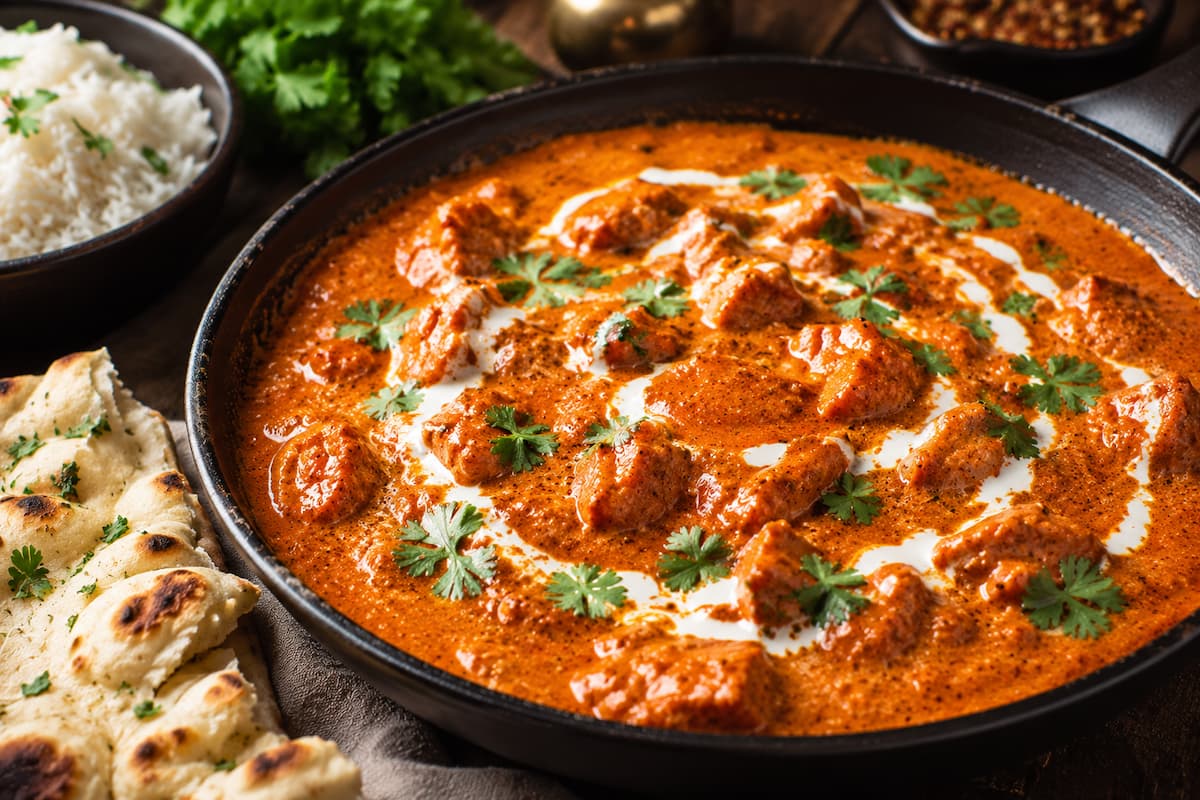
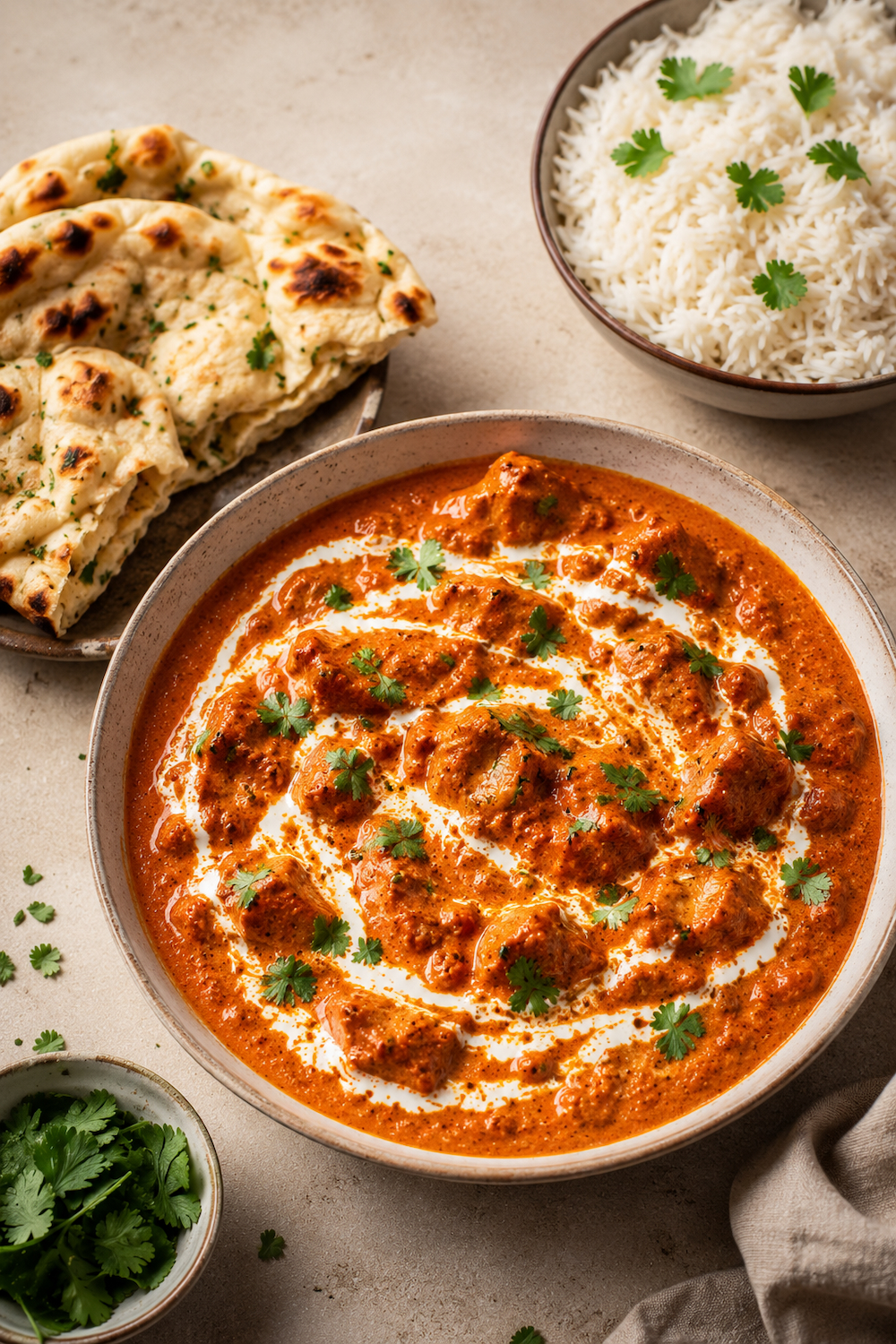
There is a specific kind of butter chicken you start chasing once you have tasted it at a good restaurant: glossy, deep orange-red, silky enough to coat the back of a spoon, barely spicy, and rich in a way that seems almost implausible for something made with such simple ingredients. This is that recipe — not a watered-down weeknight imitation, but the real thing, adapted for a home kitchen without asking anything unreasonable of you.
Butter chicken — or murgh makhani — was invented in the early 1950s at the legendary Moti Mahal restaurant, when chefs simmered leftover tandoori chicken in a tomato, butter and cream gravy to prevent it from drying out. That origin story contains the whole secret: charred, spice-marinated chicken meets a velvety sauce, and the two melt together into something far greater than the sum of their parts. You do not need a tandoor at home. A hot cast-iron pan does exactly the same job in fifteen minutes.
The recipe below uses one bowl for the marinade, one pan for the sauce, and finishes in under an hour of active time — faster if you marinate the chicken the night before (which you should, because overnight is genuinely transformative). The spice list looks longer than it is; every single one lives in a standard spice drawer and will last for months.
There is one ingredient in this recipe that is non-negotiable. I will come back to it in the ingredient notes. Read that section before you shop.
Why this recipe works
- Yogurt marinade, not a dry rub. Full-fat yogurt tenderises the chicken, adds a subtle tang that survives the sauce, and creates that characteristic charred-but-moist surface when seared hot. No other marinade comes close for this dish.
- High-heat sear, not a gentle poach. Butter chicken gets its depth from the caramelisation on the chicken surface before the sauce goes anywhere near it. That char, combined with the fond left in the pan, is what separates a restaurant plate from a home version that tastes hollow.
- Tomato paste, not whole tomatoes. Canned tomatoes or passata thin the sauce and require 40 minutes of reduction to build flavour. Double-concentrated tomato paste caramelises in four minutes and delivers the glossy, clingy texture restaurants achieve with a fraction of the time.
- Blending the sauce. This single step — taking an immersion blender to the cooked sauce before the cream goes in — is what makes the difference between a chunky home curry and the smooth, mirror-gloss sauce that runs off the back of a spoon. Five seconds of effort, extraordinary result.
- Cold butter at the end. A final tablespoon of cold, unsalted butter stirred in off the heat mounts the sauce and gives it that high-gloss finish. It is the same technique fine-dining kitchens use; it works here for exactly the same reason.
- Weeknight-practical. Marinate while you do other things, cook the sauce in the time your rice takes to steam, done. The entire dish benefits from being made ahead, which means it is one of the rare recipes that is genuinely better on day two.
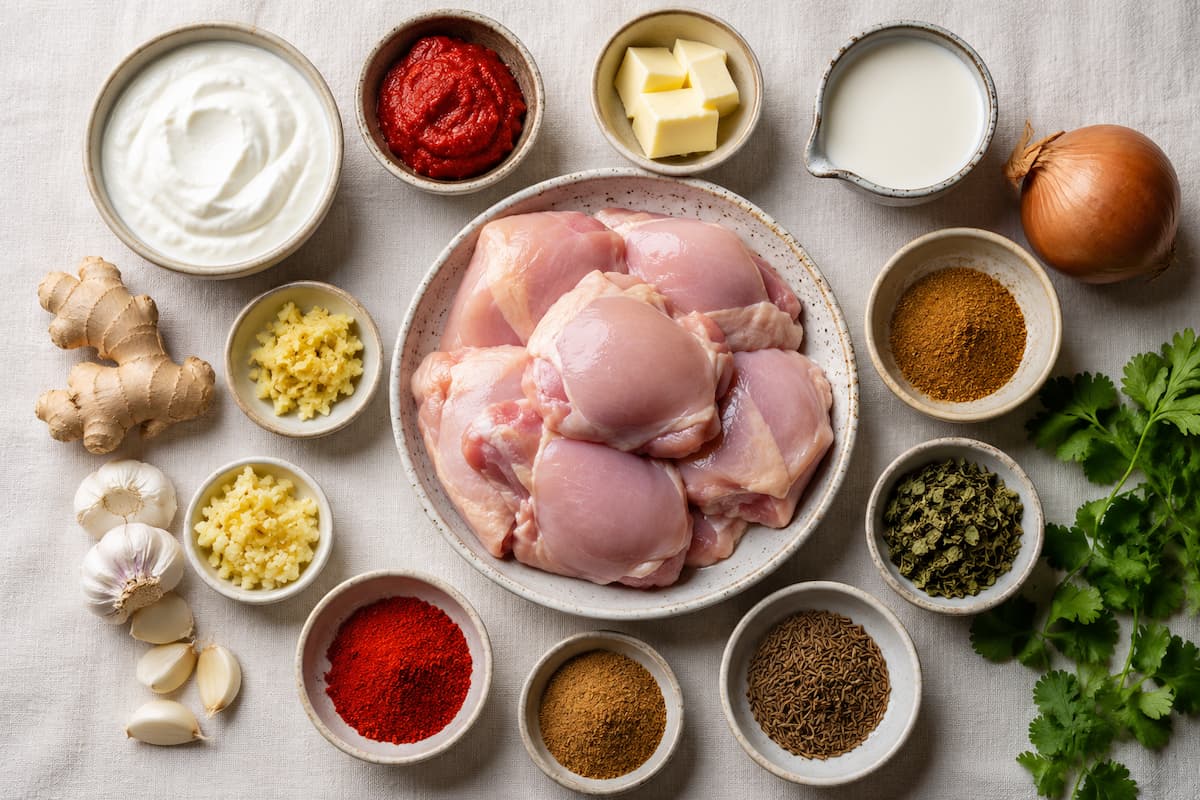
Ingredient notes
Chicken thighs
Boneless, skinless thighs are the right cut here. They stay juicy through both the sear and the sauce simmer, and they absorb the marinade more deeply than breast. If chicken breast is all you have, cut it into slightly larger 4 cm pieces, marinate for a minimum of four hours (overnight is essential with breast), and reduce the searing time by thirty seconds per side to avoid overcooking. See our high-protein chicken meal guide for more guidance on choosing the right cut for different preparations.
Full-fat plain yogurt
Greek yogurt or full-fat strained yogurt both work perfectly. The fat protects the chicken from fierce heat, the acid tenderises, and the milk proteins brown beautifully. Low-fat yogurt is a false economy here — it produces a grainy, curdled crust on the chicken rather than the smooth, lacquered surface you want. For a dairy-free version, full-fat coconut yogurt is the closest substitute in both fat content and behaviour under heat.
Kashmiri chilli powder
This is the spice that gives butter chicken its signature glowing red-orange colour without significant heat. It is mild — closer in heat level to smoked paprika than cayenne. If you cannot source it from a spice specialist or online, the closest substitute is a blend of three parts smoked paprika to one part cayenne. Plain American chilli powder is formulated with cumin and oregano, which will muddy both the colour and the flavour profile of the sauce; avoid it here entirely.
Garam masala
The warm spice blend that underpins the flavour of this dish. Buy a fresh jar — stale garam masala is the single most common reason homemade butter chicken tastes flat and thin compared to restaurant versions. The volatile aromatic compounds that make garam masala taste alive degrade within six months of opening. Trusted brands such as MDH or Everest are reliable; a small-batch freshly ground blend is even better if you can find one.
Kasuri methi (dried fenugreek leaves) — the non-negotiable ingredient
This is the ingredient everyone trying to reverse-engineer restaurant butter chicken eventually discovers. Kasuri methi is simply dried fenugreek leaves, and they carry a slightly bitter, herbaceous, hay-like fragrance that nothing else replicates. Always crush the dried leaves between your palms before adding them — this releases the essential oils and transforms a modest sprinkle into a genuinely distinctive finish. Find it at any South Asian or specialty spice grocer, or order online. There is no substitute, and omitting it will leave the dish tasting incomplete. Buy a packet; it costs almost nothing and lasts a year.
Double-concentrated tomato paste
The backbone of the sauce. Look for tubes labelled “double-concentrated” — these have had far more water removed than standard canned paste, delivering a richer, more complex flavour without the extended reduction time fresh tomatoes require. If you only have regular tomato paste, increase the quantity to three-quarters of a cup and simmer the sauce for an additional ten minutes before blending.
Heavy cream and butter
Use heavy cream with at least 35% fat content — single cream or half-and-half will split when it meets the hot sauce unless you are extremely careful with the heat. Use real unsalted butter; ghee is the traditional choice and works equally well. The cold pat of butter added at the very end is a technique worth learning for any sauce: cold butter, added off the heat and swirled in, creates a glossy, emulsified finish that hot butter or cream alone cannot achieve.
Fresh ginger and garlic
Grated on a Microplane, not minced. Grated ginger and garlic dissolve completely into the sauce; minced pieces remain gritty and uneven. A pre-made ginger-garlic paste from an Asian or specialty grocery store is a convenient substitute that works extremely well in both the marinade and the sauce.
How to make butter chicken from scratch — step by step

Make the marinade and coat the chicken (5 minutes active; 30 minutes to overnight rest).
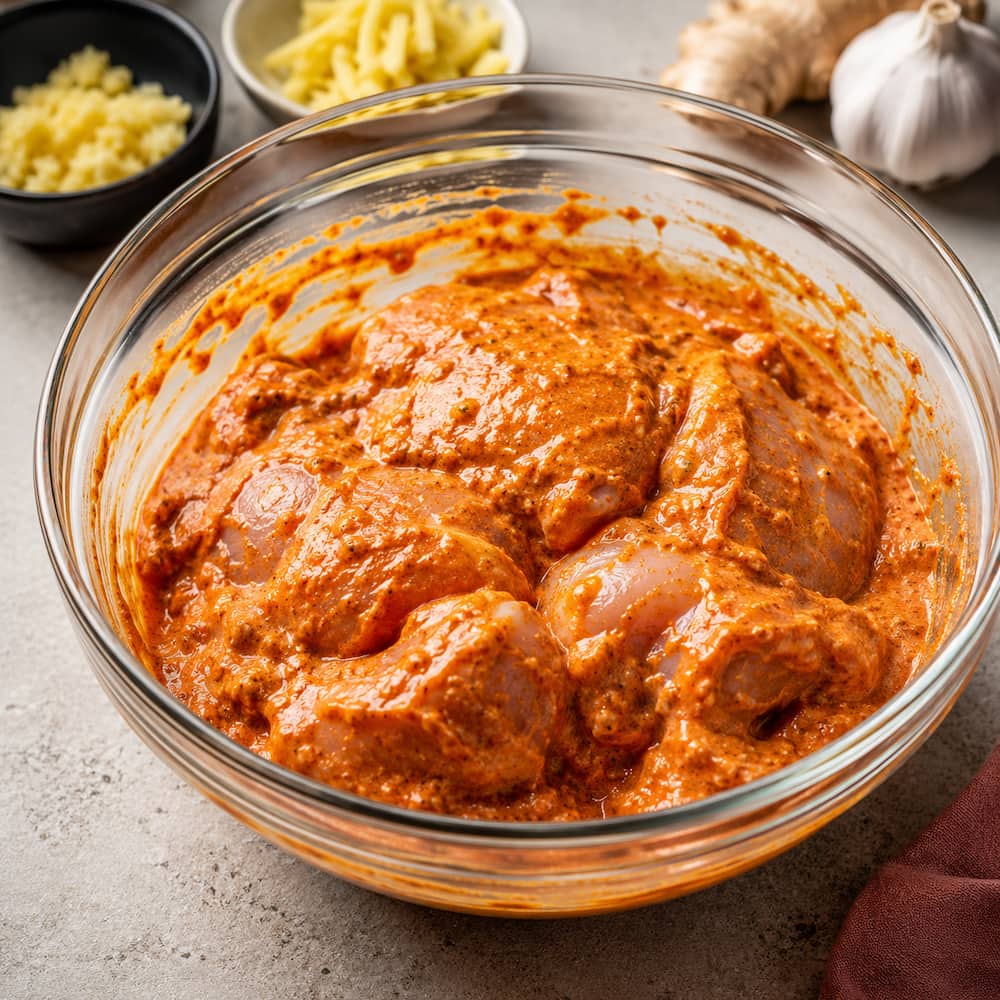
Whisk together ½ cup full-fat Greek yogurt, one tablespoon lemon juice, one tablespoon grated ginger, four grated garlic cloves, one teaspoon Kashmiri chilli powder, one teaspoon garam masala, half a teaspoon ground turmeric, half a teaspoon ground cumin, and one teaspoon fine sea salt in a large bowl. The mixture should look like vibrant rust-coloured paint. Add 700 g of chicken thigh pieces and toss until every piece is thoroughly coated. Cover the bowl with cling film and refrigerate for at least 30 minutes. If you have the time — and you should plan to have the time — an overnight marinade produces chicken that is noticeably more tender and deeply flavoured.
Sear the chicken on high heat (about 8 minutes total).
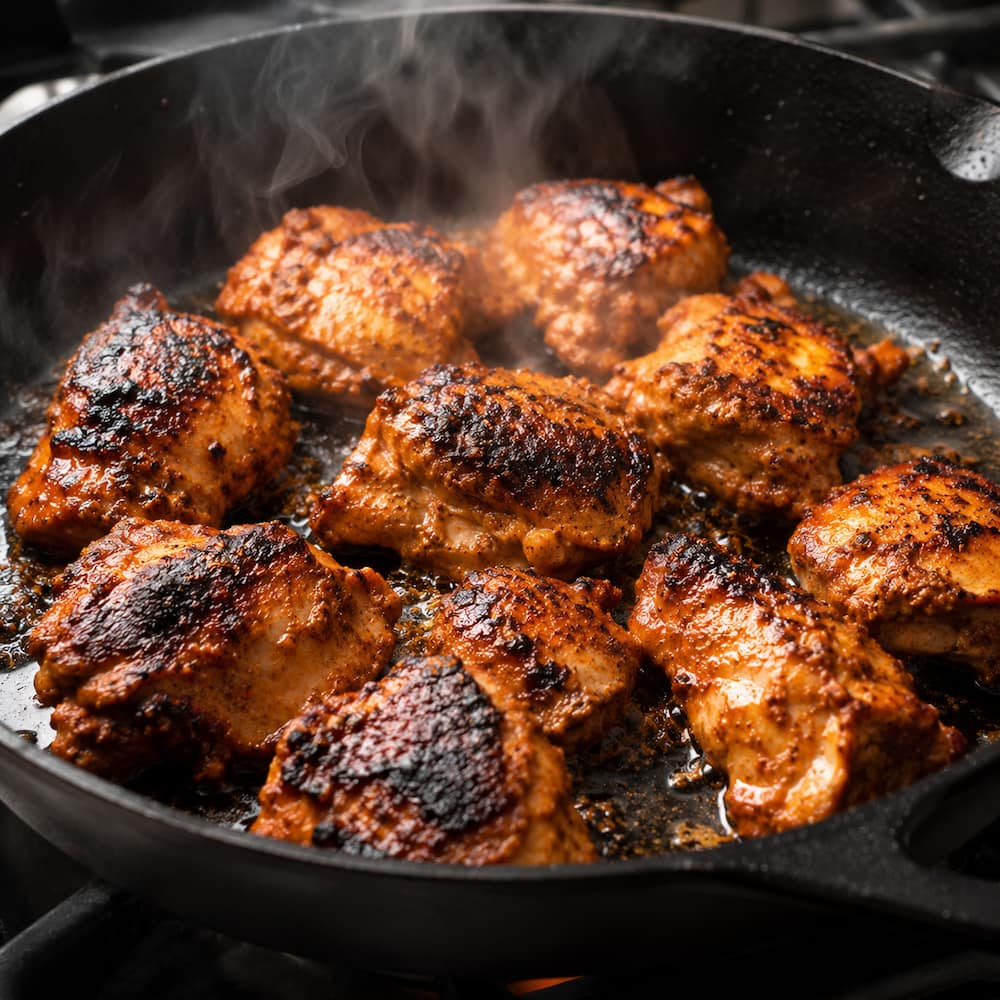
Heat one tablespoon of ghee or neutral oil in a wide, heavy skillet — cast iron is ideal — over medium-high heat until it shimmers and a drop of marinade sizzles vigorously on contact. Working in two batches to avoid crowding, lay the chicken pieces in a single layer and leave them entirely undisturbed for two to three minutes. You want a charred, almost-scorched crust on the underside — this is correct and intentional. Flip and sear the other side for two minutes. The chicken will not be cooked through at this point, which is also correct. Transfer to a plate and set it aside. Repeat with the second batch. Do not wipe the pan — the brown fond left on the surface is concentrated flavour that belongs in your sauce.
-
Build the aromatic base (4 minutes).
Reduce the heat to medium. Melt two tablespoons of unsalted butter in the same pan. Add the onion and cook for four minutes, stirring occasionally, until it is soft and translucent but not browned. Add one tablespoon of grated ginger and four more grated garlic cloves and stir for 45 seconds — just until you smell the raw edge disappear. Keep the heat at medium; garlic goes bitter the moment it browns.
-
Bloom the spices (90 seconds).
Lower the heat to medium-low. Add one teaspoon Kashmiri chilli powder, one teaspoon garam masala, half a teaspoon ground coriander, and half a teaspoon ground cumin. Stir constantly and watch carefully — within 30 seconds the spices will darken slightly and smell deeply toasted rather than raw. This is the blooming point. Pull the pan off the heat immediately if you sense they are going past toasted towards scorched; burnt spices cannot be rescued and will make the entire sauce bitter.
Caramelise the tomato paste (3–4 minutes).
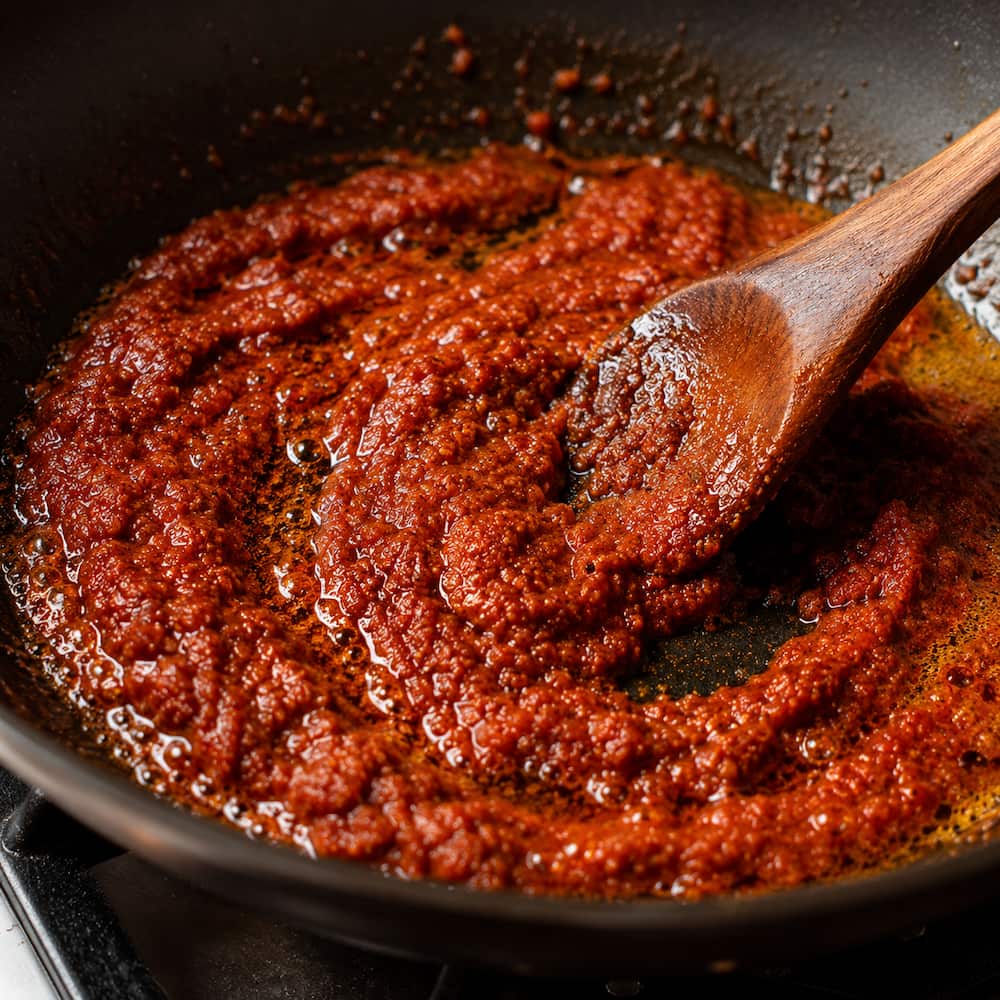
Return the pan to medium heat and stir in half a cup of double-concentrated tomato paste. Cook, stirring almost constantly, for three to four minutes. Watch the paste transform: it will shift from bright scarlet to a deeper brick-red, begin to stick slightly to the pan in thin sheets, and you will notice a pool of oil beginning to separate at the edges. That oil separation is your cue — it means the paste has caramelised sufficiently and the water has cooked out. This step is the foundation of the sauce’s richness; do not rush it.
-
Make the sauce (10 minutes simmer).
Pour in 300 ml of water, one teaspoon of sugar, and three-quarters of a teaspoon of fine sea salt. Stir to dissolve the paste into a smooth sauce, then bring to a gentle bubble. Reduce heat to low and simmer uncovered for eight to ten minutes. The sauce should thicken until a spoon dragged slowly across the pan leaves a clear trail for a moment before the sauce flows back in. If it looks watery at nine minutes, give it two more.
-
Blend for restaurant-grade silk (strongly recommended — 1 minute).
Remove the pan from the heat. Use an immersion blender directly in the pan and blend for 30 seconds until the sauce is completely smooth. For the truest restaurant texture, set a fine-mesh sieve over a bowl and pass the blended sauce through it, pressing gently with a spatula. Return the strained sauce to the pan. This step is optional in the sense that it is technically skippable, but it is mandatory in the sense that it is precisely what makes the difference between a good home curry and something that tastes like it came from a restaurant kitchen.
Add the cream and return the chicken (8 minutes).
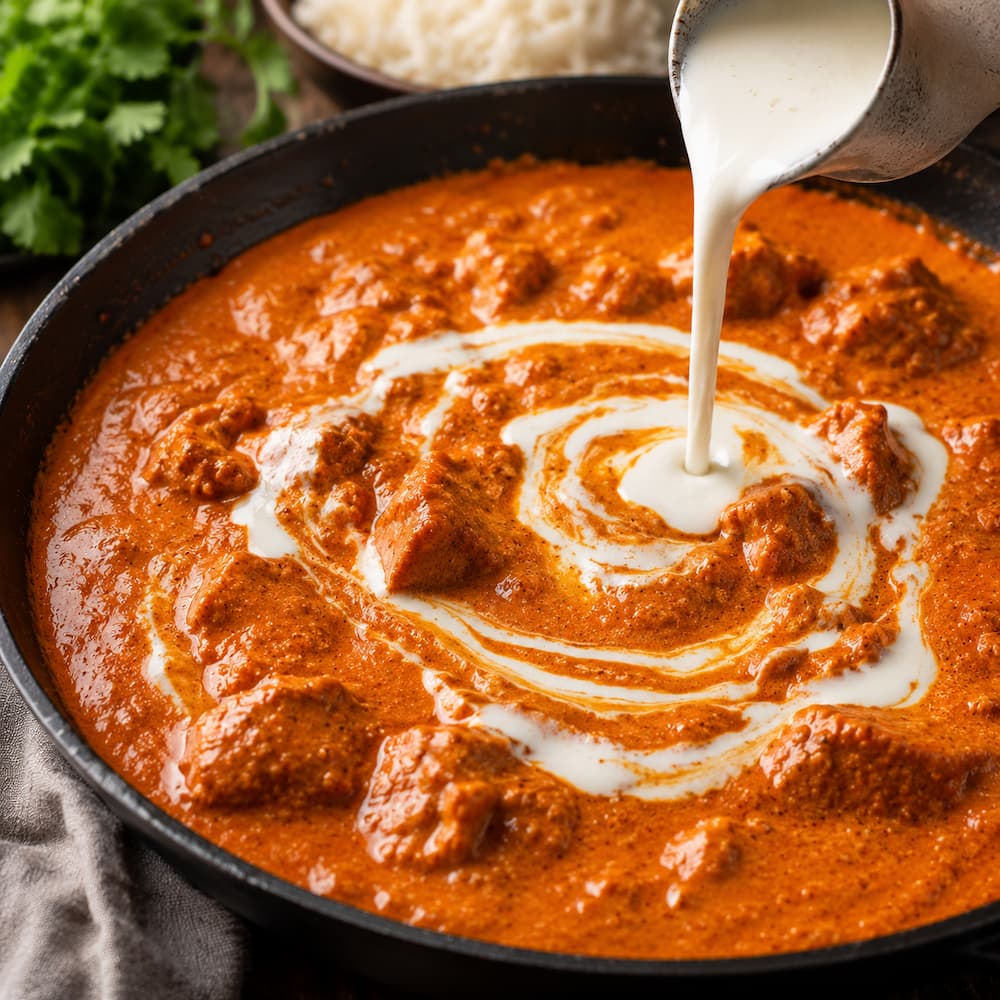
Return the pan to low heat — not medium, not medium-low, but low. Pour in 180 ml of heavy cream in a slow, steady stream while stirring so the cream emulsifies into the sauce rather than sitting on top of it. Slide the seared chicken back in along with every drop of juice on the resting plate. Simmer very gently — the surface should barely shiver, not bubble — for six to eight minutes until the chicken reaches an internal temperature of 74°C / 165°F and the sauce coats each piece in a thick, glossy layer. Taste the sauce at this point; it should be rich, warm, aromatic, and slightly sweet from the cream and sugar.
-
Finish with butter and kasuri methi (1 minute).
Turn off the heat entirely. Take your two teaspoons of kasuri methi and crush them firmly between both palms directly over the pan — you will smell the transformation instantly as the essential oils release. Stir them into the sauce. Drop in one tablespoon of cold, unsalted butter and swirl the pan gently until the butter melts into the sauce and disappears into a glossy sheen. Taste one final time and adjust salt if needed. If the sauce has any sharpness, a pinch more sugar will balance it.
-
Rest, garnish and serve.
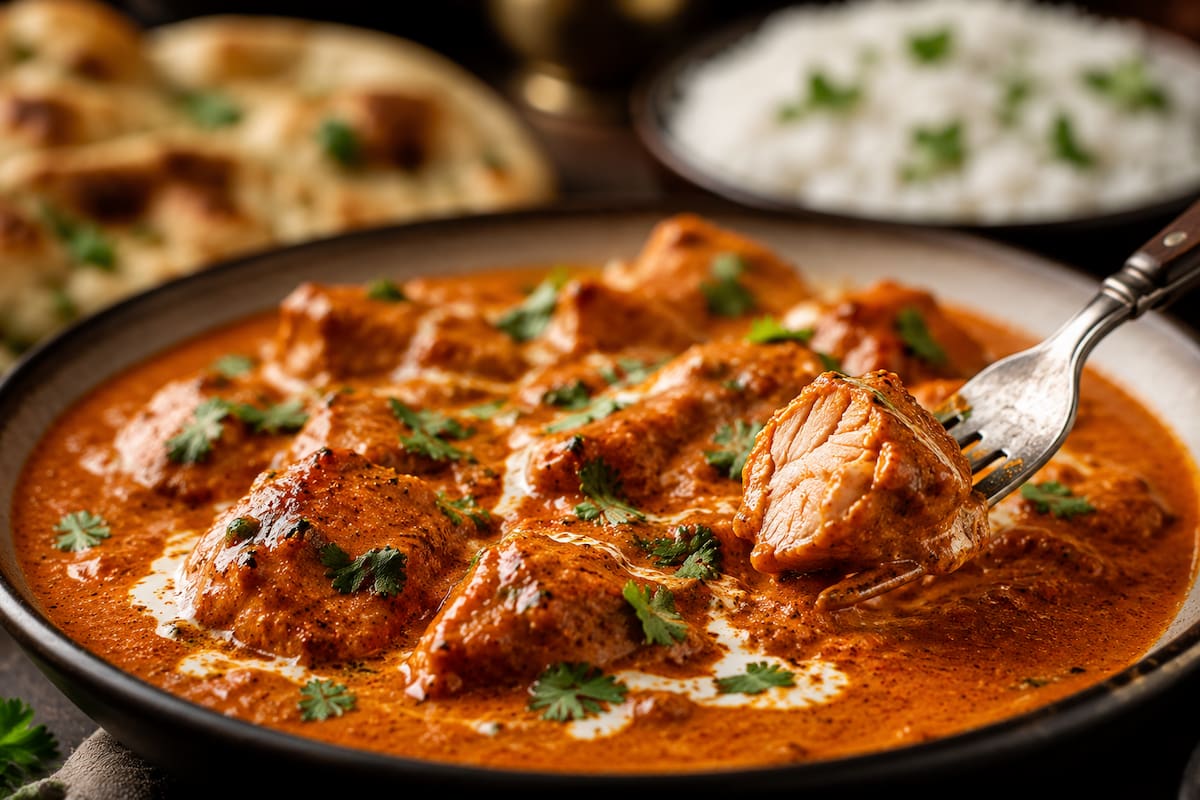
Let the butter chicken sit off the heat for three to five minutes before serving. This brief rest lets the sauce thicken slightly and the flavours settle into each other. Swirl one tablespoon of cream over the surface in a loose spiral, scatter with a handful of fresh coriander leaves, and serve immediately with hot basmati rice and warm naan for dunking. The colour should be a deep, glowing red-orange; the surface should be mirror-glossy; the first spoonful should make someone in the room say something.
Common mistakes to avoid
Burning the spices during blooming. Spices go from perfectly toasted to acrid and ruined in seconds. The heat must be medium-low, you must stir constantly, and you must be ready to pull the pan off the heat the moment the spices deepen. A burnt spice stage cannot be recovered; the bitterness will carry through the entire sauce even after adding tomato and cream.
Splitting the cream. Two things cause this: adding cold cream directly to a roaring-hot sauce without stirring, or letting the sauce reach a hard boil after the cream is in. Lower the heat to low before you add the cream, pour it in a slow stream, stir constantly, and never let the finished sauce bubble aggressively. If splitting does occur, an immersion blender can sometimes rescue it.
Skipping the kasuri methi. This ingredient accounts for the distinctive “restaurant” aroma that people spend years trying to identify. If your butter chicken tastes like a good tomato-chicken curry but not like the restaurant version, this is almost always the reason. It costs almost nothing and is available at any specialty spice shop or online.
Using the wrong chilli powder. Standard American chilli powder blends contain cumin, oregano, garlic powder, and sometimes paprika — it will give you the wrong colour and an entirely different flavour profile. Cayenne alone will make the dish fiery without the characteristic red-orange colour. Source Kashmiri chilli powder specifically, or use the smoked paprika-cayenne blend described in the ingredient notes.
Crowding the pan when searing. If the chicken pieces touch one another in the pan, the moisture they release has nowhere to go and they steam instead of sear. You lose the charred edge that gives the dish its depth. Work in two batches, even if it feels slower, and make sure there is visible space between each piece.
Skipping the sauce blend. Many home versions have a thick, slightly grainy texture that does not match the restaurant experience. The one-minute immersion blender step — and ideally the subsequent fine-mesh sieve pass — is what creates the satiny, pourable sauce that the dish is known for. It is not technically required, but treating it as optional is selling the recipe short.
Variations
Lighter version
Reduce the butter in the sauce stage to one tablespoon and replace the heavy cream with half a cup of half-and-half plus a quarter cup of full-fat Greek yogurt stirred in off the heat (yogurt curdles if it returns to the boil, so stir it in after the pan comes off the flame and swirl the sauce over residual heat only). Skip the finishing butter. You retain the full spice profile and drop the calorie count to approximately 280 kcal per serving.
Extra spicy version
Add one or two finely chopped serrano or Thai green chillies with the ginger and garlic in the sauce stage. Increase the Kashmiri chilli powder to one and a half teaspoons and add a pinch of cayenne with the garam masala. Finish with a crack of fresh black pepper at the table. The heat lifts noticeably without altering the signature colour or flavour architecture.
Instant Pot version
Set the Instant Pot to Sauté mode. Melt the butter, bloom the spices, and caramelise the tomato paste exactly as written. Add the water, sugar and salt, then layer the marinated chicken on top without stirring (stirring thick paste into the bottom of the pot triggers the BURN alert). Seal and pressure-cook on High for six minutes, followed by a ten-minute natural pressure release. Open, switch back to Sauté mode, stir in the cream and kasuri methi, and simmer for two minutes. Mount with cold butter, rest, and serve. Never pressure-cook the cream — always add it after the pressure cycle.
Dairy-free version
Use full-fat coconut yogurt in the marinade in a 1:1 substitution. Replace the butter in the sauce with coconut oil or a plant-based butter. In place of heavy cream, use three-quarters of a cup of full-fat coconut cream (the thick layer from a well-chilled tin, not the thin liquid) or a cashew cream made by blending one-third cup raw cashews — soaked in hot water for twenty minutes — with half a cup of water until completely smooth. The flavour shifts slightly sweet and tropical but remains unmistakably butter chicken in character.
What to serve with butter chicken
The classic pairing is steamed basmati rice — its delicate floral fragrance provides the ideal counterpoint to the richness of the sauce. Rinse the rice three times in cold water before cooking to remove surface starch, and you will have individual grains rather than a sticky mass. Jeera rice — basmati tempered in ghee with whole cumin seeds — is the restaurant upgrade and takes only an extra two minutes.
For sauce-dunking, soft garlic naan is the traditional accompaniment and the reason butter chicken is truly a two-handed meal. If you are not making naan from scratch, frozen naan briefly toasted under the broiler, then brushed with melted butter and a pinch of minced garlic, comes remarkably close to the real thing.
To balance the richness of the dish, serve a small bowl of cooling cucumber raita alongside — full-fat yogurt with grated cucumber, toasted cumin, fresh mint, and a pinch of salt. A simple kachumber salad of diced cucumber, tomato and red onion dressed with lemon juice and a pinch of chaat masala also works beautifully, cutting through the cream in the same way a green salad cuts through a pasta bake.
For a complete dinner table, add a vegetable dish: wilted spinach with garlic and ghee, roasted cauliflower with cumin, or the always-reliable mixed vegetable side dish. The sauce in the butter chicken is rich enough to carry the whole meal on its own, so a simple vegetable dish is all you need.
If you are planning a larger feast, butter chicken pairs naturally with our paneer, dal and quinoa bowl for a high-protein combination, or alongside millet dishes for guests with specific dietary preferences.
Storage and reheating
Refrigerator: Cool the butter chicken completely before transferring to an airtight container. It will keep for up to three days in the fridge. The flavours genuinely deepen overnight — the sauce becomes richer and more integrated the next day, which is why this is one of the few dishes worth deliberately making the evening before a dinner party.
Freezer: Butter chicken freezes exceptionally well for up to two months. Portion it into single-serving containers before freezing for practical weeknight use. The cream sauce may separate very slightly during thawing, which is completely normal; a gentle stir while reheating brings it back together without any loss of quality.
Reheating from the fridge: The best method is a saucepan over low heat for five to eight minutes, stirring occasionally and adding a splash of water or a tablespoon of cream to loosen the sauce as it warms. If you must use a microwave, use 50% power in 90-second intervals, stirring between each, and never on full power — high microwave heat will split the cream sauce.
Reheating from frozen: Thaw overnight in the refrigerator, then reheat using the saucepan method above. Do not thaw at room temperature or in the microwave from frozen — even heat is essential for a cream-based sauce.
Nutrition notes
One serving of this butter chicken — approximately 300 g, the sauce and chicken divided equally into four portions — contains approximately 410 kcal, 33 g protein, 26 g fat (10 g saturated), 11 g carbohydrate, and 720 mg sodium. Values are calculated using USDA FoodData Central and established international food composition databases, and will vary based on the fat content of your cream and the size of your chicken pieces. These are approximate figures, not laboratory-tested values.
Paired with one cup of cooked basmati rice, a complete plate comes to approximately 620–650 kcal with around 38 g protein — a well-balanced main course that is naturally gluten-free. The lighter version described in the Variations section reduces the per-serving count to approximately 280 kcal by adjusting the cream and butter ratios. For more on building high-protein meals that satisfy without excess, see our dedicated recipe guides.
Butter Chicken From Scratch
Silky, glossy, restaurant-style butter chicken made from scratch. Juicy marinated chicken thighs in a velvety tomato-butter sauce with a swirl of cream — mild, deeply spiced, and weeknight-ready in under an hour.
Ingredients
For the chicken marinade
- 700 g / 1½ lb boneless skinless chicken thighs, cut into 4 cm pieces
- 120 g / ½ cup full-fat Greek yogurt or full-fat strained yogurt
- 1 tbsp fresh lemon juice
- 1 tbsp fresh ginger, grated
- 4 garlic cloves, grated
- 1 tsp Kashmiri chilli powder
- 1 tsp garam masala
- ½ tsp ground turmeric
- ½ tsp ground cumin
- 1 tsp fine sea salt
For the sauce
- 1 tbsp ghee or neutral oil (for searing)
- 2 tbsp unsalted butter
- 1 small onion, finely chopped
- 1 tbsp fresh ginger, grated
- 4 garlic cloves, grated
- 1 tsp Kashmiri chilli powder
- 1 tsp garam masala
- ½ tsp ground coriander
- ½ tsp ground cumin
- 120 g / ½ cup double-concentrated tomato paste
- 300 ml / 1¼ cups water
- 1 tsp sugar
- ¾ tsp fine sea salt
- 180 ml / ¾ cup heavy cream (35% fat minimum), plus 1 tbsp to garnish
- 2 tsp kasuri methi (dried fenugreek leaves), crushed
- 1 tbsp cold unsalted butter (to finish)
- Fresh coriander leaves, to garnish
Instructions
- Whisk all marinade ingredients in a large bowl. Add chicken, toss to coat. Cover and refrigerate 30 minutes minimum (overnight ideal).
- Heat ghee in a heavy skillet over medium-high heat. Sear chicken in two batches, 2–3 minutes per side until charred. Transfer to a plate. Do not wipe the pan.
- Reduce heat to medium. Melt 2 tbsp butter in the same pan. Cook onion for 4 minutes until soft. Add ginger and garlic; stir 45 seconds.
- Reduce heat to medium-low. Add Kashmiri chilli, garam masala, coriander and cumin. Stir constantly for 30 seconds until deeply fragrant and slightly darkened.
- Add tomato paste. Cook over medium heat for 3–4 minutes, stirring often, until brick-red and oil separates at the edges.
- Pour in water, sugar and salt. Simmer over low heat uncovered for 8–10 minutes until thickened.
- Off the heat, blend the sauce smooth with an immersion blender. Strain through a fine-mesh sieve for restaurant texture. Return to the pan.
- Heat to low. Stir in cream in a slow stream. Add seared chicken with its resting juices. Simmer gently 6–8 minutes until chicken is cooked through (74°C / 165°F internal).
- Off heat: crush kasuri methi between palms and stir in. Swirl in 1 tbsp cold butter until glossy. Adjust salt.
- Rest 3–5 minutes. Swirl with cream, scatter with coriander. Serve with basmati rice or warm naan.
Recipe notes
- Best chicken cut: Thighs stay juicy; breast works but marinate longer and reduce cook time.
- Kasuri methi substitute: There is none. Find it at any specialty spice shop or online — it costs very little.
- Kashmiri chilli substitute: 3 parts smoked paprika + 1 part cayenne.
- Make-ahead: Tastes better the next day. Keeps 3 days in the fridge, 2 months frozen.
- Preventing cream split: Always reduce to low heat before adding cream; never boil hard after.
- Dairy-free: Coconut yogurt in marinade, coconut cream or cashew cream in sauce, plant-based butter.
Frequently asked questions
Can I make butter chicken ahead of time?
Yes — and it is genuinely better that way. The sauce deepens and integrates overnight, and the chicken absorbs more of the spice flavours. Cook the full recipe, cool completely, refrigerate, and reheat gently with a splash of cream. This is one of the best dinner-party dishes precisely because making it a day ahead is an improvement rather than a compromise.
Can I use chicken breast instead of thighs?
You can, but chicken breast dries out more easily under both the high sear heat and the sauce simmer. If using breast, cut into slightly larger 4 cm pieces, marinate for a minimum of four hours (overnight is strongly recommended), sear for slightly less time per side, and pull the chicken from the sauce as soon as it reaches 74°C / 165°F internally.
What is the difference between butter chicken and chicken tikka masala?
Butter chicken — murgh makhani — is characteristically mild, sweet, smooth and cream-forward, with a sauce that uses no onion. Chicken tikka masala uses onions in the sauce, has a bolder and spicier profile, and the sauce is typically chunkier and less silky. Both are excellent; they are genuinely different dishes despite their visual similarity.
Why does my butter chicken taste bitter?
Almost always one of two causes: spices that were cooked for too long or on too high a heat during the blooming stage, or tomato paste that was caramelised on too high a heat and scorched rather than reduced. Both can be partially masked by adding a teaspoon of sugar and a small squeeze of lemon juice, but the better fix is to lower the heat next time and watch both stages carefully.
Is butter chicken spicy?
In its traditional form, no. Kashmiri chilli powder — which provides the colour — is mild, closer in heat to smoked paprika than cayenne. The dish should feel warm and aromatic, not hot. If your version is unexpectedly spicy, the chilli powder used was likely a hotter variety than Kashmiri. For those who want genuine heat, the Extra Spicy variation above adds fresh chillies and cayenne without altering the sauce’s fundamental character.
Can I skip the cream entirely?
The cream is what gives butter chicken its defining silkiness, but it can be replaced. Full-fat coconut cream makes an excellent dairy-free substitute. A cashew cream — raw cashews soaked and blended with water until smooth — also works well and is nearly invisible in the finished dish. Simply reducing the sauce further without any cream substitute will give you something closer to a standard tomato chicken curry, which is delicious but not the same dish.
More recipes you will enjoy
If this butter chicken has become a household favourite, these recipes follow naturally:
- Ambur Dum Biryani — Complete Recipe and Nutrition Guide — another classic from the same rich slow-cooked tradition, ideal for occasions
- Chicken Tikka Masala — the bolder, spicier sibling with a chunkier sauce; once you have mastered butter chicken, this is the natural next step
- Easy Skillet Garlic Naan — soft, blistered, made entirely on the stovetop; the perfect dunking vehicle for any curry night
- Slow-Cooked Dal Makhani — creamy black lentils in a sauce built from the same butter-tomato foundation; the vegetarian centrepiece of any feast
- High Protein Meal — Paneer, Dal and Quinoa — a complete vegetarian plate with over 30 g protein per serving, equally satisfying as a weeknight main
- 10 Healthy Dinner Recipes for Weight Loss — light, protein-rich weeknight alternatives for the nights when a rich curry is not the plan
Butter chicken is one of those recipes that rewards you for paying attention. The first time, follow every step precisely. The second time, you will start to understand where the flexibility lives — a longer marinade, a more aggressive sear, an extra pinch of kasuri methi, a final swirl of cream for a richer finish. By the third time, it will feel like your own.
If you make this recipe, please leave a comment below and let us know how it went — your tweaks, your variations, your questions. And if you photograph it, tag @growrain so we can see the result. There is something genuinely satisfying about seeing that glossy, deep-orange sauce on someone else’s stovetop.