
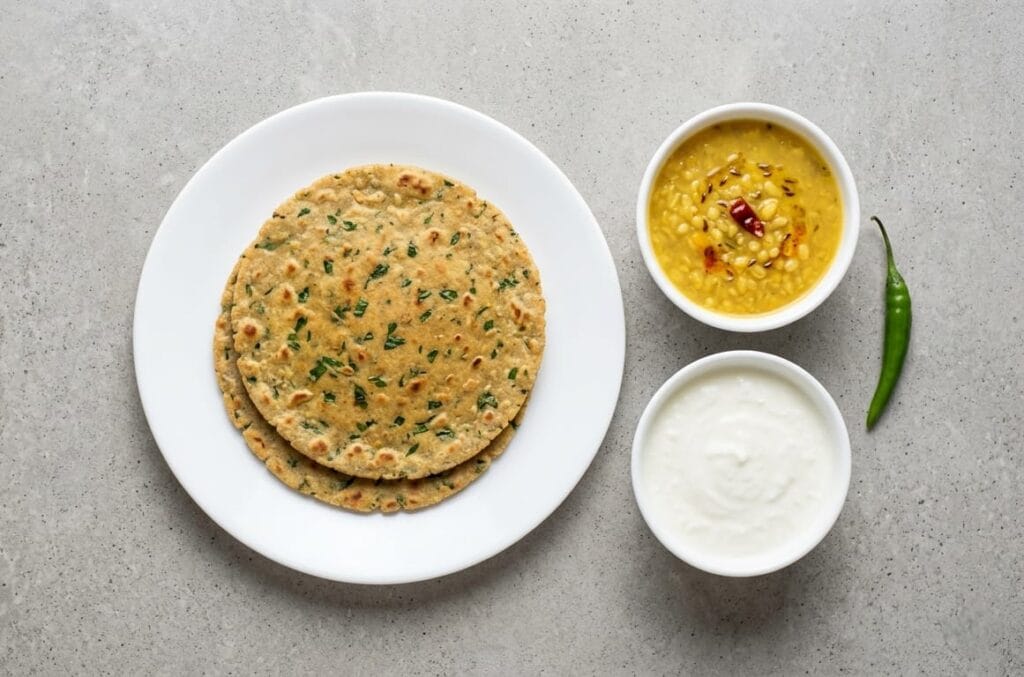
Methi Bajra Roti: Best Low GI Indian Bread for Diabetes
Category: Diabetic Recipes |
Serves: 2 (4 rotis) |
Prep Time: 10 minutes |
Cook Time: 15 minutes |
GI: 50–55 (Low GI) |
Cost per serving: ₹15 |
Calories: 212 kcal per serving
Introduction
Methi bajra roti is a low glycemic index Indian flatbread made using pearl millet flour and fenugreek leaves, ideal for blood sugar control.
For people managing diabetes, choosing the right type of roti is essential. Regular wheat roti can cause faster blood sugar spikes, but switching to a low GI Indian roti like methi bajra roti can make a significant difference.
Bajra (pearl millet) is one of India’s most powerful traditional grains. Research confirms that bajra has a glycemic index of approximately 54, placing it firmly in the low GI category. It is high in fiber and contains essential minerals like magnesium, which support better glucose metabolism. When combined with fresh methi (fenugreek leaves), this recipe becomes even more effective for blood sugar control due to methi’s natural insulin-supporting properties.
This diabetic Indian bread is simple, affordable, and suitable for everyday meals across Indian households and the global Indian diaspora. It delivers nutrition, taste, and health in one plate.
In this guide, you will learn how to prepare methi roti for diabetes, along with its glycemic impact, nutrition data, and food cost in Indian rupees.
Ingredients (Serves 2 — 4 Rotis)
| Ingredient | Quantity | Notes |
|---|---|---|
| Bajra flour | 120g | Pearl millet flour |
| Fresh methi leaves | 80g | Finely chopped, washed thoroughly |
| Onion | 50g | Optional — can skip |
| Green chilli | 5g | Finely chopped |
| Ginger | 5g | Grated or finely chopped |
| Ajwain (carom seeds) | 2g | Aids digestion |
| Salt | 4g | To taste |
| Water | 90ml | Add gradually |
| Oil or ghee | 5g | For cooking |
Step-by-Step Cooking Instructions
Step 1 — Prepare Dough
Take a mixing bowl. Add bajra flour, washed methi leaves, onion, green chilli, ginger, ajwain, and salt. Mix evenly. Add water gradually and knead into a soft dough. Rest for 5–10 minutes before shaping.
Step 2 — Shape Rotis
Divide the dough into 4 equal portions. Flatten each portion using your palms or roll gently with a rolling pin on a dusted surface. Keep thickness uniform for even cooking.
Step 3 — Cook on Tawa
Heat tawa on medium flame. Place roti and cook both sides evenly until golden spots appear. Apply minimal oil or ghee while cooking. Total cook time per roti: 3–4 minutes.
Step 4 — Serve
Serve hot with dal, curd, or vegetable sabzi. This combination provides protein alongside the roti, further lowering the overall glycemic impact of the meal.
Glycemic Index (GI) Analysis
Data source: Published research — Fitterfly Nutrition Research 2025, PMC peer-reviewed studies, ICMR-NIN guidelines
| Ingredient | GI Value | Category | Blood Sugar Impact |
|---|---|---|---|
| Bajra flour | 54 | Low GI | Slow glucose release |
| Methi leaves | <15 | Very Low GI | Supports insulin response |
| Onion | 10 | Very Low GI | Minimal impact |
| Ajwain | ~5 | Very Low GI | Digestive support |
Low GI foods release glucose slowly, helping maintain stable blood sugar levels after meals. Adding methi further reduces the effective GI of the final dish.
Nutrition Information (Per Serving — 2 Rotis)
Source: ICMR-NIN Indian Food Composition Tables (IFCT) 2017 & USDA FoodData Central
| Nutrient | Per Serving (2 Rotis) | % Daily Value (approx) |
|---|---|---|
| Calories | 212 kcal | 11% |
| Protein | 6.9 g | 14% |
| Carbohydrates | 32.5 g | 11% |
| Dietary Fiber | 6.2 g | 22% |
| Fat | 5.1 g | 7% |
| Sodium | 380 mg | 16% |
| Magnesium | ~68 mg | 16% |
| Iron | ~3.2 mg | 18% |
Allergen Information
Contains: Possible gluten cross-contamination — bajra is naturally gluten-free but may be processed in shared mills. Check packaging if you have celiac disease.
Free from: Dairy, Eggs, Fish, Soy, Tree nuts, Peanuts, Sesame
As per FSSAI Food Safety and Standards (Labelling and Display) Regulations 2020
FSSAI Compliance Notes
- Wash methi leaves thoroughly to remove soil and pesticide residue before use
- Use potable water for dough preparation as per FSSAI hygiene standards
- Store bajra flour in airtight, dry conditions away from moisture and pests
- Cook rotis thoroughly on both sides to avoid microbial risk
- Do not hold cooked rotis beyond 2 hours at room temperature — serve fresh
- Label allergen information clearly if served in food service establishments
Blood Sugar Impact Guide
| Factor | How It Helps |
|---|---|
| Slow digestion | High fiber in bajra delays glucose absorption into bloodstream |
| Improved insulin response | Methi leaves contain compounds that support natural insulin sensitivity |
| Reduced spikes | Low GI (50–55) prevents sudden post-meal blood sugar rise |
| Best pairing | Combine with protein — dal, paneer, or curd — to further lower meal GI |
| Portion control | Limit to 2 rotis per meal for optimal blood sugar management |
Food Cost Analysis (Indian Rupees)
Based on current Indian retail market rates — March 2026
| Ingredient | Quantity Used | Market Rate | Cost (₹) |
|---|---|---|---|
| Bajra flour | 120g | ₹60/kg | ₹7.20 |
| Fresh methi leaves | 80g | ₹30/bunch | ₹10.00 |
| Onion & spices | — | — | ₹8.00 |
| Oil/ghee | 5g | ₹200/kg | ₹5.00 |
| Total (4 rotis) | ₹30.20 | ||
| Cost per serving (2 rotis) | ₹15 | ||
Catering Guide — Bulk Cooking for 50 Servings
Yield: 100 rotis — 50 servings of 2 rotis each
| Ingredient | Quantity for 50 Servings |
|---|---|
| Bajra flour | 3 kg |
| Fresh methi leaves | 2 kg |
| Onion | 1.25 kg |
| Oil/ghee | 250 g |
| Salt | 100 g |
Operational Tips:
- Use batch kneading in small lots — bajra dough dries out faster than wheat dough
- Prepare dough in batches of 500g to maintain texture and freshness
- Cook on large flat griddle or commercial tawa for speed and efficiency
- Serve within 30 minutes of cooking for best texture and food safety compliance
- Estimated bulk cost: ₹750 for 50 servings — ₹15 per serving
Frequently Asked Questions
Conclusion
Methi bajra roti is a powerful example of how traditional Indian foods can support modern health needs. As a low GI Indian roti with a confirmed GI of 50–55, it helps maintain steady blood sugar levels while providing essential nutrients, fiber, magnesium, and iron.
This diabetic Indian bread is easy to prepare, costs only ₹15 per serving, and is suitable for daily consumption. With the combined benefits of bajra and methi, it is one of the smartest dietary choices for people managing diabetes or aiming for better metabolic health across India. You can also explore our high protein Indian meal guide for balanced nutrition planning alongside this roti.
GrowRain recommends including millet-based rotis like this in your regular diet to improve blood sugar control while enjoying authentic Indian flavors.
Medical Disclaimer: This article is for educational purposes only and is not a substitute for medical advice. Consult a qualified doctor or registered dietitian for personalised diabetes management and dietary planning.
🌿 GrowRain.com — Professional Nutrition & Recipe Platform | FSSAI Guideline Based | ICMR-NIN Sourced Data | Serving All of India