
Category: Kids Nutrition |
Age Group: 6–14 years |
Prep Time: 20–30 minutes |
Cost per lunchbox: ₹20–₹45 |
Diet: Vegetarian |
Standard: ICMR-NIN + FSSAI aligned
Introduction
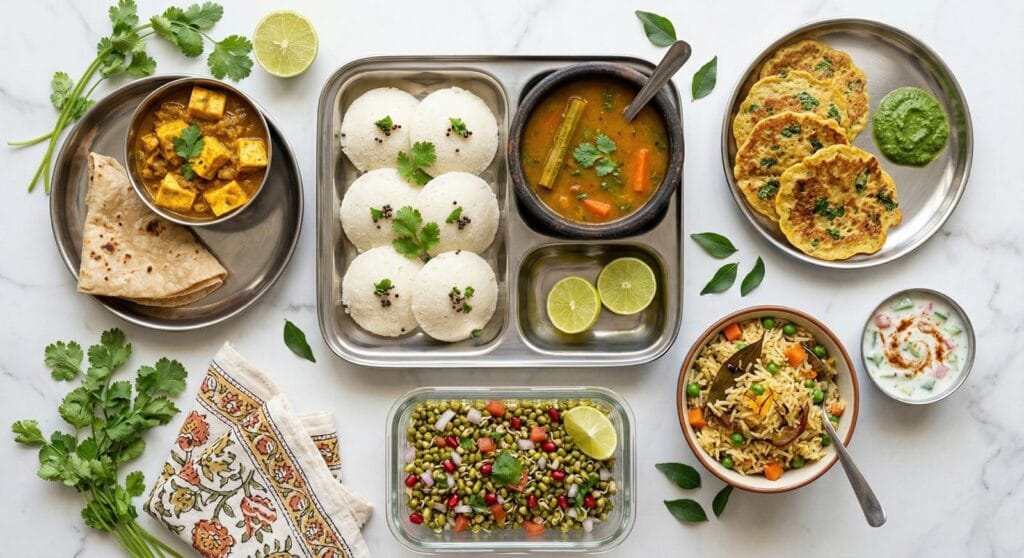
Kids lunch box ideas India refers to balanced, home-cooked school meals designed to meet children’s daily nutritional needs using affordable and familiar Indian ingredients.
Planning a daily school lunch is not just about filling a tiffin box — it directly impacts your child’s growth, energy, and ability to concentrate in school. These kids lunch box ideas India are designed to provide balanced nutrition using simple, familiar Indian foods that children enjoy eating.
Children between 6–14 years require a steady intake of carbohydrates for energy, protein for growth, and essential vitamins and minerals for brain development and immunity. According to ICMR-NIN guidelines, a well-balanced lunch should contribute around 25–35% of a child’s daily nutritional needs.
This guide includes healthy tiffin box recipes that are practical, affordable, and aligned with Indian home cooking. Each meal is designed as a nutritious lunch box for kids, ensuring safety, taste, and proper nutrition for school-going children across India. Whether you are packing food for primary school or teenagers, these school lunch ideas India will help you plan better meals every day.
Age-wise Nutrition Needs (ICMR-NIN RDA)
Source: ICMR-NIN Recommended Dietary Allowances for Indians, 2020
| Age Group | Daily Energy | Protein Need | Best Lunch Choice |
|---|---|---|---|
| 6–8 years | 1350–1690 kcal | 20g+ | Moong Dal Cheela — easy digestion, high protein |
| 9–11 years | 1690–2190 kcal | 29–39g | Roti + Paneer Sabzi — balanced growth meal |
| 12–14 years | 2060–2750 kcal | 39–54g | Paneer Roti + Sprouts combo — higher protein |
1. Roti with Paneer Sabzi
| Ingredient | Quantity | Notes |
|---|---|---|
| Wheat flour | 60g | For 2 rotis |
| Paneer | 80g | Fresh, stored below 5°C |
| Onion | 40g | Finely chopped |
| Tomato | 40g | Finely chopped |
| Oil | 5g | Any cooking oil |
| Turmeric powder | 1g | Anti-inflammatory |
| Red chilli powder | 1g | Mild for children |
| Salt | 3g | Within WHO daily limit |
Step 1 — Prepare Dough
Knead 60g wheat flour with water gradually and rest the dough for 10 minutes before rolling.
Step 2 — Cook Sabzi
Heat 5g oil on medium flame. Sauté onion for 3 minutes until golden. Add tomato, turmeric, and chilli powder. Cook for 4 minutes until soft.
Step 3 — Add Paneer
Add 80g paneer cubes and cook for 5 minutes on low-medium flame. Season with salt and remove from heat.
Step 4 — Cook Rotis
Roll dough into 2 even rotis. Cook on hot tawa for 2 minutes per side until golden spots appear. Pack hot.
Nutrition Per Serving — Source: ICMR-NIN IFCT 2017 & USDA FoodData Central
| Calories | Protein | Carbohydrates | Fat | Fibre |
|---|---|---|---|---|
| 420 kcal | 16g | 45g | 14g | 3.2g |
Allergens: Contains dairy (paneer), gluten (wheat flour)
Free from: Eggs, Fish, Soy, Tree nuts, Peanuts, Sesame
As per FSSAI Food Safety and Standards (Labelling and Display) Regulations 2020
FSSAI Label: Vegetarian ▲ | 420 kcal per serving | Contains dairy & gluten | Prepared under hygienic conditions as per FSSAI guidelines
| Ingredient | Quantity | Rate (March 2026) | Cost ₹ |
|---|---|---|---|
| Wheat flour | 60g | ₹40/kg | ₹2.40 |
| Paneer (local dairy) | 80g | ₹280/kg | ₹22.40 |
| Onion + Tomato | 80g | ₹30/kg avg | ₹2.40 |
| Oil + Spices | — | — | ₹4.00 |
| Fuel + overhead | — | — | ₹4.20 |
| Total Cost per Serving | ₹35.40 ≈ ₹35 | ||
2. Moong Dal Cheela with Chutney
| Ingredient | Quantity | Notes |
|---|---|---|
| Moong dal (yellow) | 80g | Soak 4 hours |
| Ginger | 5g | Grated |
| Green chilli | 3g | Mild — optional for young kids |
| Cumin seeds | 2g | Aids digestion |
| Coriander leaves | 5g | Finely chopped |
| Salt | 3g | To taste |
| Oil | 5g | For cooking |
Step 1 — Soak and Grind
Wash moong dal and soak for 4 hours. Drain and grind into a smooth, thick batter. Add a little water if needed.
Step 2 — Prepare Batter
Mix ginger, green chilli, cumin seeds, coriander leaves, and salt into the batter. Stir well to combine evenly.
Step 3 — Cook Cheela
Heat tawa on medium flame. Pour batter and spread into a thin circle. Cook for 3 minutes per side with light oil until golden and crisp.
Step 4 — Pack Fresh
Cool for 2 minutes before packing. Wrap cheela separately from chutney to avoid sogginess. Serve with green chutney or curd.
Nutrition Per Serving — Source: ICMR-NIN IFCT 2017 & USDA FoodData Central
| Calories | Protein | Carbohydrates | Fat | Fibre |
|---|---|---|---|---|
| 300 kcal | 14g | 35g | 8g | 5.4g |
Allergens: None — naturally gluten-free
Free from: Dairy, Gluten, Eggs, Fish, Soy, Tree nuts, Peanuts, Sesame
As per FSSAI Food Safety and Standards (Labelling and Display) Regulations 2020
FSSAI Label: Vegetarian ▲ | 300 kcal per serving | Gluten-free | No major allergens | Prepared under hygienic conditions as per FSSAI guidelines
| Ingredient | Quantity | Rate (March 2026) | Cost ₹ |
|---|---|---|---|
| Moong dal | 80g | ₹130/kg | ₹10.40 |
| Spices + herbs | — | — | ₹5.00 |
| Oil + overhead | — | — | ₹3.00 |
| Total Cost per Serving | ₹18.40 ≈ ₹18 | ||
3. Vegetable Pulao with Raita
| Ingredient | Quantity | Notes |
|---|---|---|
| Rice (raw) | 100g | Washed and soaked 15 min |
| Carrot | 30g | Diced small |
| Green beans | 30g | Chopped |
| Green peas | 40g | Fresh or frozen |
| Potato | 50g | Small cubes |
| Curd (for raita) | 100g | Fresh, chilled |
| Garam masala | 1g | Mild |
| Oil | 5g | For sautéing |
| Salt | 3g | To taste |
Step 1 — Sauté Vegetables
Heat 5g oil in a heavy pan on medium flame. Add all vegetables and sauté for 5 minutes until slightly tender.
Step 2 — Add Rice and Cook
Add soaked rice, salt, and garam masala. Stir well. Add water in 1:2 ratio (100g rice = 200ml water). Cook covered on low flame for 15 minutes.
Step 3 — Prepare Raita
Mix 100g fresh curd with a pinch of salt and roasted cumin powder. Pack in a separate sealed container to prevent sogginess.
Step 4 — Pack Separately
Allow pulao to cool for 5 minutes. Pack pulao and raita in separate compartments to maintain food safety and texture.
Nutrition Per Serving — Source: ICMR-NIN IFCT 2017 & USDA FoodData Central
| Calories | Protein | Carbohydrates | Fat | Fibre |
|---|---|---|---|---|
| 380 kcal | 10g | 60g | 9g | 3.8g |
Allergens: Contains dairy (curd/raita)
Free from: Gluten, Eggs, Fish, Soy, Tree nuts, Peanuts, Sesame
As per FSSAI Food Safety and Standards (Labelling and Display) Regulations 2020
FSSAI Label: Vegetarian ▲ | 380 kcal per serving | Contains dairy | Prepared under hygienic conditions as per FSSAI guidelines
| Ingredient | Quantity | Rate (March 2026) | Cost ₹ |
|---|---|---|---|
| Rice | 100g | ₹60/kg | ₹6.00 |
| Mixed vegetables | 150g | ₹40/kg avg | ₹6.00 |
| Curd | 100g | ₹80/kg | ₹8.00 |
| Oil + spices + overhead | — | — | ₹5.00 |
| Total Cost per Serving | ₹25.00 ≈ ₹25 | ||
4. Sprouts Chaat Box — Cooked for Child Safety
| Ingredient | Quantity | Notes |
|---|---|---|
| Mixed sprouts | 100g | Must be steamed — never raw for kids |
| Onion | 30g | Finely chopped |
| Tomato | 30g | Deseeded |
| Lemon juice | 10g | Fresh squeezed |
| Chaat masala | 2g | Kids prefer mild — use sparingly |
| Roasted cumin powder | 1g | Digestive benefit |
| Coriander leaves | 5g | Washed thoroughly |
| Salt | 2g | Minimal |
Step 1 — Steam Sprouts (Mandatory for Safety)
Steam mixed sprouts for 5–7 minutes. Raw sprouts carry Salmonella and E.coli risk, especially dangerous for children. Always steam before packing for school.
Step 2 — Cool Before Mixing
Allow steamed sprouts to cool for 5 minutes at room temperature before combining with vegetables and spices.
Step 3 — Mix and Season
Add chopped onion, tomato, lemon juice, chaat masala, cumin powder, coriander, and salt. Mix gently and taste for balance.
Step 4 — Pack Fresh
Pack immediately in an airtight container. This is a cold dish — use an insulated box with an ice pack if available for best safety.
Nutrition Per Serving — Source: ICMR-NIN IFCT 2017 & USDA FoodData Central
| Calories | Protein | Carbohydrates | Fat | Fibre |
|---|---|---|---|---|
| 220 kcal | 12g | 30g | 2g | 6.5g |
Allergens: None — no major allergens
Free from: Dairy, Gluten, Eggs, Fish, Soy, Tree nuts, Peanuts, Sesame
As per FSSAI Food Safety and Standards (Labelling and Display) Regulations 2020
FSSAI Label: Vegetarian ▲ | 220 kcal per serving | No major allergens | Steamed for safety | Prepared under hygienic conditions as per FSSAI guidelines
| Ingredient | Quantity | Rate (March 2026) | Cost ₹ |
|---|---|---|---|
| Mixed sprouts | 100g | ₹100/kg | ₹10.00 |
| Onion + Tomato | 60g | ₹30/kg avg | ₹1.80 |
| Spices + lemon | — | — | ₹3.00 |
| Total Cost per Serving | ₹14.80 ≈ ₹15 | ||
5. Idli with Sambar
| Ingredient | Quantity | Notes |
|---|---|---|
| Idli batter | 200g | Fermented, ready-made or homemade |
| Toor dal | 50g | Washed |
| Tomato | 40g | Chopped |
| Onion | 40g | Chopped |
| Tamarind | 10g | Soaked, extract pulp |
| Sambar powder | 5g | Store-bought or homemade |
| Oil | 5g | For tempering |
| Mustard seeds | 2g | For tempering |
| Salt | 3g | To taste |
Step 1 — Steam Idlis
Fill idli moulds with fermented batter. Steam in an idli steamer for 10 minutes on medium flame. Insert a toothpick — if it comes out clean, idlis are done.
Step 2 — Pressure Cook Dal
Pressure cook toor dal with 150ml water for 3 whistles. Mash cooked dal lightly and set aside.
Step 3 — Prepare Sambar
Add cooked dal, tomato, onion, tamarind pulp, and sambar powder into a pan. Simmer on medium flame for 10 minutes until vegetables are soft.
Step 4 — Temper and Pack
Heat 5g oil, add mustard seeds and let them splutter. Pour over sambar. Pack idlis and sambar in separate leak-proof containers.
Nutrition Per Serving — Source: ICMR-NIN IFCT 2017 & USDA FoodData Central
| Calories | Protein | Carbohydrates | Fat | Fibre |
|---|---|---|---|---|
| 350 kcal | 11g | 55g | 7g | 4.2g |
Allergens: Possible gluten cross-contact if batter processed in shared facility
Free from: Dairy, Eggs, Fish, Soy, Tree nuts, Peanuts, Sesame
As per FSSAI Food Safety and Standards (Labelling and Display) Regulations 2020
FSSAI Label: Vegetarian ▲ | 350 kcal per serving | Possible gluten trace | Prepared under hygienic conditions as per FSSAI guidelines
| Ingredient | Quantity | Rate (March 2026) | Cost ₹ |
|---|---|---|---|
| Idli batter | 200g | ₹60/kg | ₹12.00 |
| Toor dal | 50g | ₹100/kg | ₹5.00 |
| Vegetables + tamarind | — | — | ₹6.00 |
| Sambar powder + oil + overhead | — | — | ₹5.00 |
| Total Cost per Serving | ₹28.00 ≈ ₹28 | ||
Best Value Lunch Box — Protein Per Rupee Analysis
Which meal gives your child the most protein for the lowest cost? This analysis helps parents make smarter food choices daily.
| Meal | Protein | Cost | Protein per ₹10 | Verdict |
|---|---|---|---|---|
| Roti + Paneer | 16g | ₹35 | 4.6g | Premium, high protein |
| Moong Dal Cheela | 14g | ₹18 | 7.8g ⭐ | Best value overall |
| Veg Pulao + Raita | 10g | ₹25 | 4.0g | Best for energy |
| Sprouts Chaat | 12g | ₹15 | 8.0g ⭐ | Most affordable |
| Idli + Sambar | 11g | ₹28 | 3.9g | Best for digestion |
Nutrition Comparison — All 5 Lunch Boxes
Source: ICMR-NIN IFCT 2017 & USDA FoodData Central
| Meal | Calories | Protein | Carbs | Fat | Fibre |
|---|---|---|---|---|---|
| Roti + Paneer | 420 | 16g | 45g | 14g | 3.2g |
| Moong Dal Cheela | 300 | 14g | 35g | 8g | 5.4g |
| Veg Pulao + Raita | 380 | 10g | 60g | 9g | 3.8g |
| Sprouts Chaat | 220 | 12g | 30g | 2g | 6.5g |
| Idli + Sambar | 350 | 11g | 55g | 7g | 4.2g |
Packing & Food Safety Guide (FSSAI)
| Risk | Cause | FSSAI Safe Practice |
|---|---|---|
| Bacterial growth | Food left >2 hours at room temp | Use insulated box, child must eat by lunch break |
| Cross contamination | Raw and cooked food stored together | Always use separate compartments |
| Sprout bacteria | Raw sprouts — Salmonella risk | Always steam 5–7 min before packing |
| Moisture spoilage | Wet sabzi soaking roti | Pack dry and wet items separately always |
| Hand contamination | Unwashed hands before packing | Wash hands with soap before every packing |
Frequently Asked Questions
Conclusion
These kids lunch box ideas India combine traditional Indian foods with modern nutrition science to deliver balanced, affordable, and safe meals for school-going children. Each recipe is designed to fit Indian household budgets while meeting ICMR-NIN nutritional standards for children aged 6–14.
By rotating these five meals across the school week, parents can ensure their child receives adequate protein, carbohydrates, fibre, and essential micronutrients every day — without repetition or excess cost. The protein-per-rupee analysis shows that smart meal planning does not require expensive ingredients.
Explore more nutrition guides on GrowRain: High Protein Indian Meals and Restaurant Style Recipes for complete family meal planning.
Medical Disclaimer: This article is for educational purposes only and is not a substitute for medical or dietary advice. Consult a qualified doctor or registered dietitian for personalised nutrition guidance for your child.
🌿 GrowRain.com — Professional Nutrition & Recipe Platform | FSSAI Guideline Based | ICMR-NIN Sourced Data | Serving All of India