
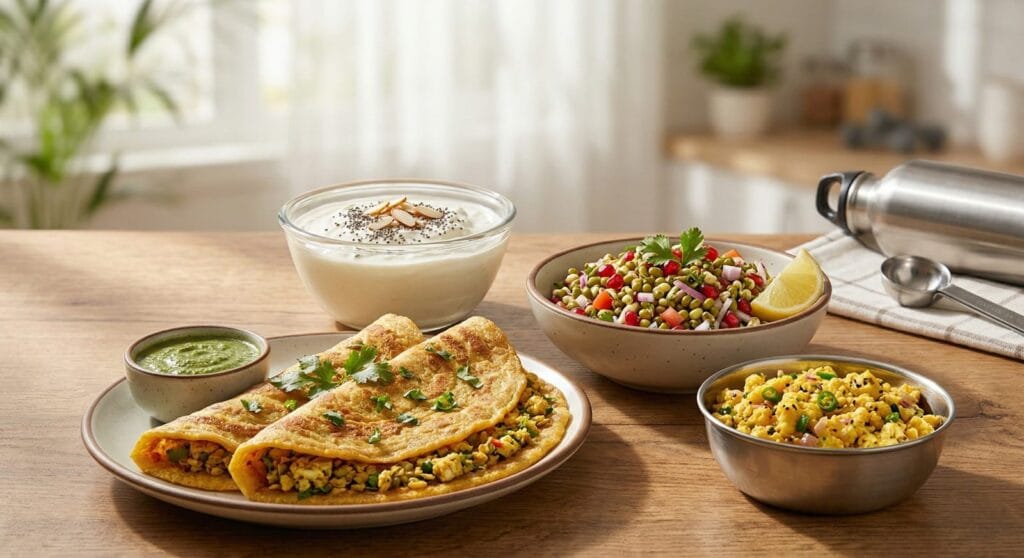
10 High Protein Indian Breakfast Recipes for Weight Loss and Muscle Gain
Category: High Protein Meals |
Recipes: 10 options |
Diet: Vegetarian & Non-Veg |
Protein per serving: 12–25g |
Prep Time: 10–30 minutes |
Data Source: ICMR-NIN IFCT 2017 & USDA FoodData Central
Introduction
A high protein Indian breakfast is a morning meal using everyday Indian ingredients like dal, paneer, eggs, sprouts, or curd that provides 15–25 grams of protein to support weight loss, muscle gain, and sustained energy through the day.
Most Indian breakfasts are high in carbs but low in protein — plain poha, white bread, or suji upma may taste good but leave you hungry within 2 hours. If you are trying to lose weight, build muscle, or simply stay full longer, switching to a high protein Indian breakfast can make a major difference.
In this guide you will find 10 practical high protein breakfast ideas using everyday Indian ingredients — with exact ingredients, simple cooking steps, and protein estimates per serving.
Explore more: High Protein Meals Collection | Healthy Indian Recipes
Why High Protein Breakfast Matters
A protein-rich breakfast supports both weight management and muscle health. Here is why it matters:
1. Keeps You Full Longer
Protein increases satiety hormones and slows digestion — reducing unnecessary snacking and helping with calorie control through the day.
2. Supports Muscle Growth and Recovery
Starting your day with protein ensures your muscles have the amino acids needed for repair and growth — especially important if you exercise in the morning.
3. Stabilizes Energy Levels
Unlike high-carb breakfasts that cause blood sugar spikes and crashes, a high protein breakfast releases energy steadily — helping you stay focused and productive.
4. Supports Fat Loss
Protein has a higher thermic effect than carbohydrates — meaning your body burns more calories digesting protein. This makes a high protein breakfast particularly useful for weight management.
Best High Protein Indian Breakfast Ingredients
Indian kitchens already have many protein-rich ingredients. You just need to use them wisely.
Vegetarian Protein Sources
- Moong dal — 24g protein per 100g dry
- Chana — 19g protein per 100g dry
- Paneer — 18g protein per 100g
- Curd (dahi) — 3.5g protein per 100g
- Mixed sprouts — 4–9g protein per 100g
- Besan (gram flour) — 22g per 100g
- Tofu — 8g protein per 100g
- Peanuts — 26g protein per 100g
- Oats — 13g protein per 100g dry
- Quinoa — 14g protein per 100g dry
Source: ICMR-NIN IFCT 2017
Non-Vegetarian Protein Sources
- Whole egg — 13g protein per 100g
- Egg white — 11g protein per 100g
- Chicken breast — 31g per 100g
- Rohu fish — 16g per 100g
Add-on Protein Boosters
- Chia seeds — 17g protein per 100g
- Flax seeds — 18g protein per 100g
- Almonds — 21g protein per 100g
- Milk — 3.4g protein per 100ml
Source: USDA FoodData Central
How Much Protein Do You Need at Breakfast?
For most Indian adults, a breakfast providing 15–25 grams of protein is a practical daily target based on activity level and fitness goals.
| Goal | Suggested Protein at Breakfast | Best Recipe Type |
|---|---|---|
| Weight loss | 15–20g | Dal-based, sprouts, curd bowls |
| Muscle gain | 20–25g | Eggs, paneer, tofu combinations |
| General health | 12–18g | Any option from this list |
Based on ICMR-NIN Recommended Dietary Allowances for Indians, 2020
High Protein Breakfast Combinations — Quick Reference
| Protein Combination | Est. Protein | Best For |
|---|---|---|
| 2 Moong dal chilla + paneer filling | 18–22g | Weight loss + muscle gain |
| 2 eggs + multigrain toast | 15–18g | Muscle gain |
| Sprouts + hung curd bowl | 12–15g | Light high protein breakfast |
| Paneer bhurji + 1 whole wheat roti | 20–24g | Post-workout recovery |
10 High Protein Indian Breakfast Recipes — With Ingredients and Steps
Find more recipes in our complete recipe collection. Each recipe below includes exact ingredients and cooking steps.
1. Moong Dal Chilla with Paneer Filling
~20g protein per serving
Veg | Prep: 20 mins (+ soaking) | Serves: 2
Ingredients:
- 1 cup moong dal (soaked 4 hours)
- 100g paneer, grated
- 1 small onion, finely chopped
- 1 green chilli, chopped
- Salt, cumin, coriander to taste
- 1 tsp oil per chilla
Steps:
- Grind soaked moong dal with minimal water into a smooth batter. Add salt, cumin, and chopped green chilli.
- Heat a non-stick pan, pour one ladle of batter, spread into a circle. Place grated paneer and onion in the centre.
- Fold and cook on both sides with minimal oil until golden. Serve with green chutney.
Protein estimate: Moong dal ~24g/100g dry + Paneer ~18g/100g. Source: ICMR-NIN IFCT 2017
2. Besan Cheela with Curd
~15g protein per serving
Veg | Prep: 10 mins | Serves: 2
Ingredients:
- 1 cup besan (gram flour)
- ½ cup water
- 1 small onion, chopped
- ½ tsp turmeric, salt, ajwain
- 1 cup curd (dahi) as side
- 1 tsp oil per cheela
Steps:
- Mix besan with water, turmeric, ajwain, salt, and onion into a smooth batter of pouring consistency.
- Heat pan on medium flame. Pour one ladle of batter and spread thin. Add minimal oil on edges.
- Cook until edges lift and base is golden. Flip and cook 1 minute. Serve with curd.
Protein estimate: Besan ~22g/100g + Curd ~3.5g/100g. Source: ICMR-NIN IFCT 2017
3. Vegetable Omelette with Multigrain Toast
~18g protein per serving
Non-Veg | Prep: 10 mins | Serves: 1
Ingredients:
- 3 whole eggs
- ¼ cup spinach, chopped
- 1 small onion and tomato, chopped
- Salt, pepper, green chilli to taste
- 1 tsp butter or oil
- 2 slices multigrain toast
Steps:
- Beat eggs with salt and pepper. Mix in chopped onion, tomato, spinach, and green chilli.
- Heat pan with butter. Pour egg mixture and cook on medium flame without stirring.
- Fold once edges are set. Serve immediately with multigrain toast.
Protein estimate: Egg ~13g/100g. 3 eggs ≈ 180g = ~23g protein. Source: USDA FoodData Central
4. Paneer Bhurji with Whole Wheat Roti
~22g protein per serving
Veg | Prep: 15 mins | Serves: 2
Ingredients:
- 200g paneer, crumbled
- 1 onion, 1 tomato — finely chopped
- ½ tsp cumin, turmeric, red chilli
- Fresh coriander, salt
- 1 tsp oil
- 2 whole wheat rotis
Steps:
- Heat oil in pan. Add cumin, then onion. Sauté until golden. Add tomato and cook until soft.
- Add turmeric and red chilli. Mix well. Add crumbled paneer and stir gently for 3–4 minutes.
- Finish with fresh coriander and salt. Serve with whole wheat roti.
Protein estimate: Paneer ~18g/100g. 200g paneer = ~36g. Per serving (half): ~18g + roti contribution. Source: ICMR-NIN IFCT 2017
5. Steamed Sprouts Chaat
~12g protein per serving
Veg | Prep: 5 mins (sprouts ready overnight) | Serves: 1
Ingredients:
- 1.5 cups mixed sprouts (moong, chana)
- ½ small onion, tomato — chopped
- Lemon juice, chaat masala, salt
- Fresh coriander
Steps:
- Important: Steam sprouts for 5–7 minutes before eating to reduce bacterial risk. Do not consume raw sprouts.
- Mix steamed sprouts with chopped onion, tomato, chaat masala, and salt.
- Squeeze lemon juice and garnish with coriander. Serve immediately.
Protein estimate: Mixed sprouts ~5–9g/100g. 150g sprouts ≈ ~12g protein. Source: ICMR-NIN IFCT 2017
6. Oats Upma with Roasted Peanuts
~14g protein per serving
Veg | Prep: 15 mins | Serves: 2
Ingredients:
- 1 cup rolled oats
- 3 tbsp roasted peanuts
- 1 small onion, curry leaves, mustard seeds
- ½ tsp turmeric, salt
- 1 tsp oil, 1.5 cups water
Steps:
- Dry roast oats in a pan for 3 minutes until light golden. Keep aside.
- Heat oil, add mustard seeds, curry leaves, onion. Sauté until onion is soft. Add turmeric and salt.
- Add water and bring to boil. Add oats and peanuts. Stir well and cook 3–4 minutes until absorbed. Serve hot.
Protein estimate: Oats ~13g/100g dry + Peanuts ~26g/100g. Source: USDA FoodData Central
7. Hung Curd Bowl with Fruits and Seeds
~13g protein per serving
Veg | Prep: 5 mins (curd hung overnight) | Serves: 1
Ingredients:
- 200g hung curd (made from full-fat dahi)
- 1 tbsp chia seeds
- 10 almonds, roughly chopped
- ½ banana or seasonal fruit
- Pinch of cinnamon (optional)
Steps:
- Hang curd in a muslin cloth overnight in fridge to make thick hung curd. Or use Greek-style thick curd.
- Transfer to a bowl. Add chia seeds, chopped almonds, and cinnamon. Mix gently.
- Top with sliced banana or seasonal fruit. Serve immediately.
Protein estimate: Hung curd ~7g/100g + Chia ~17g/100g + Almonds ~21g/100g. Source: USDA FoodData Central
8. Egg Bhurji with Whole Wheat Roti
~20g protein per serving
Non-Veg | Prep: 10 mins | Serves: 1
Ingredients:
- 3 whole eggs
- 1 small onion, 1 tomato — finely chopped
- ½ tsp cumin, turmeric, red chilli
- Fresh coriander, salt
- 1 tsp oil
- 1 whole wheat roti
Steps:
- Beat eggs lightly with salt. Heat oil in pan, add cumin. Add onion and sauté until light golden.
- Add tomato, turmeric, and red chilli. Cook until tomato softens completely.
- Pour beaten eggs. Stir continuously on medium flame until scrambled and cooked through. Garnish with coriander. Serve with roti.
Protein estimate: 3 eggs ≈ ~20g protein. Source: USDA FoodData Central
9. Tofu Bhurji — Vegan High Protein Option
~16g protein per serving
Veg / Vegan | Prep: 15 mins | Serves: 2
Ingredients:
- 200g firm tofu, crumbled
- 1 onion, 1 tomato — chopped
- ½ tsp turmeric, cumin, red chilli
- Salt, fresh coriander
- 1 tsp oil
Steps:
- Press tofu firmly between cloth to remove excess water. Crumble into small pieces.
- Heat oil, add cumin. Sauté onion until golden. Add tomato, turmeric, and chilli. Cook well.
- Add crumbled tofu, mix gently and cook 4–5 minutes. Season with salt and coriander. Serve with roti or bread.
Protein estimate: Tofu ~8g/100g. 200g = ~16g protein. Source: USDA FoodData Central
10. Quinoa Vegetable Upma
~14g protein per serving
Veg | Prep: 20 mins | Serves: 2
Ingredients:
- 1 cup quinoa, rinsed
- 1 small carrot, beans — finely chopped
- 1 small onion, mustard seeds, curry leaves
- ½ tsp turmeric, salt, lemon juice
- 1 tsp oil, 2 cups water
Steps:
- Rinse quinoa thoroughly. Heat oil, add mustard seeds and curry leaves. Add onion and sauté.
- Add chopped vegetables and turmeric. Cook 3 minutes. Add quinoa and water.
- Cover and cook on low flame 12–15 minutes until water is absorbed. Fluff with fork. Add lemon juice and serve.
Protein estimate: Quinoa ~14g/100g dry. Source: USDA FoodData Central
Complete Breakfast Comparison Table
Source: ICMR-NIN IFCT 2017 & USDA FoodData Central estimates. Values are approximate per serving.
| Breakfast Option | Protein (approx) | Type | Best For | Prep Time |
|---|---|---|---|---|
| Moong Dal Chilla + Paneer | ~20g | Veg | Weight loss + muscle | 20 mins |
| Besan Cheela + Curd | ~15g | Veg | Quick meals | 10 mins |
| Vegetable Omelette + Toast | ~18g | Non-Veg | Muscle gain | 10 mins |
| Paneer Bhurji + Roti | ~22g | Veg | Post-workout | 15 mins |
| Steamed Sprouts Chaat | ~12g | Veg | Light breakfast | 5 mins |
| Oats Upma + Peanuts | ~14g | Veg | Weight control | 15 mins |
| Hung Curd Bowl | ~13g | Veg | No-cook option | 5 mins |
| Egg Bhurji + Roti | ~20g | Non-Veg | Gym diet | 10 mins |
| Tofu Bhurji | ~16g | Vegan | Plant-based | 15 mins |
| Quinoa Upma | ~14g | Veg | Balanced nutrition | 20 mins |
Tips for Making Your Breakfast Higher in Protein
| Tip | How to Apply |
|---|---|
| Add a protein side | Pair any meal with curd, milk, or sprouts to add 5–10g extra protein |
| Replace refined grains | Switch white bread or suji to oats, quinoa, or millets for better protein |
| Use mixed protein sources | Combine dal + dairy or eggs + grains for complete amino acid balance |
| Include nuts and seeds | A small handful of peanuts or almonds adds 5–7g protein easily |
| Prep ingredients in advance | Soak dal, hang curd, or boil sprouts the night before to save morning time |
Common Mistakes to Avoid
| Mistake | Why It Matters |
|---|---|
| Relying only on carbs | Plain poha or white bread lacks sufficient protein — hunger returns quickly |
| Skipping breakfast | Missing breakfast can lead to overeating at lunch and poor energy levels |
| Eating raw sprouts | Always steam sprouts before eating to reduce bacterial contamination risk |
| Too much oil | Excess oil adds unnecessary calories — keep cooking minimal and light |
| Not balancing meals | Protein should always be combined with fiber and healthy fats for complete nutrition |
Frequently Asked Questions
Conclusion
A well-planned high protein breakfast can support both weight loss and muscle gain without making your routine complicated. Indian kitchens already have everything you need — dal, paneer, eggs, sprouts, oats, and grains.
By making small adjustments and choosing the right combinations from this list, you can easily reach 15–25 grams of protein at breakfast every day using affordable, everyday Indian ingredients.
Explore more on GrowRain: High Protein Meals | Healthy Indian Recipes | Diabetic Recipes | Browse All Recipes
Nutrition Disclaimer: This article is developed by the GrowRain nutrition team based on practical Indian cooking experience and general nutrition guidance. Protein estimates are approximate and sourced from ICMR-NIN Indian Food Composition Tables (IFCT) 2017 and USDA FoodData Central. Individual nutritional values may vary based on ingredient brand, quantity, and preparation method. Consult a registered dietitian for personalised nutrition advice.
🌿 GrowRain.com — Practical Nutrition & Recipe Platform | ICMR-NIN Sourced Data | Serving All of India