
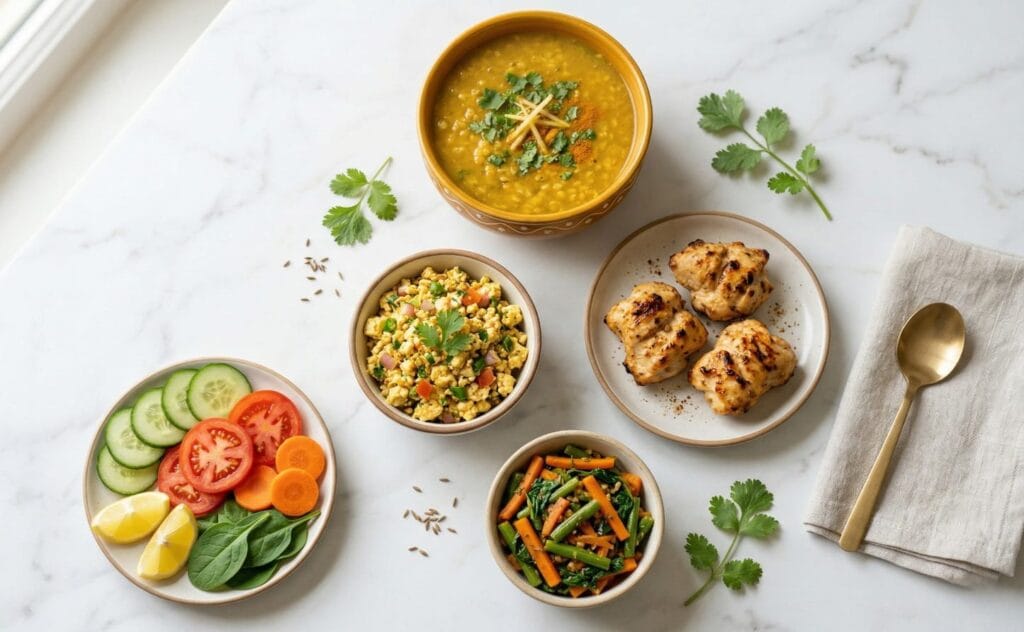
10 Healthy Indian Dinner Recipes for Weight Loss (Veg & Non-Veg)
Category: Easy Home Cooking |
Recipes: 10 options |
Diet: Vegetarian & Non-Veg |
Calories per serving: 120–320 kcal |
Protein per serving: 6–28g |
Data Source: ICMR-NIN IFCT 2017 & USDA FoodData Central
Introduction
Healthy Indian dinner recipes for weight loss are light, low-calorie meals rich in protein and fiber that reduce calorie surplus, support digestion, and help the body recover overnight.
Most Indian dinners are carb-heavy — large roti portions, rice with sabzi, or oily curries. While these taste good, they can add excess calories at the end of the day when activity levels are low. The good news is that a few simple adjustments can turn your everyday dinner into a weight-loss friendly meal without sacrificing taste.
In this guide you will find 10 practical Healthy Indian Recipes for dinner — with ingredients, simple steps, estimated calories, protein data, and approximate food cost where relevant.
For more: High Protein Meals | Diabetic Recipes | Browse All Recipes
Healthy Indian dinner recipes for weight loss are light, low-calorie, high-protein meals made with dal, vegetables, paneer, eggs, or lean meat that support fat loss, improve digestion, and provide sustained energy without excess calories. These recipes typically range from 120–320 calories per serving and include complete nutrition data sourced from ICMR-NIN and USDA.
Why Dinner Matters for Weight Loss
1. Reduces Calorie Surplus
Evening is when most people are least active. A lighter dinner aligns calorie intake with lower energy expenditure — helping the body use stored fat rather than adding to it.
2. Protein Supports Overnight Recovery
A protein-rich dinner provides amino acids during sleep — supporting muscle repair and recovery without adding unnecessary carbs.
3. Fiber Improves Digestion
Dal, vegetables, and millets at dinner provide dietary fiber which supports gut health, slows digestion, and reduces post-meal blood sugar spikes.
4. Controls Late Night Cravings
A satisfying, protein-rich dinner reduces the urge to snack at night — one of the most common reasons weight loss stalls.
Best Ingredients for a Weight Loss Dinner
| Ingredient | Why It Helps | Protein per 100g |
|---|---|---|
| Moong dal | Light, easy to digest, high protein | 24g (dry) |
| Paneer | High protein, low carb | 18g |
| Eggs | Complete protein, quick cooking | 13g |
| Chicken breast | Lean protein, low fat | 31g |
| Mixed vegetables | Low calorie, high fiber, high volume | 2–4g |
| Tofu | Plant protein, vegan friendly | 8g |
| Quinoa | Better carb with protein, filling | 14g (dry) |
Source: ICMR-NIN IFCT 2017 & USDA FoodData Central
10 Healthy Indian Dinner Recipes for Weight Loss
1. Moong Dal Soup
~180 kcal | ~12g protein
Veg | Prep: 20 mins | Serves: 2 | Est. Cost: ₹20–25 per serving
Ingredients:
- 50g yellow moong dal
- 2 cups water
- 2 garlic cloves, 1 tsp cumin seeds
- ¼ tsp turmeric, salt to taste
- 1 tsp oil for tadka
Steps:
- Wash and soak dal for 20 minutes. Drain and add to pressure cooker with 2 cups water and turmeric.
- Pressure cook for 2 whistles on medium flame until dal is completely soft and mashable.
- Blend lightly with a ladle for semi-smooth texture. Add water if needed to adjust consistency. Bring to a gentle simmer.
- Heat 1 tsp oil in small pan. Add cumin seeds and minced garlic — let them splutter and turn golden. Pour tadka over dal soup, stir and serve hot.
Moong dal is extremely easy to digest and provides 12g protein per serving with only 180 calories. High fiber content keeps you full for hours and stabilises blood sugar — preventing late-night cravings.
2. Paneer Bhurji (Low Oil)
~300 kcal | ~18g protein
Veg | Prep: 15 mins | Serves: 2 | Est. Cost: ₹60–70 per serving
Ingredients:
- 100g paneer, crumbled
- 1 medium onion, 1 tomato — finely chopped
- ¼ tsp turmeric, ½ tsp red chilli, salt
- Fresh coriander for garnish
- 1 tsp oil only
Steps:
- Heat 1 tsp oil in a non-stick pan on medium flame. Add onion and sauté until light golden — about 3 minutes.
- Add tomato, turmeric, and chilli powder. Cook until tomato softens completely and moisture reduces — about 4 minutes.
- Add crumbled paneer. Mix well ensuring paneer is evenly coated with the masala.
- Cook on low flame for 4–5 minutes stirring occasionally. Garnish with fresh coriander and serve immediately.
Paneer provides 18g protein per serving with only 1 tsp oil — keeping total calories at 300 kcal. High protein content improves satiety and supports muscle preservation during weight loss.
3. Egg Bhurji
~270 kcal | ~20g protein
Non-Veg | Prep: 10 mins | Serves: 1 | Est. Cost: ₹30–40 per serving
Ingredients:
- 3 whole eggs
- 1 small onion, 1 tomato — finely chopped
- ¼ tsp cumin, turmeric, red chilli, salt
- Fresh coriander
- 1 tsp oil
Steps:
- Beat 3 eggs with a pinch of salt in a bowl. Set aside. Heat 1 tsp oil in non-stick pan, add cumin seeds.
- Add onion and sauté until light golden — about 2 minutes. Add tomato, turmeric, and chilli powder.
- Cook tomato mixture on medium flame until completely soft and moisture evaporates — about 3 minutes.
- Pour beaten eggs over the mixture. Stir continuously on low-medium flame until fully cooked through with no runny parts. Garnish with coriander and serve.
Eggs provide all 9 essential amino acids and 20g protein per serving at only 270 calories. Quick to prepare and highly satiating — ideal for weight loss dinners when time is limited.
4. Vegetable Dal Khichdi
~280 kcal | ~12g protein
Veg | Prep: 20 mins | Serves: 2
Ingredients:
- 40g rice + 40g moong dal
- ½ cup mixed vegetables (carrot, beans, peas)
- ¼ tsp turmeric, cumin seeds, salt
- 1 tsp ghee — for flavour and digestion
- 2.5 cups water
Steps:
- Wash rice and dal together thoroughly under running water. Soak for 10 minutes and drain.
- Heat ghee in pressure cooker on medium flame. Add cumin seeds and let them splutter.
- Add soaked rice, dal, chopped vegetables, turmeric, and salt. Mix well for 1 minute.
- Add 2.5 cups water. Pressure cook for 3 whistles on medium flame. Let pressure release naturally. Stir to mix and serve warm with a side of curd for added protein.
Khichdi combines rice and dal to create a complete protein meal at only 280 calories. Easy to digest, gentle on the stomach, and the fiber from vegetables and dal slows digestion — preventing overnight hunger.
5. Tofu Vegetable Stir Fry
~220 kcal | ~15g protein
Veg / Vegan | Prep: 15 mins | Serves: 2
Ingredients:
- 150g firm tofu, cubed
- 1 cup mixed vegetables (capsicum, carrot, broccoli)
- 1 tsp soy sauce, ½ tsp black pepper
- Garlic, ginger — minced
- 1 tsp oil
Steps:
- Press tofu between clean cloth or paper towel for 10 minutes to remove excess water. Cut into even cubes.
- Heat oil in wok or heavy pan on high flame. Add minced garlic and ginger — stir for 30 seconds.
- Add tofu cubes in a single layer. Cook without stirring for 4 minutes until golden and slightly crisp on edges. Flip once.
- Add vegetables and soy sauce. Toss on high flame for 3–4 minutes until vegetables are cooked but still firm. Season with black pepper and serve immediately.
Tofu provides 15g plant protein at only 220 calories — ideal for vegan weight loss. High-heat cooking with minimal oil preserves nutrients while creating a satisfying texture that reduces appetite.
6. Chicken Stir Fry
~320 kcal | ~28g protein
Non-Veg | Prep: 20 mins | Serves: 2 | Est. Cost: ₹70–90 per serving
Ingredients:
- 120g chicken breast, thinly sliced
- 1 cup vegetables (capsicum, onion, beans)
- 1 tsp cumin, coriander, red chilli powder
- Ginger garlic paste — 1 tsp
- 1 tsp oil, salt
Steps:
- Slice chicken breast thinly against the grain. Marinate with ginger garlic paste, cumin, coriander, chilli, and salt for 15 minutes.
- Heat oil in pan on high flame until smoking. Add marinated chicken pieces in a single layer.
- Cook chicken for 5–6 minutes turning once — until fully cooked through with no pink remaining. Internal temperature must reach 75°C.
- Add vegetables and toss on high flame for 3–4 minutes until cooked but still firm. Serve immediately.
Chicken breast is the highest protein option in this list at 28g per serving. Lean protein increases thermogenesis — the body burns more calories digesting protein than carbs or fat — supporting active fat loss.
7. Clear Vegetable Soup
~120 kcal | ~6g protein
Veg | Prep: 15 mins | Serves: 2 | Est. Cost: ₹15–20 per serving
Ingredients:
- 1 cup mixed vegetables (carrot, beans, peas, corn)
- 3 garlic cloves, 1 small onion
- Salt, black pepper, lemon juice
- 3 cups water or light vegetable stock
Steps:
- Chop all vegetables into small even pieces. Mince garlic and slice onion finely.
- Bring 3 cups water to boil in a pot. Add garlic, onion, and all vegetables.
- Simmer on medium flame for 10 minutes until vegetables are cooked but not mushy — they should hold shape.
- Season with salt, black pepper, and fresh lemon juice. Taste and adjust. Serve hot as a light starter or main.
At only 120 kcal — the lowest calorie option in this list. High water content creates volume that fills the stomach, reducing appetite for the rest of the evening without adding significant calories.
8. Besan Cheela (Evening Version)
~240 kcal | ~14g protein
Veg | Prep: 10 mins | Serves: 2
Ingredients:
- 60g besan (gram flour)
- ¼ cup finely chopped spinach and onion
- ¼ tsp turmeric, ajwain, salt
- Water to make smooth batter
- 1 tsp oil per cheela
Steps:
- In a bowl, mix besan, turmeric, ajwain, and salt. Add water gradually and whisk into a smooth, lump-free pouring batter. Rest for 5 minutes.
- Add finely chopped spinach and onion to the batter. Mix well.
- Heat non-stick pan on medium flame. Pour one ladle of batter and spread thin with the back of the ladle in circular motion.
- Drizzle minimal oil on edges. Cook until base is golden and edges lift freely — about 3 minutes. Flip and cook 1 more minute. Serve with mint chutney.
Besan is naturally high in protein (22g/100g dry) and fiber. This cheela provides 14g protein per serving with only 240 calories — a quick, filling dinner that supports both weight loss and muscle maintenance.
9. Grilled Fish
~300 kcal | ~25g protein
Non-Veg | Prep: 20 mins (includes marination) | Serves: 1 | Est. Cost: ₹80–100 per serving
Ingredients:
- 120g fish fillet (surmai or rohu)
- 1 tsp lemon juice, ½ tsp red chilli, turmeric
- Ginger garlic paste — 1 tsp
- Salt, coriander powder
- 1 tsp oil for grilling
Steps:
- Pat fish fillet dry with paper towel. Mix lemon juice, chilli, turmeric, ginger garlic paste, coriander powder, and salt into a paste.
- Coat fish evenly on both sides with the marinade. Rest for 15 minutes at room temperature.
- Heat grill pan or heavy tawa with 1 tsp oil on medium-high flame. Place fish and cook without moving for 4 minutes until base is sealed and golden.
- Flip carefully using a flat spatula and cook other side for 3–4 minutes until fully cooked — flesh should be opaque and flake easily. Serve with lemon wedge and salad.
Grilled fish delivers 25g lean protein at 300 calories with omega-3 fatty acids that support metabolism and reduce inflammation. Grilling instead of frying eliminates unnecessary calories from oil.
10. Quinoa Vegetable Upma
~260 kcal | ~10g protein
Veg | Prep: 20 mins | Serves: 2 | Est. Cost: ₹35–45 per serving
Ingredients:
- 50g quinoa, rinsed thoroughly
- ½ cup vegetables (carrot, beans, corn)
- Mustard seeds, curry leaves, onion
- ¼ tsp turmeric, salt, lemon juice
- 1 tsp oil, 1 cup water
Steps:
- Rinse quinoa thoroughly under cold water for 2 minutes to remove bitterness. Drain and set aside.
- Heat oil in a pan. Add mustard seeds and let them pop. Add curry leaves and sliced onion — sauté until golden.
- Add chopped vegetables and turmeric. Cook for 3 minutes on medium flame.
- Add rinsed quinoa and 1 cup water. Stir well, cover, and cook on low flame for 12–15 minutes until water is fully absorbed. Fluff with fork, add lemon juice, and serve warm.
Quinoa is a complete protein grain containing all 9 essential amino acids — rare among plant foods. At 260 calories with 10g protein and higher fiber than regular rice, it supports sustained weight loss without hunger.
Complete Dinner Comparison Table
Source: ICMR-NIN IFCT 2017 & USDA FoodData Central. Values are approximate per serving.
| Dinner Option | Calories | Protein | Type | Best For |
|---|---|---|---|---|
| Moong Dal Soup | 180 | 12g | Veg | Light digestion |
| Paneer Bhurji | 300 | 18g | Veg | High protein veg |
| Egg Bhurji | 270 | 20g | Non-Veg | Quick protein |
| Dal Khichdi | 280 | 12g | Veg | Balanced meal |
| Tofu Stir Fry | 220 | 15g | Vegan | Plant protein |
| Chicken Stir Fry | 320 | 28g | Non-Veg | Highest protein |
| Clear Veg Soup | 120 | 6g | Veg | Lowest calorie |
| Besan Cheela | 240 | 14g | Veg | Quick prep |
| Grilled Fish | 300 | 25g | Non-Veg | Lean protein |
| Quinoa Upma | 260 | 10g | Veg | Fiber + protein |
Frequently Asked Questions
Conclusion
Healthy Indian dinners for weight loss do not require giving up taste or cooking elaborate meals. The 10 recipes in this guide use everyday Indian ingredients — dal, paneer, eggs, vegetables, and millets — to create meals that are light, filling, and nutritionally complete.
The key principles are simple: keep oil minimal, include a protein source in every dinner, add fiber through vegetables or lentils, and eat at a reasonable hour. These small adjustments can make a significant difference to your weight management journey over time.
You can also explore our high protein Indian meal guide and diabetic recipes for more balanced meal options.
Explore more practical Healthy Indian Recipes and nutrition guides on GrowRain to build sustainable and healthy eating habits that work for Indian lifestyles.
Nutrition Disclaimer: Calorie and protein values are approximate estimates based on standard ingredient quantities sourced from ICMR-NIN IFCT 2017 and USDA FoodData Central. Actual values may vary by ingredient brand, portion size, and cooking method. This article is for general informational purposes only. Consult a registered dietitian for personalised dietary advice.
🌿 GrowRain.com — Practical Nutrition & Recipe Platform | ICMR-NIN Sourced Data | Serving All of India